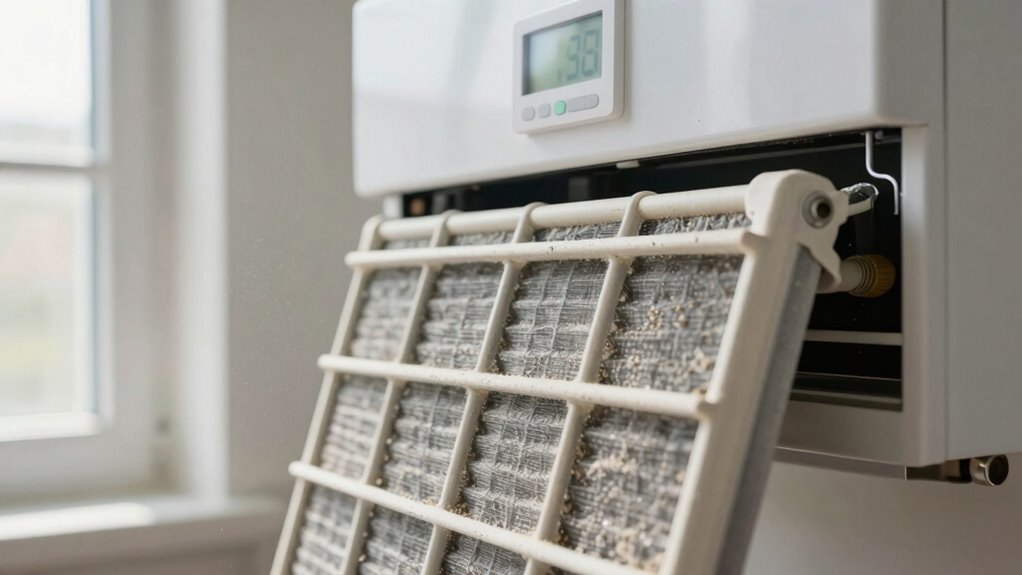

You should change your furnace filter every 1 to 3 months, depending on usage and type. If you’ve got pets, live in a dusty area, or use your furnace heavily, check it monthly. Dirty filters can reduce air quality and furnace efficiency, leading to higher energy bills. Regular maintenance keeps your indoor air clean and your system running smoothly. Stick around to discover more handy tips and insights on filter management!
Key Takeaways
- Change your furnace filter every 1-3 months based on filter type and usage conditions.
- Check filters monthly for dirt or clogging to ensure optimal performance.
- Use high-efficiency filters to effectively capture allergens and improve air quality.
- Signs for replacement include reduced airflow, increased dust, and higher energy bills.
- Seasonal recommendations: change filters monthly in spring and fall; every 1-3 months in winter and summer.
Understanding Furnace Filters

What do you really know about furnace filters? Understanding the basics can help you maintain a comfortable home environment. The air filter lifespan varies depending on usage, type, and environment. Typically, you should check your filter every month, but some may last up to three months. It’s essential to recognize the filter material options available, such as fiberglass, pleated, and HEPA filters. Eco-friendly practices can also extend the life of your furnace filter by reducing the number of particles in the air. Fiberglass filters are affordable but less effective, while pleated filters offer better filtration and efficiency. HEPA filters, although pricier, trap small particles effectively, making them ideal for allergy sufferers. By choosing the right filter and monitoring its lifespan, you can guarantee *crucial* air quality and improve your furnace’s performance. Additionally, using educational resources on filter types can help you make informed choices. In the same way, understanding water chemistry can lead to better maintenance of your home environment. Moreover, selecting a filter with the right filtration efficiency can significantly enhance the overall air quality in your home. A filter’s color accuracy can also impact the overall effectiveness of your home’s air quality system. Don’t overlook this *indispensable* maintenance task!
Types of Furnace Filters
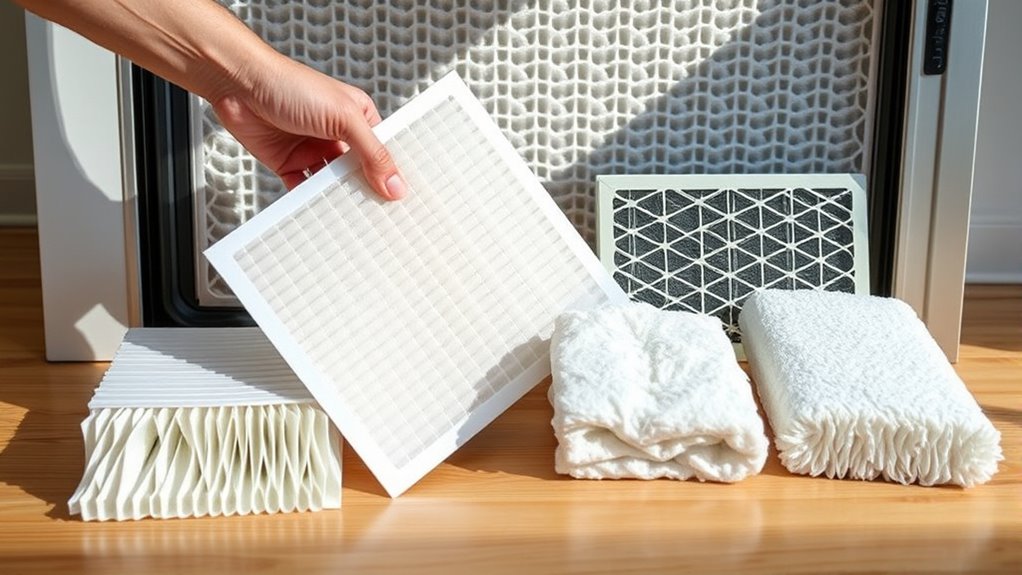
Have you ever wondered which type of furnace filter is best for your home? There are several options, each varying in air filter lifespan and filter material durability. Fiberglass filters are affordable and suitable for basic needs, but they have a short lifespan and lower efficiency. Pleated filters, on the other hand, offer better filtration and durability, lasting up to three months. If you want superior performance, consider HEPA filters. They trap smaller particles and have a longer lifespan, but they can be pricier. Additionally, using an airless paint sprayer can enhance your DIY projects by providing a smoother finish and reducing the time spent on painting. Regular maintenance of your HVAC system can also benefit from auditory processing skills, as understanding sounds can help identify unusual noises that may indicate issues. Moreover, local festivals in your area may provide opportunities to learn about home improvement techniques and connect with DIY enthusiasts. It’s important to note that regular cleaning and aftercare essential for HVAC systems can greatly impact their efficiency and longevity. Finally, washable filters save money in the long run, but you’ll need to maintain them regularly. Choosing the right filter depends on your needs, budget, and how often you’re willing to change or clean them. Additionally, regular maintenance of your HVAC system can greatly improve your home’s air quality and efficiency, making it essential for DIY home improvement.
Factors Affecting Filter Change Frequency
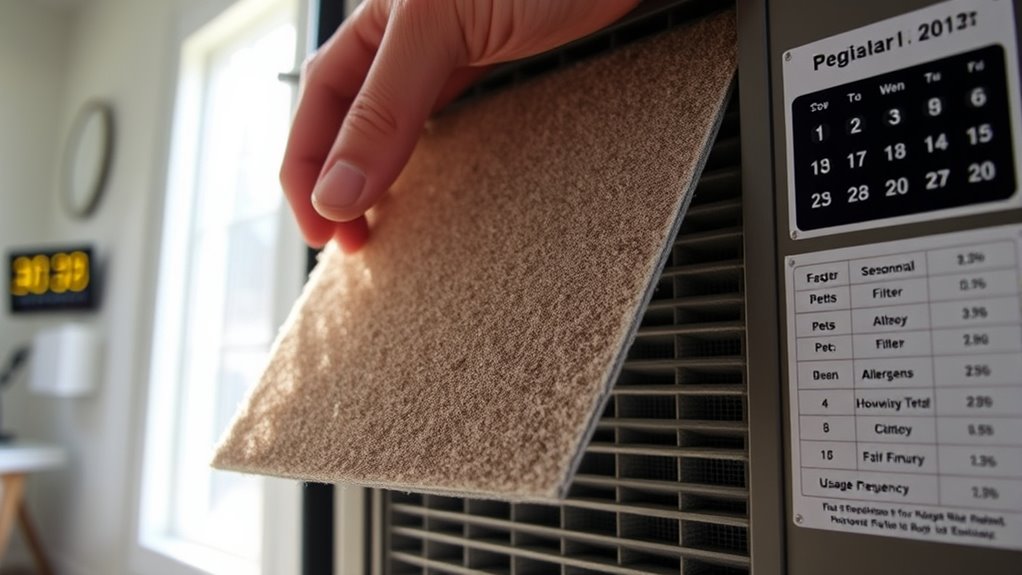
While the type of filter you choose is important, several factors influence how often you should change it. One major factor is your home’s air quality. If you live in an area with high pollution or allergens, you’ll likely need to change your filter more frequently. Additionally, using an air purifier can significantly enhance the overall air quality in your home, potentially extending the life of your furnace filter. To ensure optimal performance, it’s essential to understand heat distribution within your home, as it can impact how quickly your filter accumulates dust and debris. Electric bikes, for example, can affect indoor air quality due to their electric power generation capabilities, especially if used frequently in a garage or enclosed space. Pets also play a role; their hair and dander can clog filters quickly, necessitating more frequent changes. Additionally, the filter lifespan varies by type; some filters last longer than others. If you use your furnace heavily during the winter, this can also shorten the filter’s lifespan. Regularly enjoying the best gelato can make you less inclined to notice dust accumulation while relaxing in your home. Keep an eye on your filter and adjust your changing schedule based on these factors to maintain ideal performance and air quality. Regularly monitoring clean-home systems can help you make informed decisions about when to replace your filter.
General Guidelines for Changing Filters

To maintain ideal air quality and furnace efficiency, it’s vital to follow general guidelines for changing filters regularly. By doing so, you can enhance energy efficiency and provide much-needed allergy relief in your home. Here are some key recommendations:
- Change your filter every 1-3 months, depending on usage and type.
- Opt for high-efficiency filters to capture allergens and dust effectively.
- Check your filter monthly, and replace it if it looks dirty or clogged. Regular maintenance of your furnace ensures California’s spirit of clean living is upheld in your home. Additionally, maintaining the cleanliness of your filters can significantly improve airflow and efficiency. Implementing proper ventilation in your home also plays a crucial role in preserving air quality. For optimal performance, consider using high-efficiency filters that can trap even the smallest particles, ensuring cleaner air indoors.
Sticking to these guidelines ensures your furnace runs smoothly, prolongs its lifespan, and helps keep your indoor air clean. Regular filter changes not only improve air quality but also contribute to lower energy bills and a healthier living environment for you and your family. Additionally, ensuring that your furnace system is sized and installed correctly can further enhance its performance and efficiency.
Signs Your Filter Needs Changing

If you notice your home’s air quality declining or your energy bills rising unexpectedly, it might be time to check your furnace filter. A clogged filter can lead to airflow restriction, making your system work harder and increasing energy costs. Look for signs like dust accumulation around vents or a noticeable drop in heating efficiency. If your filter’s lifespan is nearing its end—usually every 1 to 3 months—it’s vital to replace it. Regularly changing your filter can significantly improve vehicle performance and efficiency of your heating system. Additionally, maintaining user privacy is crucial for your overall health and well-being, as pollutants can adversely affect indoor air quality. Pay attention to how often you run your furnace; heavy use can quicken the need for a change. Regularly inspecting your filter helps guarantee optimal performance and keeps your home comfortable. Additionally, the importance of maintaining air quality standards cannot be overstated, as it plays a crucial role in your overall health and well-being. Don’t wait for issues to escalate; proactive maintenance is key.
The Impact of Dirty Filters on Air Quality

When you neglect to change your furnace filter, dirty filters can substantially degrade your home’s air quality. This can lead to a buildup of indoor allergens that affect your respiratory health. You might not notice the change immediately, but over time, the impact becomes evident.
- Increased dust and pet dander circulating in your home
- Higher levels of mold spores and pollen in the air
- Unpleasant odors due to trapped pollutants
These factors can aggravate allergies and asthma symptoms, making it harder to breathe comfortably. By regularly changing your filter, you’ll not only improve your air quality but also contribute to a healthier living environment for you and your family. Don’t overlook the importance of this simple task!
Seasonal Considerations for Filter Changes

As seasons change, it is crucial to adjust your furnace filter routine accordingly. Different times of the year bring varying levels of dust, pollen, and allergens. By staying proactive, you can maintain better air quality and enhance allergen removal in your home.
| Season | Recommended Filter Change Frequency | Benefits |
|---|---|---|
| Winter | Every 1-3 months | Reduces dust and pet dander |
| Spring | Every month | Targets pollen and mold spores |
| Summer | Every 1-3 months | Filters out humidity-related allergens |
| Fall | Every month | Prepares for winter dust |
How to Change Your Furnace Filter

Changing your furnace filter is a straightforward task that can considerably improve your home’s air quality. To guarantee you do it right, follow these filter installation tips:
Changing your furnace filter is simple and greatly enhances your home’s air quality. Follow these tips for successful installation.
- Turn off the furnace: Always shut off your system to avoid any accidents during the change.
- Remove the old filter: Take out the used filter and check its air filter lifespan; if it’s clogged, it’s time for a replacement.
- Install the new filter: Make sure the new filter is facing the right direction, and push it snugly into the slot.
Once you’ve completed these steps, turn your furnace back on. Regularly changing your filter will not only enhance your indoor air quality but also help your system run more efficiently.
Tips for Maintaining Your Furnace System

To keep your furnace running smoothly and efficiently, regular maintenance is essential. Start by checking your air filter lifespan; ideally, you should replace it every 1 to 3 months, depending on usage and filter type. Regularly inspecting and cleaning your filters can notably enhance airflow and improve efficiency.
Additionally, keep the area around your furnace clear of debris and dust. Scheduling an annual professional inspection ensures that all components are functioning properly and helps catch potential issues early.
Don’t forget to check your thermostat settings and consider upgrading to a smart thermostat for better control. Following these filter maintenance tips will not only extend your furnace’s life but also save you money on energy bills.
Frequently Asked Questions
Can I Wash and Reuse My Furnace Filter?
You can wash and reuse some furnace filters, but it depends on the type. If you have a reusable filter, cleaning it can improve your air quality and provide allergy relief. Just make sure to follow the manufacturer’s instructions for washing. However, disposable filters should be replaced, not washed. Regular maintenance is key to keeping your home’s air fresh and reducing allergens, so check your filter often for the best results.
How Do I Know My Filter Is the Right Size?
Choosing the right filter size is like finding the perfect pair of shoes; if they’re too big or small, you’ll feel it right away. To determine your filter dimensions, measure the length, width, and thickness of your existing filter. Use sizing techniques like checking the model number or consulting your furnace manual for guidance. Ensuring a snug fit keeps your system running efficiently and your air quality in top shape.
What Tools Do I Need to Change the Filter?
You don’t need many tools to change your air filter. Just grab a screwdriver or a simple pull-tab, depending on your furnace model. Make sure you have the right air filter type ready for installation, and don’t forget to wear gloves for cleanliness. Following these filter maintenance tips will help you stay on track. Check the filter’s size and type before starting, ensuring a hassle-free replacement process.
Can a Dirty Filter Cause My Furnace to Overheat?
Yes, a dirty filter can definitely cause your furnace to overheat. When the filter’s clogged, it creates airflow restriction, making your furnace work harder to heat your home. This increased strain reduces your furnace efficiency and can lead to overheating or even system failure. Regularly changing your filter keeps airflow smooth, ensuring your furnace runs efficiently and safely, so don’t overlook this essential maintenance step!
Do I Need a Professional to Change My Filter?
You don’t necessarily need a professional to change your filter. If you’re comfortable with a little DIY replacement, filter maintenance can be straightforward. Just make sure you know the type of filter your furnace uses and follow the manufacturer’s instructions. After all, isn’t it satisfying to take care of your home yourself? However, if you’re unsure or facing complications, calling a professional can guarantee everything’s done correctly and safely.
Conclusion
In the grand scheme of home comfort, keeping your furnace filter fresh is a small yet impactful task. By being proactive and mindful, you’re not just swapping out a filter; you’re nurturing the air your family inhales. Embrace the rhythm of regular maintenance, and you’ll invite a gust of fresh air into your home. After all, a simple change today can lead to a healthier tomorrow—so give your furnace the care it deserves.