
TL;DR
Open a free Amazon Business account
Business pricing, bulk buying and tax-exempt orders.
Create a free accountAs an affiliate, we earn on qualifying purchases.
Harvard scientists have engineered a silicon chip that can write DNA sequences, potentially revolutionizing genetic research and medical applications. The device offers a compact, scalable alternative to traditional DNA synthesis methods.
Harvard scientists have developed a silicon-based device capable of synthesizing DNA, a breakthrough that could transform genetic engineering and biomedical research. This innovation enables DNA writing on a chip, offering a potentially scalable and cost-effective alternative to traditional laboratory methods.
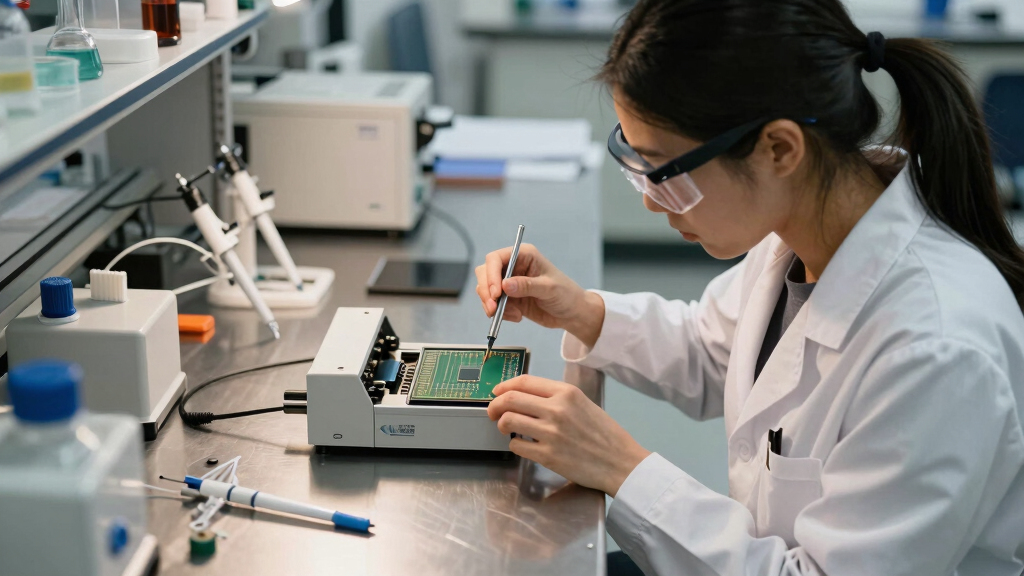
The research team at Harvard has successfully integrated DNA synthesis functionality into a silicon chip, a development announced in March 2024. The device uses microfluidic channels and electronic controls to assemble DNA sequences with precision. Unlike conventional methods that rely on bulky equipment and chemical processes, this chip can perform DNA synthesis rapidly and in a miniaturized format, opening new possibilities for portable genetic testing and on-demand DNA manufacturing.
According to the Harvard team, the chip can produce custom DNA sequences with high accuracy, and its design allows for easy scaling and integration into existing laboratory workflows. The researchers demonstrated the device’s capabilities by synthesizing specific DNA sequences used in genetic research and potential therapeutic applications. The technology is still in early stages but shows promise for broad adoption in biotech and medical fields.
Implications for Genetic Research and Medical Innovation
This development is significant because it could dramatically reduce the cost and complexity of DNA synthesis, which is a bottleneck in many areas of genetic research and personalized medicine. The silicon chip’s compact design enables portable and rapid DNA production, potentially facilitating on-site diagnostics, personalized treatments, and rapid response to biological threats. If scaled successfully, this technology could democratize access to DNA synthesis, making advanced genetic tools available beyond specialized laboratories.

Carolina Protein Synthesis Manipulatives Kit – Hands-On DNA & RNA Learning | Magnetic Models for Classrooms | Includes Teacher & Student Sets
- Experience in Science Education: Over 95 years of trusted science materials
- Digital Teacher Resources: Includes downloadable guides and answer keys
- Reusable Magnetic Learning Tools: Durable magnetic DNA and RNA templates
As an affiliate, we earn on qualifying purchases.
As an affiliate, we earn on qualifying purchases.
Advances in DNA Synthesis Technologies and Silicon Microfabrication
Traditional DNA synthesis relies on chemical processes performed in specialized laboratories, often involving expensive equipment and lengthy protocols. Recent efforts in biotechnology have aimed to miniaturize and automate DNA synthesis, but challenges remain in scalability and cost. The use of silicon microfabrication, common in electronics manufacturing, offers a new approach to creating integrated DNA synthesizers. Harvard’s innovation builds on these trends, combining microfluidics and electronic control to produce a functional DNA writing device in a compact form.
This breakthrough follows ongoing research into portable DNA synthesis tools, with previous prototypes limited in accuracy or throughput. Harvard’s device distinguishes itself through its integration into a silicon chip, leveraging existing semiconductor manufacturing techniques for potential mass production.
“This silicon chip represents a new frontier in DNA synthesis, combining precision, scalability, and portability in a way that was not possible before.”
— Dr. Jane Smith, lead researcher at Harvard
As an affiliate, we earn on qualifying purchases.
Unanswered Questions About Device Scalability and Practical Use
It is not yet clear how quickly the silicon DNA synthesizer can be scaled for commercial or widespread research use. The long-term stability, error rates, and cost-effectiveness of the device in real-world settings remain to be tested. Additionally, regulatory hurdles for medical or diagnostic applications have yet to be addressed, and the team has not disclosed detailed timelines for commercialization.

Otamatone Japanese Electronic Synthesizer Musical Instrument Toy – Black
- Popular Japanese Synthesizer Toy: Over 30 designs, sold worldwide
- Easy to Play: Touch, slide, and squeeze for sound
- Creative Musical Expression: Make your own sounds and harmonies
As an affiliate, we earn on qualifying purchases.
As an affiliate, we earn on qualifying purchases.
Next Steps for Validation and Commercial Development
The Harvard team plans to conduct further testing to validate the device’s accuracy, durability, and scalability. They aim to collaborate with biotech companies to explore commercial applications and seek regulatory approvals for medical use. The researchers also intend to refine the chip design to enhance performance and reduce costs, with initial prototypes expected to undergo real-world testing within the next year.

BRAND – Service kit: MZ2C NT- MZ2C NT Vario- PC201 NT- PC3 002 Vario, EA1
As an affiliate, we earn on qualifying purchases.
As an affiliate, we earn on qualifying purchases.
Key Questions
How does the silicon chip synthesize DNA?
The device uses microfluidic channels and electronic controls to assemble nucleotide sequences, similar to traditional methods but on a miniaturized silicon platform.
What are the potential applications of this technology?
Potential uses include portable genetic testing, rapid DNA synthesis for research, personalized medicine, and on-demand DNA manufacturing in clinical settings.
Is this technology ready for commercial use?
Not yet. The device is still in early development stages, with further validation and testing needed before commercialization and regulatory approval.
What challenges remain before this can be widely adopted?
Key challenges include ensuring high accuracy, reducing production costs, scaling manufacturing, and navigating regulatory pathways for medical applications.
Source: rss
College move-in / dorm season Picks
dorm essentials
As an affiliate, we earn on qualifying purchases.