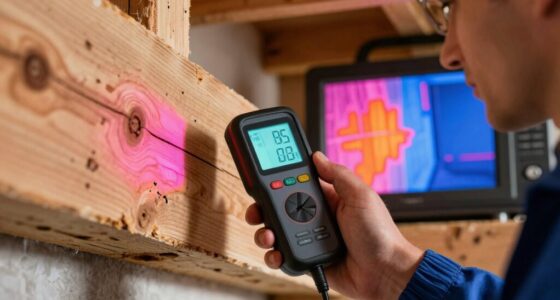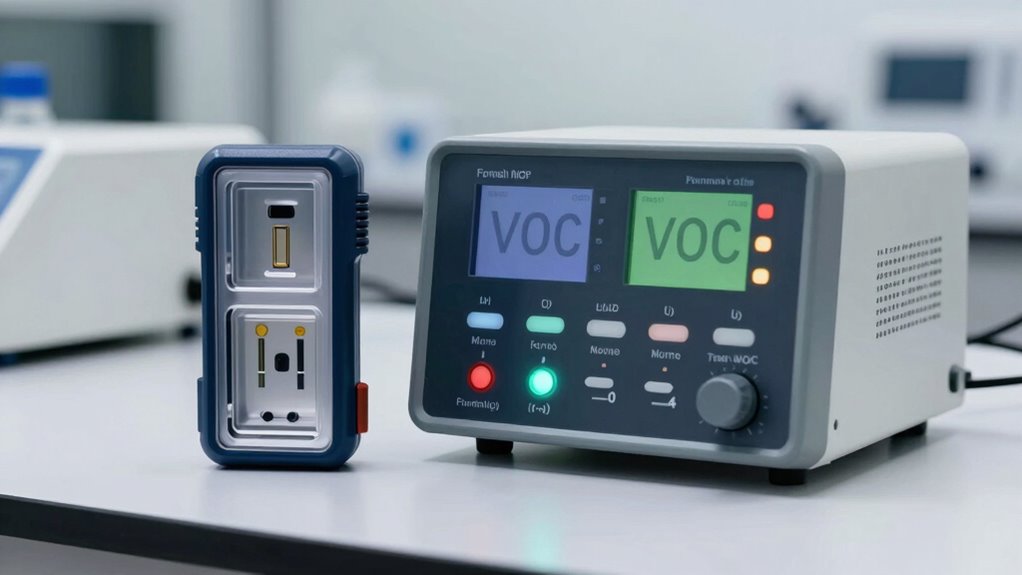

Formaledehyde meters focus specifically on detecting formaldehyde with high sensitivity and quick response times, making them ideal when this chemical is your main concern. General VOC monitors measure a broader range of volatile organic compounds, providing an all-encompassing view of overall indoor air quality. While formaldehyde meters target health-related risks from a single pollutant, VOC monitors help identify multiple sources. To learn more about which device suits your needs, keep exploring the differences and applications.

Get health and wellness essentials delivered free with Prime
- Fast, free delivery on millions of items
- Prime Video, Amazon Music and more included
- Member-only deals all year
Key Takeaways
- Formaldehyde meters are specialized for high-sensitivity detection of formaldehyde, while VOC monitors measure a broad range of VOCs.
- Formaldehyde meters focus on health-related risks from formaldehyde exposure, whereas VOC monitors assess overall indoor air quality.
- Formaldehyde meters often require precise calibration due to their sensitivity, with some featuring automatic calibration features.
- VOC monitors detect multiple compounds, including formaldehyde, but may have less sensitivity to any single VOC.
- The choice depends on whether the primary concern is formaldehyde-specific health risks or general indoor air pollution.

When it comes to monitoring indoor air quality, understanding the differences between formaldehyde meters and general VOC monitors is essential. Both tools play a vital role in ensuring your environment meets air quality standards, but they serve different purposes. Formaldehyde meters are specifically designed to detect and measure formaldehyde concentrations, a common indoor pollutant linked to health issues like respiratory problems and irritation. On the other hand, general VOC monitors measure a broader range of volatile organic compounds, including formaldehyde, benzene, toluene, and others, providing a more comprehensive view of indoor air quality.
Understanding formaldehyde meters versus general VOC monitors is key for accurate indoor air quality assessment.
If you’re concerned about formaldehyde exposure, you’ll want a dedicated formaldehyde meter that offers high sensitivity and quick response times. These devices are calibrated to detect formaldehyde levels accurately, often requiring regular sensor calibration to maintain precision. Sensor calibration is critical because sensor readings can drift over time, leading to inaccurate measurements. Regular calibration ensures that your device stays within the required accuracy ranges, aligning with established air quality standards. Without proper calibration, you risk underestimating or overestimating formaldehyde levels, which can affect your health assessments and decision-making.
General VOC monitors are more versatile, capable of detecting multiple compounds simultaneously. While they may not be as sensitive to formaldehyde alone, they provide a broader picture of overall indoor air quality. These monitors are ideal for environments where multiple sources of VOCs are present, such as new furniture, paints, cleaning products, or industrial settings. Since VOC levels can fluctuate rapidly, choosing a monitor with proper sensor calibration is critical to get reliable readings. Some advanced VOC monitors come with automatic calibration features, helping you maintain accuracy without frequent manual adjustments. Additionally, sensor calibration can help extend the lifespan of your monitoring devices and ensure consistent performance over time. Moreover, understanding the sensor technology used in your device can help you select the most appropriate model for your specific needs.
Understanding your specific needs will guide your choice. If formaldehyde is your primary concern, a dedicated formaldehyde meter aligned with air quality standards is the best option. For a comprehensive overview of various VOCs, a general VOC monitor is more suitable. Regardless of which device you choose, regular sensor calibration is vital for trustworthy data. Proper calibration ensures your readings accurately reflect the real air quality, enabling you to make informed decisions about ventilation, filtration, or other mitigation measures. In the end, precise measurements help you maintain a healthier indoor environment and comply with relevant air quality standards. Additionally, choosing specialized testing devices can further improve detection accuracy and reliability.
As an affiliate, we earn on qualifying purchases.
Frequently Asked Questions
How Often Should Formaldehyde Meters Be Calibrated?
You should calibrate your formaldehyde meter at least every 6 to 12 months, depending on usage and manufacturer recommendations. Regular calibration guarantees accurate readings and accounts for sensor lifespan, which can degrade over time. If you notice inconsistent results or suspect the sensor is aging, it’s wise to calibrate more frequently. Proper maintenance keeps your measurements reliable and extends the instrument’s effective life.
Are Formaldehyde Meters Suitable for Outdoor Use?
You shouldn’t count on formaldehyde meters for outdoor use, as they’re mainly designed for indoor environments. Outdoor accuracy can be compromised by environmental factors like wind, rain, and sunlight, which interfere with readings. It’s like trying to catch water with a sieve—you won’t get reliable results. For outdoor measurements, consider specialized VOC monitors built to handle environmental challenges and provide accurate data in open-air settings.
What Is the Detection Limit of General VOC Monitors?
General VOC monitors typically have detection limits ranging from 0.1 to 1 parts per billion (ppb), depending on the device’s sensor sensitivity and detection accuracy. This means they can detect very low levels of volatile organic compounds in the air. You should choose a monitor with a sensitivity that matches the VOC levels you’re concerned about. Keep in mind, higher sensor sensitivity usually results in better detection accuracy for low concentrations.
Do VOC Monitors Detect Specific Chemicals or All VOCS?
Imagine a sensor as a keen-eyed detective, scanning the air. VOC monitors don’t detect specific chemicals but cover a broad detection range, sensing a variety of volatile organic compounds. Chemical specificity varies—some are more precise, targeting particular VOCs, while others offer general detection. So, you get a broad overview of air quality, but for pinpoint accuracy, specialized sensors are your best bet.
How Long Do Formaldehyde Meter Sensors Typically Last?
Formaldehyde meter sensors usually last about 6 to 12 months, depending on usage and environmental conditions. You should monitor the sensor’s lifespan regularly and follow the manufacturer’s recommendations for calibration frequency, which is often every 3 to 6 months. Proper calibration guarantees accurate readings, and replacing the sensor when it nears the end of its lifespan helps maintain reliable detection of formaldehyde levels.
As an affiliate, we earn on qualifying purchases.
Conclusion
So, next time you’re shopping for air quality monitors, remember: choosing between a formaldehyde meter and a general VOC monitor isn’t just about price—it’s about catching the sneaky pollutants that might be lurking in your home. Ironically, while a fancy VOC monitor might sound like the all-in-one hero, it may not catch those specific formaldehyde sneaks. Sometimes, specialized tools are worth more than a Swiss Army knife when it comes to your health.
indoor air quality monitor with calibration
As an affiliate, we earn on qualifying purchases.
As an affiliate, we earn on qualifying purchases.
As an affiliate, we earn on qualifying purchases.
Cold & flu season Picks
humidifiers
As an affiliate, we earn on qualifying purchases.