
TL;DR

Get health and wellness essentials delivered free — and shop member deals
- Fast, free delivery on millions of items
- Access to Prime Big Deal Days deals on October 6–7
- Prime Video, Amazon Music and more included
Infrared thermometers estimate temperature by detecting infrared energy, usually from the forehead or ear. They offer quick readings, but technique, room conditions, and the device’s instructions affect the result; for many adults, 38°C (100.4°F) is a common fever reference point, not a diagnosis.
A temperature check can take seconds, yet one small change—like a damp forehead or a chilly walk indoors—can shift the number on the screen. That’s why infrared thermometers for adults are handy tools, but their readings need a little context.
This guide explains what they are, how they work, what can throw off a result, and what to look for when buying one. You’ll also learn when a reading may deserve a second check or professional advice.
Forehead infrared thermometers estimate body temperature from skin heat; ear models depend on correct placement.
Use the same device, site, and method for repeat checks, and follow the model’s distance and positioning instructions.
Sweat, hair, weather, exercise, earwax, and object mode can all make a reading less useful.
A temperature of 38°C (100.4°F) is a common adult fever reference point, but symptoms and context matter too.
Seek professional advice for severe or worsening symptoms, or if you have a higher risk from infection.
How Infrared Thermometers Turn Heat Into a Number
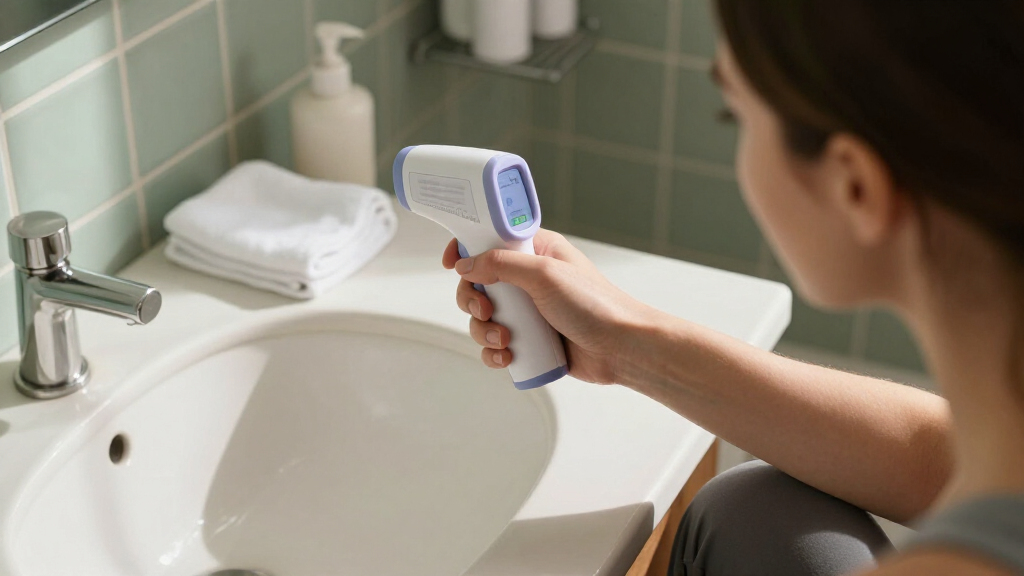
Infrared thermometers estimate temperature by detecting infrared energy emitted from the body, then converting that signal into a temperature reading. Most adult consumer models measure the skin at the forehead or temple; ear models detect heat from the eardrum and nearby tissue. The number is an estimate, not a direct copy of an oral or rectal measurement [1].
Think of the device like a camera that reads heat instead of light: it gathers information from a particular surface, then applies its own calculation. A forehead reading can be quick and touch-free, while an ear reading depends on placing and aiming the tip correctly. In either case, follow the manual’s specified site and method.
For example, if you point a forehead model at a person’s hairline when its instructions specify the temple, you’ve changed the measurement conditions. A different number doesn’t automatically mean the person’s temperature changed. It may mean the device measured a different spot.
Why Adults Reach for a Quick, Touch-Free Check
Infrared thermometers make temperature checks fast and comfortable, with many consumer models returning a result in seconds. Noncontact forehead models can help when you want to avoid touching skin, and memory features can make repeat checks easier to track [1]. Convenience makes them useful for a quick check at home, especially when someone feels unwell.
Imagine checking on a partner who is asleep: a silent forehead model may let you take a reading without waking them. An ear thermometer can also be practical, though you need to position it carefully and follow its cleaning directions. Neither format suits every person or situation.
Use the number as one piece of information alongside symptoms and how the person feels. If a reading seems at odds with the person’s condition, repeat it according to the manual and consider confirmation with another suitable thermometer.
What Can Throw Off Your Reading?
Infrared thermometers for adults work best when you use the right distance, angle, site, and conditions for that exact model. A sweaty or covered forehead, recent time outdoors, direct sunlight, or exercise can affect a skin reading; earwax and placement can affect an ear reading [1]. Small differences in technique can produce different numbers.
Picture returning from a brisk winter walk and checking your forehead at the front door. Your skin may still feel cold, so the reading may not reflect your usual indoor conditions. Let the person acclimate indoors for the period the manufacturer recommends, then measure the same spot as directed.
These key points for a reliable check can help:
- Use the manual’s stated distance and angle.
- Expose and dry the forehead; keep hair, hats, and makeup away from the measurement area when possible.
- Wait after exercise, bathing, or coming in from hot or cold weather, following the device’s guidance.
- Keep the sensor clean, check the batteries, and use body mode for a person.
- Compare repeat readings from the same site and device; different methods are not interchangeable.
Some models offer a separate object mode for measuring surfaces or liquids. A reading from that mode is meant for the object, not as a body temperature. Check the screen setting before you press the button.
How to Check an Adult’s Temperature More Consistently
To get a more consistent result, use the same thermometer, site, and setup each time. Follow this simple sequence, while treating your model’s instructions as the final guide:
- Prepare the person. If they have just exercised, bathed, or come indoors from extreme weather, wait for the period specified in the manual.
- Check the device. Confirm it is set to body mode, the sensor is clean, and the batteries are working.
- Position it as directed. Use the specified forehead spot or ear placement, distance, and angle.
- Repeat only if needed. If the result conflicts with how the person feels, repeat using the same method and consider an appropriate second thermometer.
- Record the context. Note the time, measurement site, and result if you’re tracking symptoms.
For instance, if your first forehead check is unexpectedly low while you feel feverish, avoid switching immediately to a different site and treating the numbers as equal. Recheck with correct positioning, then use symptoms and an appropriate measurement method to guide your next step.
What 38°C Means—and What It Doesn’t
For many adults, 38°C (100.4°F) or higher is a commonly used fever reference point, but the measurement site, device, and clinical context can affect how you interpret a result [1]. A number near that threshold deserves care, because a forehead estimate may not match a reading from another method. A normal forehead reading also does not rule out illness.
Suppose your thermometer shows 37.9°C, but you feel markedly worse than you did an hour ago. The decimal alone cannot tell you whether you need care; consider your symptoms, health conditions, and how long you’ve been ill. The device gives you a clue, not a diagnosis.
Use the thermometer to support your judgment, not replace it. Seek professional advice for severe or worsening symptoms, or if you have a condition that puts you at higher risk from infection.
Difficulty breathing, confusion, signs of dehydration, or persistent worsening symptoms warrant prompt medical advice. A qualified professional can help interpret the reading in light of your overall health.
Choose a Thermometer That Fits Your Routine
The right infrared thermometer is the one with a clear measurement method and instructions you can follow consistently. Before buying, check whether it measures the forehead, ear, or both, and whether it is intended for your age group and use. A higher price or extra features do not automatically mean a more reliable reading [1].
A large, readable screen may matter more than an app if you check temperatures at night. If you want to compare forehead and ear models, focus on how they fit your needs:
| Feature | Forehead model | Ear model |
|---|---|---|
| How it measures | Skin at forehead or temple | Heat from eardrum and nearby tissue |
| Useful feature | Often noncontact and quick | Compact; suitable for users comfortable with ear placement |
| What can affect it | Sweat, hair, makeup, room conditions, positioning | Earwax, aiming, and placement |
| Before purchase | Check distance and site instructions | Check placement and cleaning instructions |
Also look for a readable display, Celsius and Fahrenheit options if you need both, a practical warranty, and independent evaluations where available. Features such as color fever alerts, stored readings, object modes, or app connections may make a device easier to use; they do not prove greater accuracy [1].
Frequently Asked Questions
Are infrared thermometers accurate for adults?
They can provide useful temperature estimates when you follow the device’s instructions, but the result may differ from oral, rectal, or other measurements. Distance, placement, skin condition, and recent environmental changes can affect a reading.
Is a forehead or ear thermometer better?
Neither is best for everyone. Forehead models are often convenient and noncontact, while ear models rely on correct placement and can be affected by earwax or technique. Choose a format you can use consistently and follow its instructions.
Can I use an infrared thermometer on objects?
Only use object mode if your device has one, and follow its directions for measuring surfaces or other objects. An object-mode reading is not a body temperature.
Why does my thermometer give different readings each time?
Small changes in distance, angle, skin condition, room temperature, or timing can change the result. Repeat the measurement at the same site with the same device and method, following the manual.
Should I trust a normal reading if I feel feverish?
Not necessarily: a normal forehead estimate does not rule out illness. Repeat the reading carefully and consider confirming it with another suitable method; seek medical advice if your symptoms are severe or worsening.
Conclusion
Remember the site, setup, and symptoms: use your thermometer as directed, compare readings taken the same way, and let the person’s condition matter as much as the screen. If the number and how you feel tell different stories, check carefully and ask a qualified professional when symptoms concern you.
A steady hand and a clear reading are useful; good judgment is what gives them meaning.
Fall Picks
fall essentials
As an affiliate, we earn on qualifying purchases.