
Low-cost sensors are great for gathering critical data across various fields, including environmental monitoring, healthcare, agriculture, and smart homes. They help you track air and water quality, monitor patient health remotely, and optimize irrigation for crops. These sensors boost efficiency and productivity while ensuring data accuracy through regular calibration. As technology advances, their applications will only expand, enhancing your daily life. There’s much more to discover about the exciting future of low-cost sensors.
Key Takeaways
- Low-cost sensors ensure accurate environmental monitoring, tracking pollutants and supporting sustainable practices in agriculture and urban areas.
- They enable remote patient monitoring, facilitating early disease detection and personalized healthcare solutions.
- Smart home systems utilize low-cost sensors for efficient energy management, indoor air quality monitoring, and enhanced security.
- Calibration of low-cost sensors is crucial for maintaining data integrity and reliability across various applications.
- Advancements in sensor technology, including quantum sensors, are enhancing measurement accuracy and expanding their use in everyday applications.
Understanding Low-Cost Sensors
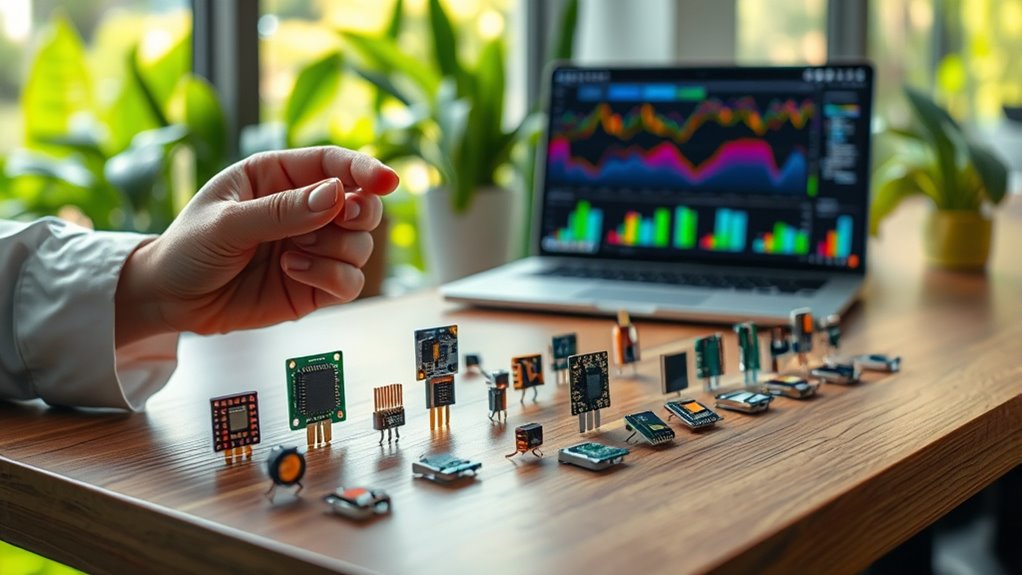
Low-cost sensors have become increasingly popular because they offer an affordable way to monitor various environmental parameters. These devices provide a practical solution for individuals and organizations looking to gather data without breaking the bank. However, it’s imperative to understand that while they’re cost-effective, their reliability hinges on proper sensor calibration. If you don’t calibrate your sensors correctly, you risk compromising data accuracy, which can lead to misguided decisions or ineffective monitoring strategies. Regular calibration helps guarantee that your sensors function at their best and yield trustworthy results. Additionally, effective storytelling can be utilized to communicate the importance of data accuracy to stakeholders, fostering a deeper understanding of the value these sensors bring to monitoring efforts. So, whether you’re tracking air quality or temperature changes, investing time in calibration can greatly enhance the value of your low-cost sensors and the insights you gain from them. Additionally, using personalized intervention strategies can further optimize the data collection process, ensuring that the specific needs of your monitoring goals are met effectively. Furthermore, low-cost sensors can be integrated with systems that utilize renewable energy sources, enhancing their sustainability and application in various projects. Understanding the importance of chain of custody is vital to ensuring that the data collected remains credible and reliable over time. Moreover, these sensors can be seamlessly incorporated into smart appliances to create a more efficient cooking and monitoring experience in the kitchen.
Applications in Environmental Monitoring

As environmental concerns grow, utilizing affordable sensors for monitoring has become essential for communities and researchers alike. These low-cost sensors enable you to track urban noise levels, helping you understand how sound pollution affects daily life. By placing sensors around your neighborhood, you can gather real-time data, identify hotspots, and advocate for quieter spaces. Additionally, monitoring water quality is vital for ensuring safe drinking water and healthy ecosystems. With affordable sensors, you can test for contaminants like bacteria and heavy metals, providing valuable information for local authorities. By employing these tools, you not only contribute to better environmental management but also empower your community to take action towards a healthier and more sustainable future. Furthermore, understanding the importance of filtration systems can enhance the effectiveness of your monitoring efforts by ensuring that air and water quality remain consistently high. Moreover, incorporating essential oils for their antimicrobial properties can complement your efforts in maintaining a healthy environment. Utilizing these sensors can also aid in identifying pollution sources, which is critical for effective environmental policy and community advocacy. Additionally, implementing native plants in your surroundings can significantly improve air quality and promote biodiversity. Creating diverse habitats through biodiversity hotspots can further support local wildlife and enhance ecosystem resilience.
Advancements in Health Care

In today’s health care landscape, low-cost sensors are transforming how you monitor patients remotely and detect diseases early. With innovative technology, you can access personalized treatment solutions that cater to individual needs. These advancements not only enhance patient care but also make health management more accessible than ever. Additionally, these systems can help create calm, clutter-light homes by ensuring that essential health monitoring devices are organized and easily accessible within the living space. Furthermore, utilizing step-by-step guidance for setting up these sensors can empower users to take control of their health monitoring effectively. For instance, integrating glycolic acid into skin care routines can be a proactive approach to maintaining overall health and wellness. The integration of technology in health care often reflects the same spirit of innovation and design seen in steampunk and Victoriana aesthetics. Moreover, the use of these sensors can lead to higher salary potential for health care professionals specializing in technology-driven patient care.
Remote Patient Monitoring
Remote patient monitoring is revolutionizing health care by enabling patients to manage their conditions from the comfort of their homes. With low-cost sensors, you can easily track vital signs like heart rate and blood pressure in real time. These sensors undergo careful sensor calibration to guarantee accurate readings, giving you peace of mind. Additionally, practicing deep breathing techniques can help reduce tension and stress, further supporting your overall health management. Data integration is another key aspect; your health data can seamlessly sync with health apps and provider systems, making it easier for you and your healthcare team to track progress. This technology not only empowers you to take charge of your health, but it also reduces unnecessary hospital visits. Embracing remote patient monitoring can lead to better health outcomes and a more personalized approach to your care. Additionally, compact living solutions can further enhance your health management by creating an organized and efficient home environment conducive to wellness. The use of portable power solutions can also support patients in managing their devices, ensuring they remain powered and operational at all times. Moreover, having a reliable backup power source can ensure that your monitoring devices stay functional during outages, providing uninterrupted care and peace of mind. Furthermore, the accuracy of your readings can be influenced by energy-efficient models that minimize interference from other electronic devices in your home.
Disease Detection Innovations
With the rise of remote patient monitoring, the focus on innovative disease detection has intensified. Low-cost sensors now play a critical role in identifying health issues earlier than ever. These devices require precise sensor calibration to guarantee accurate readings, which can lead to timely interventions. Furthermore, as you embrace these advancements, it’s essential to prioritize data privacy to protect sensitive health information.
| Sensor Type | Application | Benefit |
|---|---|---|
| Wearable Sensors | Heart rate monitoring | Early detection of arrhythmias |
| Environmental Sensors | Air quality monitoring | Identifying asthma triggers |
| Biosensors | Glucose level tracking | Managing diabetes effectively |
| Smart Pill Bottles | Medication adherence | Reducing hospital readmissions |
Personalized Treatment Solutions
As healthcare continues to evolve, personalized treatment solutions are transforming how you approach your health. With low-cost sensors, you can now gather real-time data about your body’s unique needs. These sensors rely on precise sensor calibration to guarantee that the information you receive is reliable and actionable. By monitoring vital signs, activity levels, and other health metrics, you can make informed decisions about your treatment options. Data accuracy is essential; it empowers you to adjust your lifestyle and medication based on what truly works for you. Christian Yelich’s ethnicity reflects the diversity of backgrounds that can benefit from personalized healthcare solutions. As you embrace these advancements, you’ll enjoy a more tailored healthcare experience, leading to better outcomes and a healthier life. Personalization is the future, and low-cost sensors are paving the way. Furthermore, the integration of massage guns with health-monitoring technology can enhance your DIY projects while ensuring safety and efficiency.
Enhancing Agricultural Practices

Low-cost sensors can transform how you manage your farm by providing real-time data on soil conditions and crop health. With precision soil monitoring, you’ll know exactly when and where to apply nutrients. Plus, optimizing irrigation management can save you water and enhance crop yields.
Precision Soil Monitoring
Precision soil monitoring is revolutionizing agricultural practices by providing farmers with real-time data on soil health and moisture levels. By utilizing low-cost sensors, you can enhance your crop yields while minimizing waste. Effective sensor calibration guarantees accurate readings, while data integration allows you to analyze trends over time.
| Soil Parameter | Optimal Range |
|---|---|
| pH | 6.0 – 7.5 |
| Moisture Content | 20% – 30% |
| Nitrogen Levels | 10 – 30 ppm |
| Phosphorus Levels | 15 – 30 ppm |
| Potassium Levels | 100 – 300 ppm |
Adopting this technology not only boosts productivity but also promotes sustainable farming practices. It’s time to take your agricultural methods to the next level!
Crop Health Analysis
How can you guarantee your crops are thriving throughout the growing season? By leveraging low-cost sensors, you can monitor crop health with ease. These sensors gather essential data on plant growth, nutrient levels, and environmental conditions. To ensure you’re getting the best results, proper sensor calibration is critical; it helps maintain data accuracy, allowing you to make informed decisions. Regular calibration prevents discrepancies in readings, helping you identify issues like nutrient deficiencies or pest infestations early on. By analyzing the data collected, you can adjust your practices to boost crop health and yields. Embracing this technology not only enhances your farming efficiency but also promotes sustainable practices, guaranteeing your crops flourish throughout the season.
Irrigation Management Optimization
While managing irrigation might seem straightforward, optimizing it can substantially enhance your agricultural practices. By utilizing low-cost sensors, you can monitor soil moisture levels in real-time, ensuring your crops receive just the right amount of water. Regular sensor calibration is vital to maintain data accuracy, which helps prevent over or under-watering. With precise data, you can make informed decisions about irrigation schedules, ultimately saving water and improving crop yields. Plus, integrating this technology can streamline your operations, allowing you to focus on other essential aspects of farming. By harnessing the power of low-cost sensors, you’ll not only enhance your irrigation management but also contribute to sustainable agricultural practices that benefit both your farm and the environment.
Innovations in Smart Homes

As technology evolves, smart homes are becoming more accessible and affordable, transforming the way you interact with your living space. Low-cost sensors play a critical role in this shift, enabling you to monitor everything from energy usage to indoor air quality. With proper sensor calibration, you guarantee accurate readings, enhancing your home’s efficiency. Innovative devices allow you to control lighting, heating, and security systems right from your smartphone, making your life more convenient. However, as you embrace these technologies, don’t overlook data security. Protecting your personal information is essential, so always choose reputable brands and stay updated on software security. By integrating smart sensors, you create a more responsive and secure environment tailored to your lifestyle.
The Future of Low-Cost Sensor Technology

With advancements in technology driving down costs, the future of low-cost sensor technology looks promising and transformative. You’ll find that quantum sensors are paving the way for unprecedented accuracy in measurements, making them accessible for everyday applications. Imagine using these sensors in your wearable technology to monitor health metrics with extreme precision. As these devices become cheaper and more efficient, you’ll experience a seamless integration into your daily life, enhancing everything from fitness tracking to environmental monitoring. The potential for low-cost sensors to revolutionize industries is immense, allowing for smarter cities, improved healthcare, and innovative environmental solutions. Embracing these technologies will certainly lead to a more connected, efficient, and healthier future for everyone.
Frequently Asked Questions
How Do Low-Cost Sensors Compare to Traditional Sensors in Accuracy?
Low-cost sensors often struggle with accuracy compared to traditional sensors, primarily due to less rigorous sensor calibration. While they provide valuable data, you might find their data reliability can vary markedly. Traditional sensors usually have more consistent performance, making them better for critical applications. However, if you’re working on less demanding tasks, low-cost sensors can still be useful, as long as you’re aware of their limitations in precision and reliability.
What Materials Are Commonly Used in Low-Cost Sensors?
Low-cost sensors typically use materials like plastic, silicon, and metal alloys. These materials help reduce production costs while maintaining reasonable sensor calibration and performance. When selecting a sensor, you should consider material durability, as it affects the sensor’s lifespan and reliability. Cheaper materials may wear out faster, compromising accuracy over time. Balancing cost with durability guarantees you get the most value from your investment in low-cost sensor technology.
Can Low-Cost Sensors Be Easily Integrated With Existing Systems?
Yes, you can easily integrate low-cost sensors with existing systems. Most sensors come with straightforward calibration processes that streamline their setup. You’ll find that data integration is often facilitated by standard communication protocols, making it simple to connect them to your current infrastructure. Just verify you have the right software tools to manage the data flow, and you’ll see how effortlessly these sensors can enhance your system’s capabilities.
What Are the Limitations of Low-Cost Sensors?
While low-cost sensors can feel like they’ve jumped straight out of a sci-fi movie, they do have limitations. You’ll often face issues with sensor calibration, which can lead to inaccurate readings. Additionally, environmental interference—like temperature or humidity changes—can skew data. These factors can affect reliability, making it essential for you to evaluate whether the sensors meet your needs before integrating them into your systems.
How Can Users Maintain Low-Cost Sensors for Longevity?
To maintain your low-cost sensors for longevity, regularly perform sensor calibration to ensure accuracy. Keep them clean and free from dust or debris, which can interfere with readings. Protect them from harsh environmental conditions, like extreme temperatures and moisture, by using protective housing or covers. Regularly check for signs of wear and replace any damaged components promptly. By following these steps, you’ll extend the lifespan and reliability of your sensors considerably.
Conclusion
In the world of technology, low-cost sensors are like the diligent bees in a garden, buzzing around and gathering valuable data. Just as bees pollinate flowers, these sensors enhance our lives—monitoring air quality, improving health care, and optimizing farms. As we cultivate this burgeoning field, we can envision a future where these small yet mighty devices create a thriving ecosystem of innovation. Embrace the swarm of possibilities, and watch how low-cost sensors can transform our everyday experiences!