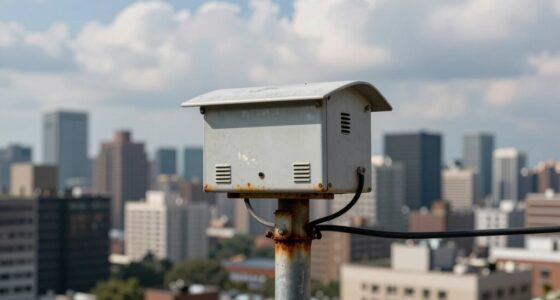
In long-term setups, sensor drift becomes more critical because it causes measurements to deviate from true values over time, leading to unreliable data. Without regular calibration, these inaccuracies can compound, making it harder to distinguish real signals from sensor errors. Environmental factors like temperature fluctuations and contaminants accelerate drift, requiring you to monitor sensors closely. If you want to understand how to manage drift effectively and maintain reliable data, keep exploring this topic further.
Key Takeaways
- Sensor drift accumulates over time, causing greater measurement inaccuracies in long-term data collection.
- In long-term setups, delayed calibration increases the risk of data becoming unreliable.
- Small drift errors can compound, significantly impacting trend analysis and decision-making.
- Environmental factors intensify sensor drift, demanding more frequent calibration in extended deployments.
- Continuous monitoring is essential to detect drift early and maintain data integrity over time.
Sensor drift affects data reliability in subtle but significant ways. When the sensors start to drift, they may report values that are increasingly off from the true measurement. This inconsistency hampers your ability to track trends accurately or detect real changes in the monitored environment. This is especially true in long-term setups, where data collection spans months or years, even slight inaccuracies can compound, making it difficult to distinguish between genuine signals and sensor errors. By prioritizing regular calibration, you minimize these risks, keeping your data as close to the truth as possible. Proper calibration procedures help ensure your sensors remain accurate over time.
Another factor to consider is the environment in which your sensors operate. Harsh conditions, temperature fluctuations, and exposure to contaminants can accelerate sensor drift. These factors mean that calibration frequency should be adjusted based on environmental stresses. If your sensors are exposed to extreme conditions, more frequent calibration becomes necessary to maintain data integrity. This proactive approach ensures you catch drift early, avoiding gaps or inaccuracies in your long-term data collection. Additionally, understanding sensor lifespan can help you plan maintenance more effectively. Recognizing the impact of environmental stresses on sensor performance can guide better deployment strategies. Regular monitoring of sensor accuracy**** can also provide early warning signs of potential issues, helping you intervene before significant data quality degradation occurs.

ANGSO-AUTO ADAS Calibration Tool Kit Compatible with Honda Toyota Kia Ford ADAS Radar Aiming Calibration Tool,Post with 0-30 Centimeter Scale,Corner Reflector Target with Billet Aluminum Stand
Universal Compatibility: Fit for Honda, Toyota, Kia, and Ford vehicles,Whether you're a professional mechanic or a DIY enthusiast,…
As an affiliate, we earn on qualifying purchases.
As an affiliate, we earn on qualifying purchases.
Frequently Asked Questions
How Can Sensor Drift Be Detected Early?
You can detect sensor drift early by regularly comparing current readings to known reference standards or calibration points. Keep an eye on signs of sensor aging, like inconsistent data or unexpected changes. Implement drift mitigation techniques, such as scheduled recalibrations or algorithm-based corrections, to catch drift early. Continuous monitoring and proactive maintenance help guarantee your sensor stays accurate over time, preventing larger issues down the line.
What Are the Best Calibration Methods for Long-Term Setups?
Think of your sensors as loyal companions whose accuracy needs nurturing. For long-term setups, you should implement rigorous calibration protocols regularly, much like tending a garden to maintain its robustness. Use traceable standards to guarantee precision, and automate calibration where possible to catch drift early. This ongoing care preserves sensor accuracy, preventing unnoticed deviations that could compromise your data integrity, just like a well-tended relationship stays strong over time.
Does Environmental Change Influence Sensor Drift Significantly?
Environmental variability can markedly influence sensor drift, especially over long-term setups. Changes in temperature, humidity, or exposure to pollutants accelerate sensor aging, causing calibration issues. You’ll notice more drift when environmental conditions fluctuate frequently or sharply. To manage this, regularly monitor environmental factors and perform calibration adjustments. Staying aware of environmental variability helps maintain sensor accuracy, reducing long-term drift impacts and ensuring reliable data collection over time.
How Often Should Sensors Be Recalibrated in Long-Term Projects?
You should recalibrate sensors regularly, ideally every 3 to 6 months, to maintain data reliability in long-term projects. Sensor lifespan varies, but consistent recalibration helps detect drift early, ensuring accurate readings. Neglecting this routine can lead to degraded data quality, especially as environmental factors influence sensor performance over time. Regular recalibration is essential to extend sensor lifespan and keep your data dependable throughout your project.
Are There Specific Sensor Types More Prone to Drift?
Certain sensor types, like electrochemical and optical sensors, are more prone to drift, affecting sensor accuracy over time. You should be especially vigilant with these, implementing drift mitigation strategies like regular recalibration and environmental controls. By understanding which sensors are more susceptible to drift, you can proactively maintain their accuracy, ensuring reliable data collection and reducing long-term measurement errors in your setups.

A Review of Emerging Sensor Technologies for Facilitating Long-Term Ground Water Monitoring of Volatile Organic Compounds
As an affiliate, we earn on qualifying purchases.
As an affiliate, we earn on qualifying purchases.
Conclusion
So, next time you set up that long-term sensor system, remember: ignoring drift isn’t just a minor slip-up—it’s practically inviting chaos. After all, who needs accuracy when you can enjoy the thrill of constant surprises? Embrace the drift, and you’ll master the art of unpredictable data. Or, you know, just fix it regularly and save yourself the headache. Your future self will thank you for choosing stability over spontaneous chaos.

NBCP V6 Wireless PC Controller with Interactive Screen,Gyroscope Calibration & Joystick Drift Repair Function,for PC Windows 7,8,10,11/Android/iOS,Hall Effect Joystick & Trigger,Programmable,Turbo Function,5-Level Vibration Feedback,1000Hz Polling Rate,6-axis Gyro
【Seamless Cross-Platform Compatibility】:Enjoy smooth control across multiple platforms with Bluetooth, 2.4G wireless, or USB-C wired. Effortlessly switch between…
As an affiliate, we earn on qualifying purchases.
As an affiliate, we earn on qualifying purchases.

Noise Monitoring Device for Airbnb | Noise & Occupancy Sensor | Indoor Noise & Occupancy Monitor | Noise Detector Privacy-Safe for Rentals, Noise Sensor for Offices & Homes
Layla Noise Monitoring Device: Accurately tracks sound levels to help maintain a calm, secure, and well-managed property environment….
As an affiliate, we earn on qualifying purchases.
As an affiliate, we earn on qualifying purchases.