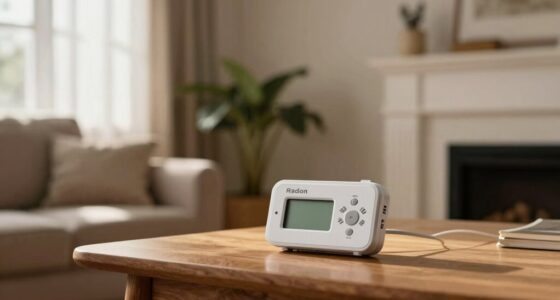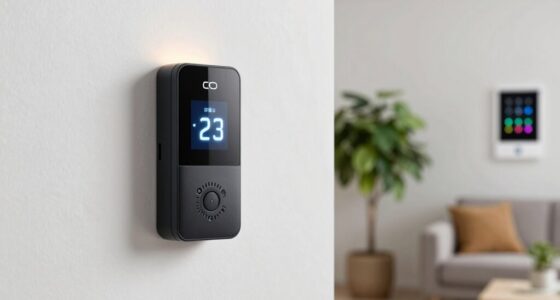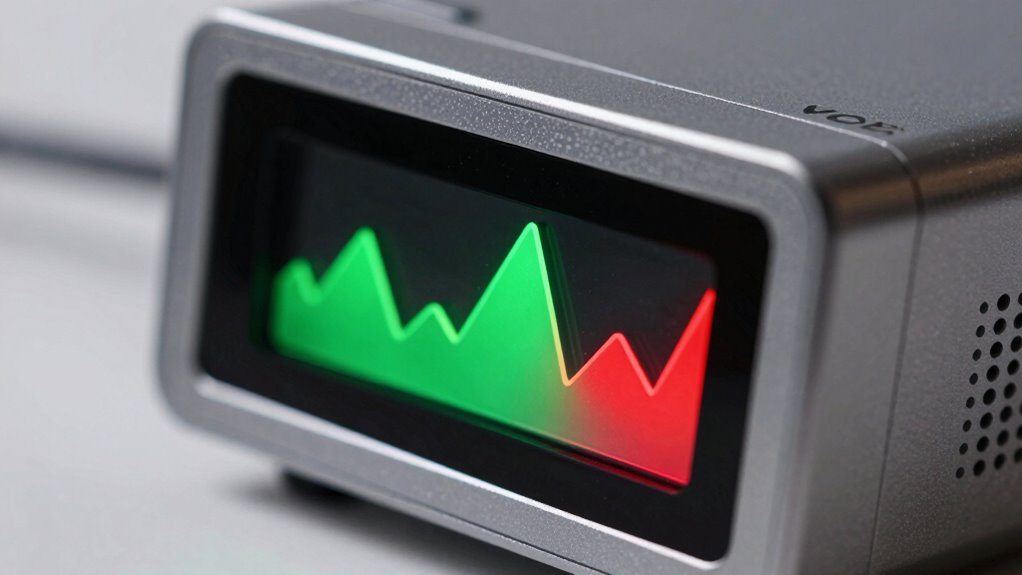
A VOC sensor spike often means there’s a sudden increase in airborne chemicals, which could be caused by cleaning products, chemicals, or environmental factors like high temperatures. It signals something in your space has changed or a new emission is occurring. This high alert helps you identify potential hazards early. If you want to understand what causes these spikes, how to respond effectively, and keep your environment safe, keep exploring further.
Key Takeaways
- A spike indicates a sudden increase in airborne VOC levels, often signaling environmental changes or emission sources.
- Spikes can result from activities like cleaning, painting, or chemical spills nearby.
- They may signal inadequate ventilation or high temperatures causing VOC accumulation.
- Persistent or repeated spikes suggest elevated health risks from prolonged exposure.
- Prompt actions like ventilation and source removal are essential to maintain safe indoor air quality.
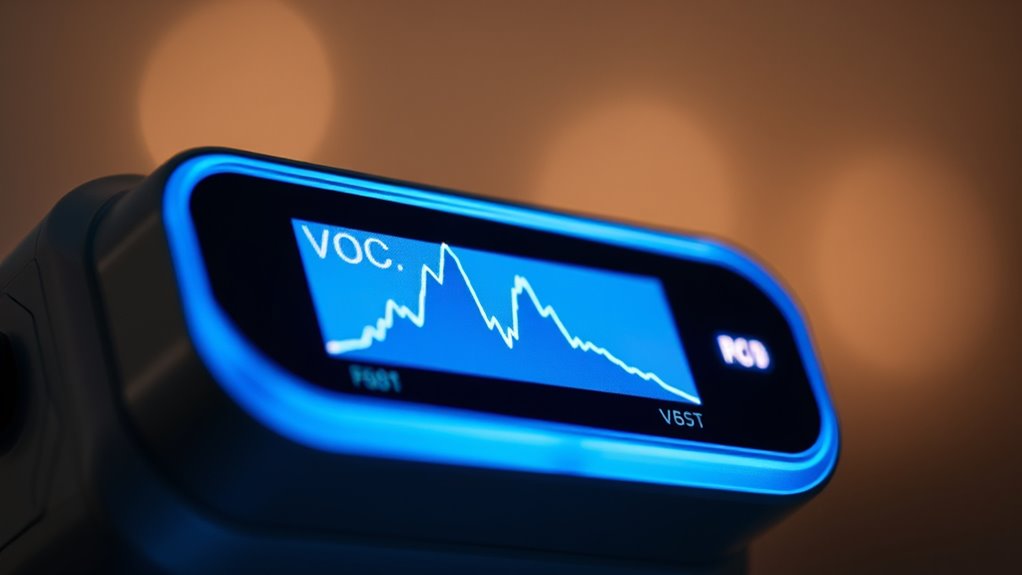
Have you ever wondered how VOC sensors detect harmful airborne chemicals in real-time? These devices are designed to monitor the air you breathe, providing instant alerts when dangerous levels of volatile organic compounds (VOCs) are present. When a sensor detects a spike in VOC levels, it’s not just a random fluctuation; it’s often a sign that something has changed in your environment that requires your attention. Understanding what these spikes mean can help you respond quickly and prevent potential health risks.
A spike in VOC readings usually indicates a sudden increase in airborne chemicals. This can happen for several reasons. For example, someone might have just used a cleaning product or sprayed perfume nearby. These products release VOCs that can cause a quick rise in sensor readings. Similarly, opening a container of paint, solvent, or other chemicals can lead to a sharp increase. Sometimes, a spike could be caused by a leak or spill, especially in industrial or workshop settings, where chemicals are stored or used regularly.
In many cases, a spike can also be linked to environmental factors. High temperatures or poor ventilation can cause VOCs to accumulate rapidly, resulting in a sudden rise in sensor readings. If your space isn’t well-ventilated, VOCs released from household items or building materials can build up before dispersing, leading to noticeable spikes. In some situations, a spike might be an early warning of a leak in ventilation or exhaust systems, signaling that air isn’t circulating properly and VOCs are concentrating. Filtration systems play a crucial role in reducing indoor VOC levels and preventing such spikes.
It’s important to recognize that not every spike indicates a catastrophic event. Some spikes are minor and temporary, caused by everyday activities. However, repeated or sustained spikes should raise concern. They suggest that VOC levels are rising to potentially harmful levels, which could impact your health if exposure continues. In such cases, it’s wise to ventilate the area immediately, identify the source of the VOCs, and remove it if possible.
Understanding what a spike means helps you take swift action to protect yourself. Don’t ignore sudden increases in VOC readings, especially if they’re sustained or frequent. A spike is your sensor’s way of warning you that something in your environment has changed, and it’s time to investigate. Whether it’s turning on a fan, opening windows, or removing a source of emissions, quick responses can considerably reduce your exposure. Remember, VOC sensors are invaluable tools in safeguarding indoor air quality, and knowing how to interpret their spikes keeps you one step ahead in maintaining a safe environment.
Frequently Asked Questions
How Often Should VOC Sensors Be Calibrated for Accuracy?
You should calibrate VOC sensors at least once every six months to maintain accuracy. However, if you operate in environments with fluctuating air quality or high pollutant levels, consider calibrating more frequently, such as quarterly. Regular calibration ensures your sensor provides reliable readings, prevents false alarms, and extends its lifespan. Always follow the manufacturer’s recommendations for calibration intervals and procedures to keep your sensor performing at its best.
Can Environmental Factors Affect VOC Sensor Readings?
Environmental factors can definitely affect VOC sensor readings, acting like mischievous gremlins that distort the data. Humidity, temperature, and airflow can cause fluctuations, making your sensor readings seem higher or lower than they truly are. You need to be aware of these influences and account for them to guarantee accurate monitoring. Regular calibration and proper sensor placement help minimize these effects, keeping your data reliable and trustworthy.
What Are Common Sources of VOC Spikes Indoors?
Indoor VOC spikes often come from household products like cleaning supplies, air fresheners, and personal care items. Cooking activities, especially frying or baking, can cause sudden increases. New furniture or carpets release VOCs as they off-gas. Also, smoking indoors or using certain hobbies like painting or gluing can lead to sharp VOC level rises. Being aware of these sources helps you identify and reduce indoor VOC spikes effectively.
How Can I Differentiate Between False Spikes and Real VOC Increases?
You can differentiate false spikes from real VOC increases by checking for consistent patterns over time. If the spike occurs suddenly but quickly drops back, it’s likely false, possibly caused by nearby electronics or brief environmental changes. Real increases tend to persist or gradually rise. Cross-reference sensor readings with known events, like opening windows or using products, and consider calibrating your sensor regularly to guarantee accuracy.
Are There Health Risks Associated With Temporary VOC Spikes?
Yes, temporary VOC spikes can pose health risks, especially if you’re exposed to high concentrations for extended periods. These spikes might cause headaches, dizziness, or respiratory irritation. Even short-term exposure can be harmful if levels are markedly above safe limits. To protect yourself, guarantee proper ventilation and identify sources of VOC emissions. If spikes occur frequently or reach dangerous levels, consider consulting an indoor air quality professional.
Conclusion
A sudden spike in VOC sensor readings is like a warning flare in the night sky, signaling you to act quickly. It often indicates a sudden increase in indoor pollutants, which could harm your health if overlooked. Keep an eye on those readings, and don’t dismiss a spike as just a blip. Instead, use it as your cue to ventilate, investigate, and guarantee your environment stays safe—because ignoring it is like sailing straight into a storm without a compass.