When you burn candles indoors, you might not realize how much they affect your air quality. Candles, especially those with paraffin wax or synthetic fragrances, release soot particles and VOCs that can irritate your lungs or trigger allergies. Poor ventilation makes it worse, allowing these pollutants to build up quickly. Proper candle maintenance and good airflow are key to minimizing these effects. To protect your space and health, understanding how candles influence your air can make a big difference.
Key Takeaways
- Burning candles releases soot and VOCs that can accumulate indoors, impacting air quality more than expected.
- Paraffin candles produce more soot, increasing airborne particles and respiratory irritation.
- Fragrant candles emit VOCs and chemicals that contribute to indoor air pollution.
- Poor ventilation allows soot and VOCs to build up, amplifying health risks.
- Proper candle maintenance and ventilation significantly reduce indoor pollutant levels.
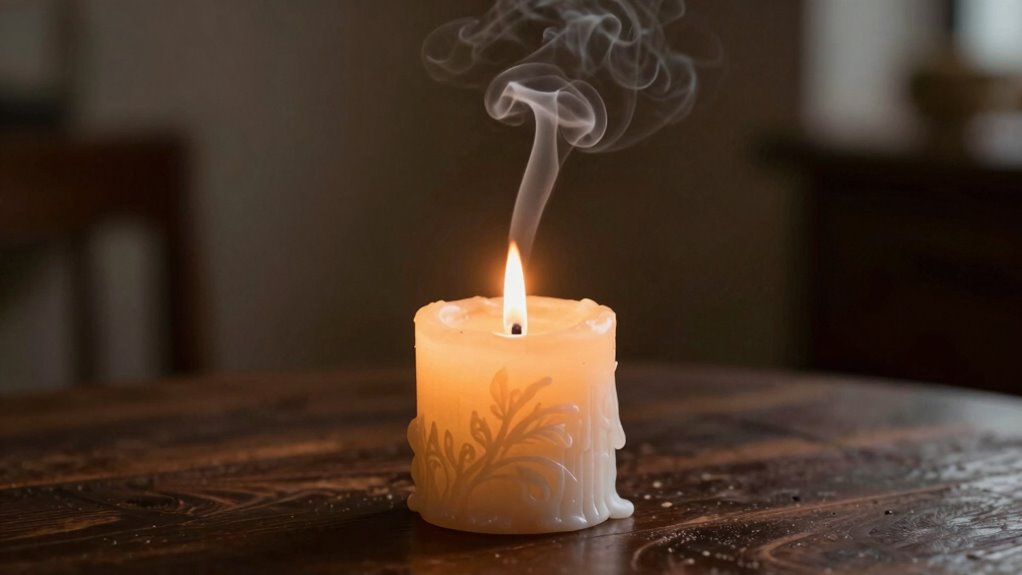
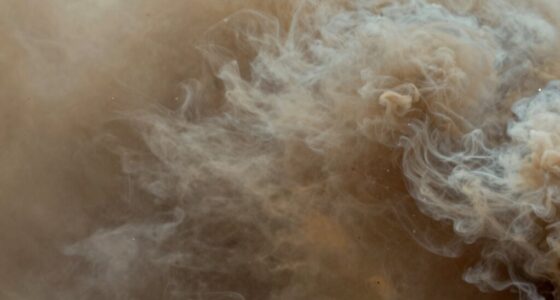
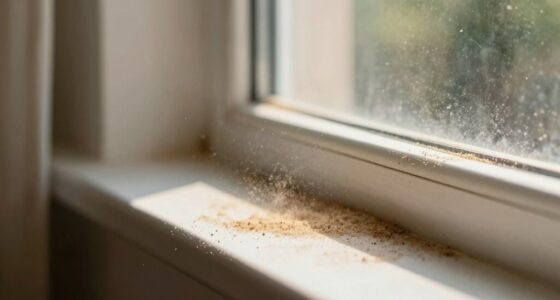
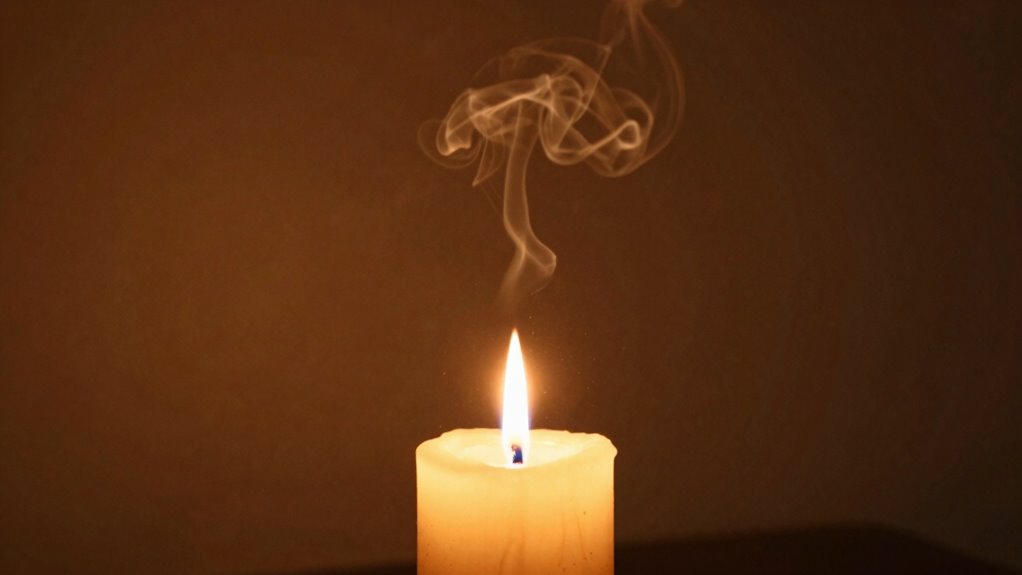
Candle use can create a cozy atmosphere, but it also impacts indoor air quality in ways you might not realize. When you light a candle, the warm glow may seem harmless, but the combustion process releases particles into the air. One of the main concerns is soot particles, tiny black or brown specks that result from incomplete burning of the candle’s wax. These particles can settle on surfaces or become airborne, where you breathe them in without even noticing. Over time, exposure to soot particles can irritate your lungs, trigger allergies, or worsen existing respiratory conditions.
Another factor that influences indoor air quality is candle fragrance. Many candles are infused with scented oils or chemical additives to create appealing aromas. While these fragrances enhance the ambiance, they also release volatile organic compounds (VOCs) into the air as the candle burns. These VOCs can contribute to indoor air pollution, leading to headaches, dizziness, or respiratory discomfort, especially if you burn candles frequently or in poorly ventilated spaces. Some synthetic fragrances contain phthalates or other chemicals that may have long-term health implications, making it worth considering the type of candle you choose.
Candle fragrances release VOCs, which can cause headaches, dizziness, and respiratory issues, especially in poorly ventilated spaces.
The amount of soot particles released depends on several factors, including the type of wax, wick, and whether the candle is burned properly. For example, candles made from paraffin wax tend to produce more soot compared to those made from beeswax or soy, which burn cleaner. Additionally, a candle wick that’s too long or is trimmed unevenly can cause flickering and incomplete combustion, increasing soot production. Proper candle maintenance, such as trimming the wick to about a quarter-inch before each use and avoiding drafts, can help reduce soot emissions. Using cleaner-burning ingredients in candles can also significantly reduce indoor pollutants.
Your ventilation habits also play an essential role. Burning candles in a well-ventilated room helps dissipate soot particles and VOCs, minimizing their buildup in the air. However, in small, enclosed spaces, these pollutants can accumulate quickly, impacting air quality more than you might expect. Regularly opening windows, using exhaust fans, or opting for candles with air-purifying properties can markedly improve your indoor air environment. Additionally, air circulation can significantly influence how pollutants disperse indoors. Proper ventilation not only reduces pollutant concentration but also helps prevent the buildup of harmful indoor air pollutants. It’s also beneficial to consider air quality monitoring devices to keep track of indoor pollutant levels and ensure a healthier environment.
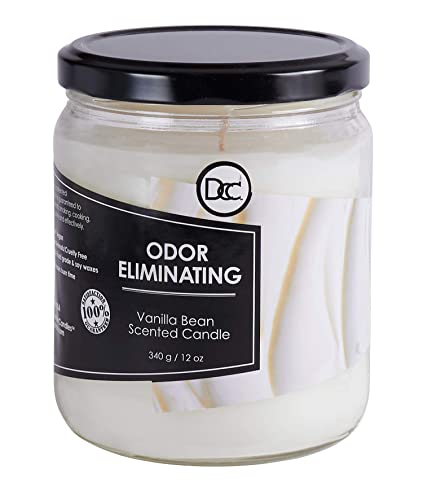
Vanilla Bean Odor Eliminating Highly Fragranced Candle – Eliminates 95% of Pet, Smoke, Food, and Other Smells Quickly – Up to 80 Hour Burn time – 12 Ounce Premium Soy Blend
The aroma of creamy vanilla with a whisper of caramelized sugar makes for an enjoyable fragrance everyone will…
As an affiliate, we earn on qualifying purchases.
As an affiliate, we earn on qualifying purchases.
Frequently Asked Questions
Do Different Candle Scents Emit Different Pollutants?
Yes, different candle scents emit different pollutants. Synthetic fragrances in candles can release volatile organic compounds (VOCs) during burn, affecting indoor air quality. The scent dispersal process varies with each fragrance, influencing how pollutants spread through your space. Fragrances with artificial chemicals tend to produce more emissions, so choosing natural candles reduces pollutant release. Pay attention to scent ingredients; natural options typically emit fewer harmful substances, making your environment safer.
Can Candle Use Affect Indoor Humidity Levels?
Candle use can influence indoor humidity levels, leading to humidity level fluctuations. When you burn candles, especially for extended periods, the combustion releases moisture into the air, increasing humidity slightly. This can impact indoor air quality by promoting mold growth or dust mite activity if humidity rises too much. To maintain ideal indoor air quality, keep an eye on humidity levels and ventilate well when burning candles frequently.
Are Soy or Beeswax Candles Safer Than Paraffin?
Soy and beeswax candles are generally safer than paraffin because their candle material burns cleaner, releasing fewer potentially harmful chemicals. They also have a lower environmental impact, as soy and beeswax are renewable resources. When you choose soy or beeswax, you reduce indoor air pollution and support sustainable practices. Overall, these candles are better for your health and the planet, making them a smarter, safer choice for your home.
How Quickly Do Candle Emissions Settle in the Air?
Candle emissions typically settle within a few hours, but the exact time depends on air circulation and emission duration. If you keep windows open or use a fan, emissions disperse faster. Without good ventilation, pollutants may linger longer, impacting indoor air quality. To minimize exposure, burn candles in well-ventilated spaces and avoid long-lasting or frequent use, especially if you’re sensitive to airborne pollutants.
Do Candle Wicks Contribute to Indoor Air Pollution?
Yes, candle wicks can contribute to indoor air pollution. During candle combustion, the wick releases tiny particles and chemicals, such as soot and volatile organic compounds (VOCs), into the air. These pollutants can lower indoor air quality and pose health risks over time. To minimize this, choose candles with natural wicks and guarantee proper ventilation while burning, helping keep your indoor environment healthier and cleaner.

MRS. MEYER'S CLEAN DAY Soy Aromatherapy Candle, 35 Hour Burn Time, Made with Soy Wax and Essential Oils, Honeysuckle, 7.2 Oz
This candle is made from ingredients like soy wax and vegetable wax and other thoughtfully-chosen ingredients
As an affiliate, we earn on qualifying purchases.
As an affiliate, we earn on qualifying purchases.
Conclusion
So, next time you light a candle, remember that your cozy glow might carry more unseen trouble than a knight’s plague. Even in this modern age, candles can quietly pollute your air with soot and chemicals. Don’t let your candlelit soirées turn into a silent siege on your lungs—think of it as an ancient warning from the days of plague-ridden towns. Use them wisely, and keep your air as fresh as a spring breeze.
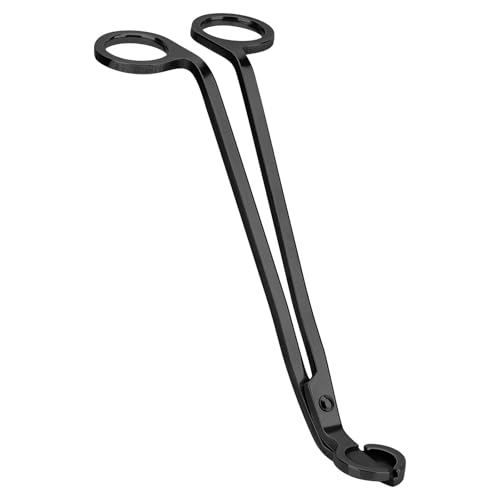
CHEFBEE Black Polished Stainless Steel Candle Wick Trimmer Wick Clipper Cutter, Scissors, Reaches Deep Into Candles to Cut Spent Cord, Allow Cleaner Burn and Prevent Soot Buildup
Ideal Size for Deep Candles – Measuring approximately 18 x 6 x 2 cm (6.97 x 2.2 x…
As an affiliate, we earn on qualifying purchases.
As an affiliate, we earn on qualifying purchases.

VEVOR Air Mover Blower Fan 12 Inch, 3198CFM 585W with 33ft Flexible Duct, Industrial Portable Ventilator Blower/Exhaust, Orange
Efficient Ventilation: Powerful 585W AC motor features 3198 CFM airflow, swiftly clearing smoke and odors. Its flexible PVC…
As an affiliate, we earn on qualifying purchases.
As an affiliate, we earn on qualifying purchases.