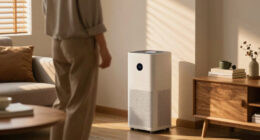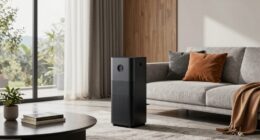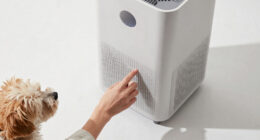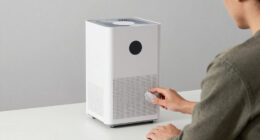

You should see dust, dander, and smoke as separate issues because each comes from different sources and affects your air quality differently. Dust consists of tiny particles from soil and skin flakes; dander mainly comes from pet or human skin shedding; and smoke contains chemicals from cigarettes, cooking, or fires. Managing each requires specific approaches like HEPA filters for dust and dander, and activated carbon for smoke. By understanding these differences, you’ll know how to improve your indoor air. If you keep exploring, you’ll discover effective strategies for each.
Key Takeaways
- Recognize each as distinct airborne pollutants with unique sources: soil particles, skin flakes, and combustion byproducts.
- Understand their different health impacts: dust and dander trigger allergies, smoke causes respiratory irritation and long-term issues.
- Use targeted control methods: HEPA filters for dust and dander; activated carbon filters and ventilation for smoke.
- Prioritize cleaning and filtration strategies specific to each issue for effective indoor air quality management.
- Tailor solutions based on the pollutant: regular cleaning for dust, hygiene and air purification for dander, and smoke avoidance measures.

Have you ever wondered why dust, dander, and smoke seem to trigger allergies or worsen respiratory issues? The answer lies in understanding how each of these issues affects your environment and how you can address them effectively. While they all contribute to poor air quality, they are distinct problems requiring tailored solutions. Recognizing these differences helps you prioritize actions like air purification and other strategies to create a healthier space.
Dust is one of the most common indoor irritants, mainly composed of tiny particles from soil, pollen, and human skin flakes. It settles on surfaces and becomes airborne when disturbed, making it easy to inhale. Regular cleaning helps reduce dust buildup, but for persistent issues, air purification becomes essential. Air purifiers with HEPA filters are effective at capturing fine dust particles, preventing them from circulating in your breathing zone. This targeted approach not only improves air quality but also minimizes dust as an allergy trigger, especially if you’re sensitive to particulate matter. Air filtration is a crucial component of managing indoor dust levels effectively. Being aware of the particulate matter in your environment can help you choose the most appropriate filtration system. Additionally, understanding the size and behavior of airborne particles can further optimize your air quality strategies.
Dander, on the other hand, originates from skin flakes shed by pets or humans. It’s a microscopic component that easily becomes airborne, triggering allergic reactions in many individuals. Unlike dust, dander is often more challenging to control because it’s constantly produced by animals and people. Investing in high-efficiency air purification helps capture these tiny allergens, reducing their presence in your indoor air. Additionally, maintaining good hygiene and keeping pets out of bedrooms or off furniture can lower dander levels, but air purification remains a critical tool in managing allergy triggers linked to dander.
Smoke presents a different challenge altogether. Whether from cigarettes, cooking, or wildfires, smoke contains a complex mix of chemicals and fine particles that can deeply irritate your respiratory system. Smoke particles are much smaller than dust or dander, which means they can penetrate deep into your lungs. To combat smoke, you need more than just regular air purification; you require devices equipped with activated carbon filters that adsorb chemical toxins and odors. Proper ventilation and minimizing smoke exposure are equally important because smoke’s harmful effects aren’t limited to allergy triggers—they can cause long-term respiratory problems. Recognizing the air quality issues associated with smoke can guide you toward more comprehensive solutions for a healthier environment.
Understanding these issues as separate yet interconnected challenges allows you to tailor your approach. Air purification plays a central role across all three, but selecting the right filters and devices for each specific problem is critical. Dust and dander can be managed with HEPA filters, while smoke demands additional carbon filtering. By distinguishing these issues, you can better protect your health and improve your indoor air quality.

MOOKA Air Purifiers for Home Large Room up to 1076ft², H13 True HEPA Air Filter Cleaner, Odor Eliminator, Remove Smoke Dust Pollen Pet Dander, Night Light, B-D02L White
MOOKA B-D02L AIR PURIFIER FOR LARGE ROOM: With the high-efficiency filtration system, the air purifier covers an area…
As an affiliate, we earn on qualifying purchases.
As an affiliate, we earn on qualifying purchases.
Frequently Asked Questions
How Do Dust, Dander, and Smoke Interact in Indoor Air Quality?
Dust, dander, and smoke interact by collectively worsening indoor air quality, making the environment harder to breathe. You can improve this by using effective air filtration systems that trap particles and pollutants. Ventilation improvements, like opening windows or using exhaust fans, help dilute and remove these contaminants. Together, these strategies reduce the combined impact of dust, dander, and smoke, creating a healthier indoor space for you.
Can Removing One Issue Improve Overall Air Quality Significantly?
You might find that removing just one issue, like dust, substantially boosts your indoor air quality. When you use air filtration and focus on source elimination—such as cleaning regularly or reducing smoke exposure—you often see a ripple effect that lessens other pollutants. By tackling one problem directly, you create a cleaner environment overall, making your space healthier and more comfortable. Sometimes, addressing one source makes a surprisingly big difference.
Are There Specific Health Symptoms Linked to Each Indoor Pollutant?
Yes, each indoor pollutant is linked to specific health symptoms. Dust often triggers allergy symptoms like sneezing, runny nose, and itchy eyes. Dander can cause respiratory symptoms, especially in allergy sufferers, leading to coughing or wheezing. Smoke, including cigarette or fire smoke, irritates your lungs, causing coughing, throat irritation, or shortness of breath. Recognizing these allergy triggers helps you address symptoms effectively and improve your indoor air quality.
What Are the Best Long-Term Strategies for Managing All Three Issues?
Think of managing dust, dander, and smoke as tending a garden—you need consistent care. Use air purification systems and upgrade ventilation to reduce indoor pollutants long-term. Regular cleaning, replacing filters, and controlling humidity help keep issues in check. For example, I installed a HEPA filter, and my allergy symptoms decreased markedly. These strategies create a healthier environment, ensuring your indoor air stays fresh and safe over time.
How Often Should I Test My Home for Dust, Dander, and Smoke Levels?
You should test your home for dust, dander, and smoke levels every three to six months to maintain ideal air quality. Use allergen tracking methods like air quality monitors to assess effectiveness of your air purifier and identify problem areas. Regular testing helps you see if your air purifier is working well or if you need to adjust filters or ventilation. Staying proactive ensures a healthier, allergen-free environment.

Cut to Fit Activated Carbon Filter Sheet 16” x 48” – Activated Carbon Air Filter for Air Purifiers Window AC Air Vent And More – Charcoal Filters Effectively Remove Odors & Freshens the Air (1-Pack)
FRESHEN THE AIR: Our activated carbon filter sheet freshens the air by removing odors ensuring a clean an…
As an affiliate, we earn on qualifying purchases.
As an affiliate, we earn on qualifying purchases.
Conclusion
Now that you understand how dust, dander, and smoke each impact your environment differently, you might think you’re prepared. But what if the next surprise comes from an unexpected source? Will you be ready to tackle it, armed with this new perspective? Remember, recognizing these issues is just the beginning. The real challenge lies ahead—are you willing to take the next step and protect your space from what’s lurking unseen? The choice is yours.
MOOKA Air Purifiers for Home Large Room up to 1076ft², H13 True HEPA Air Filter Cleaner, Odor Eliminator, Remove Smoke Dust Pollen Pet Dander, Night Light, B-D02L White
MOOKA B-D02L AIR PURIFIER FOR LARGE ROOM: With the high-efficiency filtration system, the air purifier covers an area…
As an affiliate, we earn on qualifying purchases.
As an affiliate, we earn on qualifying purchases.

uahpet Pet Air Purifier for Home, Reduce Pet Hair, Dander, Odors, Dust, Smoke for Large Rooms up to 2100 Ft², Air Cleaner with H13 HEPA, Washable Pre-Filter & Air Quality Monitor, White+Gray
Designed for Pet Hair: U-Shaped, Clog-Resistant Air Intake – Unlike traditional grille-style or perforated air inlets, which are…
As an affiliate, we earn on qualifying purchases.
As an affiliate, we earn on qualifying purchases.