Poor air mixing causes particle problems to worsen because it creates stagnant zones where pollutants can settle or stay suspended longer. When airflow is weak or uneven, contaminants like dust, allergens, and bacteria become trapped, making it harder to remove them. This buildup increases health risks and makes your indoor air feel stale. If you want to understand how better airflow management can improve your air quality, there’s more to discover on this topic.

Get health and wellness essentials delivered free — and shop member deals
- Fast, free delivery on millions of items
- Access to Prime Big Deal Days deals on October 6–7
- Prime Video, Amazon Music and more included
Key Takeaways
- Poor air mixing causes particles to settle or remain suspended longer, increasing their concentration indoors.
- Stagnant air zones trap pollutants, preventing their dispersion and removal.
- Ineffective airflow reduces the efficiency of filtration systems, allowing particles to accumulate.
- Limited air exchange in poorly mixed spaces allows airborne contaminants to build up over time.
- Lack of proper circulation maintains stagnant zones, worsening particle suspension and indoor air quality.
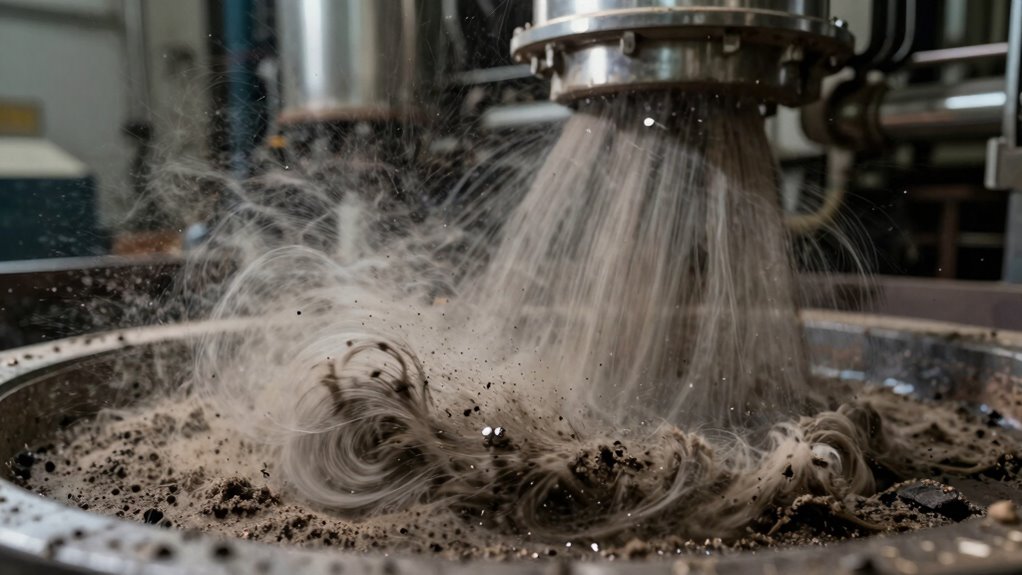
Have you ever wondered how tiny particles in the air affect indoor air quality and ventilation? It’s a fascinating yet complex process rooted in airflow dynamics and particle suspension. When air moves smoothly and evenly, it helps carry away pollutants and distribute fresh air throughout a space. But when airflow is disrupted or poorly mixed, these particles can become trapped, leading to worsening air quality.
Smooth, even airflow keeps indoor air clean by carrying away particles and pollutants effectively.
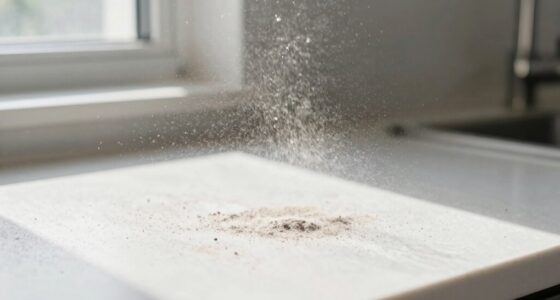
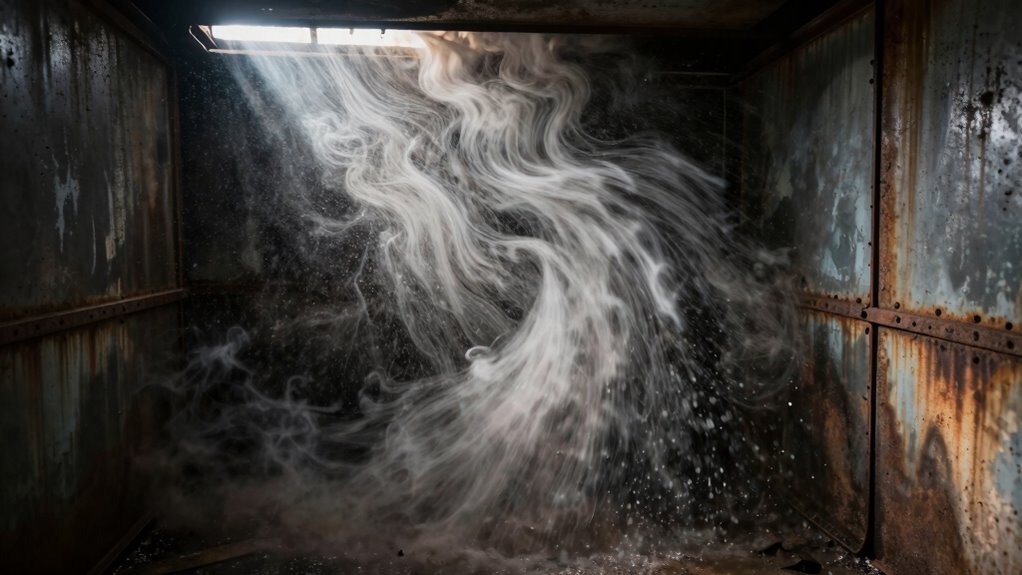
In poorly ventilated rooms, airflow dynamics often become unstable. Instead of circulating evenly, air can stagnate in certain areas, creating pockets where particles tend to accumulate. This stagnation makes it easier for airborne particles—dust, allergens, or even bacteria—to settle and remain suspended in the air longer. Particle suspension occurs when these tiny particles are kept afloat by air currents, but if airflow isn’t strong or consistent enough, particles are less likely to be carried away and more likely to settle onto surfaces or stay suspended in the air.
When airflow is weak or uneven, it reduces the exchange of indoor and outdoor air, allowing pollutants to build up. This is especially problematic in spaces where people spend extended periods, like homes or offices. Poor air mixing means that contaminated air isn’t effectively replaced by fresher air, which exacerbates the problem. As particles linger longer, they increase the risk of inhalation and can trigger health issues, especially for sensitive individuals. A well-designed ventilation system can help prevent these issues by improving airflow patterns.
Moreover, poor air mixing impacts how effectively ventilation systems work. If the air isn’t moving properly, HVAC filters and exhaust fans can’t do their jobs efficiently. Instead of removing contaminants, they may circulate them within the space. This creates a cycle where particles are continually suspended, settling, or redistributed, worsening indoor air quality over time. Additionally, airflow management plays a crucial role in maintaining consistent air quality levels. Improving airflow efficiency can significantly reduce the duration that particles remain airborne.
You might notice that in rooms with poor airflow, dust tends to settle on surfaces more quickly, and air feels stale. This isn’t just an inconvenience—it’s a sign that the ventilation isn’t functioning optimally. Enhancing airflow dynamics, by increasing air exchange rates or improving duct design, helps break up stagnant zones. When air moves more effectively, particles are less able to settle and are more likely to be carried outside or filtered out.
Additionally, understanding the importance of air circulation can help in designing better ventilation strategies. In essence, particle problems get worse with poor air mixing because the particles aren’t dispersed or removed efficiently. Instead, they tend to linger, settle, or become concentrated in certain spots. Improving airflow dynamics ensures better particle suspension management, leading to cleaner, healthier indoor environments. Proper ventilation and strategic air movement are key to keeping airborne particles in check and maintaining good indoor air quality.
As an affiliate, we earn on qualifying purchases.
Frequently Asked Questions
How Do Particle Sizes Influence Air Mixing Effectiveness?
Particle sizes considerably influence air mixing effectiveness because larger particles tend to settle quickly due to gravity, leading to particle settling issues. Smaller particles stay suspended longer, but if air mixing is poor, they can cause air stagnation, trapping contaminants. You’ll find that effective air mixing disperses particles evenly, reducing buildup and improving air quality. Understanding particle sizes helps you design better ventilation systems that prevent stagnation and optimize particle removal.
Can Specific Room Layouts Improve Air Circulation?
Did you know that proper ventilation design can increase airflow efficiency by up to 50%? You can improve air circulation by strategically arranging furniture to avoid obstructing vents and air pathways. Consider placing vents higher on walls or ceiling to promote better air movement. Efficiently designed room layouts foster consistent air mixing, which helps disperse particles evenly, reducing localized buildup and improving overall indoor air quality.
What Are Common Signs of Poor Air Mixing?
You’ll notice signs of poor air mixing through air stagnation, where the air feels heavy or stale, and uneven airflow, causing some areas to feel warmer or cooler than others. These issues often lead to pockets of contaminated air, increasing particle problems. If you detect lingering odors or inconsistent temperatures, it’s a clear sign that your space suffers from inadequate air circulation, requiring better ventilation solutions.
How Does Temperature Variation Affect Particle Dispersion?
Temperature variation impacts particle dispersion by creating thermal stratification, where layers of different temperatures form in the air. You’ll notice that warmer, less dense air tends to stay on top, while cooler, denser air sinks. This stratification hampers air mixing, causing particles to settle in certain areas. As air density varies with temperature, particles don’t disperse evenly, making it harder to control and remove airborne contaminants effectively.
Are There Technologies to Monitor Air Mixing Quality?
Think of sensor networks as vigilant sentinels guarding your air quality. They actively monitor air mixing quality using advanced sensors that detect particle concentrations and airflow patterns. These technologies help you identify poor air circulation early, preventing particle problems from spiraling out of control. By continuously tracking air quality, sensor networks empower you to take timely action, ensuring a healthier environment and reducing the risk of airborne particle buildup.
air circulation fan for indoor spaces
As an affiliate, we earn on qualifying purchases.
As an affiliate, we earn on qualifying purchases.
Conclusion
Think of poor air mixing as a tangled web, trapping particles like stubborn shadows that refuse to fade. When air doesn’t circulate well, these particles settle into corners, growing stronger and harder to remove—like darkness deepening in a room without light. To clear the haze, you need to stir the air, inviting fresh breezes that sweep away the stubborn shadows. Remember, good airflow is the key to turning the darkness into dawn, revealing clarity where chaos once dwelled.
As an affiliate, we earn on qualifying purchases.
As an affiliate, we earn on qualifying purchases.
Fall Picks
fall essentials
As an affiliate, we earn on qualifying purchases.