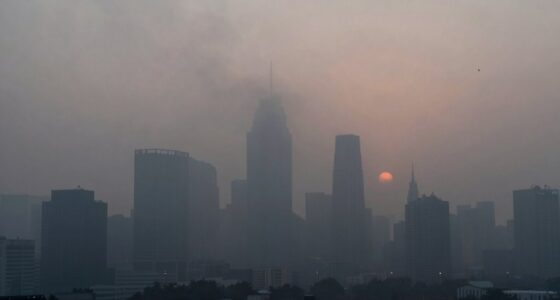
When wildfire smoke hits, act fast to protect your home. Start by evaluating your air quality and sealing windows and doors to block smoke. Create a makeshift air filtration system using HEPA filters or air purifiers. Cut down on indoor pollution from cooking or candles, and monitor your health for any symptoms like coughing or throat irritation. If you need help improving your indoor air environment, there’s more valuable information available to guide you.

Get health and wellness essentials delivered free — and shop member deals
- Fast, free delivery on millions of items
- Access to Prime Big Deal Days deals on October 6–7
- Prime Video, Amazon Music and more included
Key Takeaways
- Seal windows and doors tightly to prevent smoke infiltration; use weatherstripping or damp towels for gaps.
- Activate HVAC systems with high-efficiency filters to continuously circulate and clean the air.
- Utilize portable HEPA air purifiers or DIY filtration setups to enhance indoor air quality.
- Limit indoor activities that produce pollutants, such as cooking or burning candles, to reduce additional contamination.
- Monitor health symptoms and stay informed through official sources about air quality and wildfire conditions.
Assessing Air Quality Inside Your Home

When wildfire smoke drifts indoors, it’s essential to assess the air quality in your home quickly. Start by using air quality sensors to measure particulate levels and overall air quality. These sensors can provide real-time data, helping you understand how severe the smoke infiltration is. If you don’t have sensors, keep an eye out for visible smoke and smell the air; these are basic indicators for smoke detection. Close windows and doors to limit further exposure, but remember that you need accurate readings to take appropriate action. Additionally, it’s crucial to consider using air purifiers that are specifically designed to filter out smoke particles. Investing in smart gear can enhance your ability to monitor and respond effectively to changing air quality conditions. Furthermore, understanding the importance of user data protection can help you choose reliable air quality monitoring devices. Maintaining good indoor air quality is vital, especially during smoke events, as it can significantly impact your health and well-being. If the air quality is poor, consider using air purifiers or masks until you can fully ventilate your space. Staying informed will help you protect your health during wildfire events. Additionally, understanding air quality sensors can enhance your ability to monitor and respond effectively to smoke conditions in your home.
Sealing Windows and Doors

To effectively reduce smoke infiltration during a wildfire, you need to seal your windows and doors properly. Start by checking your window insulation; any gaps or cracks can let smoke in. Use weatherstripping or caulk to fill these openings, ensuring a tight seal. Next, focus on your doors. Installing door draft stoppers can considerably prevent smoke from seeping through the gaps beneath the doors. Make sure to close all windows and doors tightly, and keep them shut until the threat has passed. If you’ve got sliding glass doors, consider using a towel or similar item to block any gaps. Additionally, maintaining a family-friendly atmosphere can be beneficial during stressful times like wildfires, as it helps reduce anxiety and promotes calm. By taking these steps, you’ll create a more smoke-free environment inside your home during a wildfire. Importantly, ensuring your home is well-sealed can also help maintain energy efficiency, which is crucial during deep-sky imaging sessions when you may want to keep your equipment at a stable temperature. The effectiveness of your sealing efforts can greatly enhance your indoor air quality, which is vital for color accuracy in any home cinema setup you may have. Moreover, using sulfate-free options in your cleaning products can prevent harsh chemicals from degrading indoor air quality. Additionally, investing in home improvements can provide a competitive advantage in maintaining a safe and comfortable living space during emergencies.
Creating a Makeshift Air Filtration System

Even if you can’t afford a commercial air purifier, you can create a makeshift air filtration system using common household items. A DIY air purifier can help improve your indoor air quality during wildfire smoke events. Here’s a simple way to set one up:
| Item | Purpose | Notes |
|---|---|---|
| Box Fan | Circulates air | Use a clean, high-quality filter |
| 20×20 Air Filter | Filters out particles | Ensure it fits the fan |
| Household Plants | Natural air purifiers | Spider plants and peace lilies work well |
| Damp Cloth | Captures dust | Hang it near airflow |
It’s important to remember that compassionate caregiving can significantly enhance the well-being of seniors during challenging situations like wildfire smoke. Additionally, utilizing proven methods for improving indoor air quality can make a notable difference in your living environment. Implementing simple tips for better indoor air quality can create a healthier atmosphere for everyone in the home. Using effective filtration systems can also contribute to cleaner air and reduce the impact of smoke indoors. Moreover, incorporating multi-functional gear in your emergency preparedness plan can further enhance your ability to cope with unforeseen circumstances.
Reducing Indoor Pollution Sources

Setting up a makeshift air filtration system can help, but it’s equally important to tackle indoor pollution sources to enhance your air quality. Start by eliminating any unnecessary clutter that can trap dust and allergens. Use air purifiers with HEPA filters to capture airborne particles effectively. Don’t forget to check your ventilation strategies; keeping windows closed during wildfire smoke events is vital. Instead, rely on exhaust fans in kitchens and bathrooms to help circulate air without bringing in contaminants. If you’re using candles or incense, consider stopping, as they contribute to indoor pollution. Regularly cleaning your space and replacing HVAC filters to maintain ideal air quality is essential for promoting mental well-being. Additionally, protective styling options like crochet can help keep your hair healthy and reduce the amount of hair-related debris that may contribute to indoor dust. Additionally, using electric power generation systems, such as bike generators, can provide a clean energy source to power your air purifiers. Engaging in creative projects can also foster a digital-friendly environment that encourages family collaboration. These steps will considerably reduce indoor pollutants and improve your overall environment. Additionally, utilizing energy-efficient cloud solutions can help minimize the environmental impact of your indoor air quality management practices.
Monitoring Health Symptoms and Staying Informed

As wildfire smoke permeates your indoor environment, it’s essential to monitor any health symptoms that may arise. Keep a close eye on common symptoms like coughing, throat irritation, or difficulty breathing. Use health symptom tracking to document when they occur, helping you identify patterns and severity. If you notice worsening symptoms, don’t hesitate to seek medical advice. Additionally, utilizing advanced filtration systems can significantly improve the air quality in your home during these events. Research has shown that prolonged exposure to narcissistic behaviors can affect one’s mental health, underscoring the importance of addressing emotional well-being alongside physical health during stressful situations.
Stay informed by following public warning alerts issued by local authorities. These alerts provide critical updates about air quality and safety recommendations. You can also utilize apps and websites dedicated to tracking air quality in real-time. By staying vigilant about your health and informed on conditions, you can better protect yourself and your family during wildfire events. Additionally, consider implementing eco-friendly practices in your home to reduce indoor air pollution and enhance overall air quality.
Frequently Asked Questions
How Can I Tell if My Air Purifier Is Effective?
To tell if your air purifier’s effective, check the air quality indicators, if available. You should notice a decrease in dust and allergens in your space. Regular air purifier maintenance is vital; replace filters according to their lifespan to guarantee ideal performance. If you observe a lingering odor or increased particles, it might indicate that your purifier isn’t working effectively. Keep an eye on these signs to maintain clean air indoors.
What Types of Masks Are Best for Indoor Smoke Protection?
When it comes to smoke protection, you want to put your best foot forward. N95 masks are your top choice, as they filter out at least 95% of airborne particles, including smoke. They provide a snug fit, ensuring minimal leakage. Cloth masks, on the other hand, just won’t cut it for smoke protection, as they don’t offer the same level of filtration. So, grab an N95 and breathe easier indoors!
Can Plants Help Improve Indoor Air Quality During Wildfires?
Yes, indoor plants can help improve air quality during wildfires, but their effectiveness varies. While they do provide some air purification by absorbing toxins and releasing oxygen, they can’t fully counteract heavy smoke. Plants like peace lilies and snake plants are good choices, but it’s essential to combine them with other methods, like air purifiers and sealing windows, to create a healthier indoor environment. Don’t rely solely on plants for protection during severe smoke conditions.
How Often Should I Check Air Quality During Smoke Events?
During smoke events, you should check air quality every hour, like a watchful guardian protecting your home. Regular air quality monitoring keeps you informed and safe, ensuring you breathe easier. Don’t forget to maintain your smoke detectors, as they’re your first line of defense against danger. Trust your senses; if the air feels heavy and oppressive, it’s time to take action. Stay vigilant, and don’t let smoke invade your sanctuary.
What Are the Long-Term Effects of Indoor Smoke Exposure?
Indoor smoke exposure can lead to serious long-term effects, like lung damage and chronic respiratory issues. You might experience decreased lung function, making it harder to breathe over time. Prolonged exposure can also increase your risk of developing asthma or worsen existing conditions. It’s essential to keep your indoor air clean and monitor your environment, especially during smoke events, to minimize these risks and protect your respiratory health.
Conclusion
As you navigate the haze of wildfire smoke indoors, remember that your home can be a sanctuary amidst the chaos. By evaluating air quality, sealing off entry points, and creating a makeshift air filtration system, you’re weaving a protective cocoon for yourself and your loved ones. Don’t forget to monitor health symptoms and stay informed, as knowledge is your guiding light. With these steps, you can breathe easier and transform your space into a fortress against the smoke.
Fall Picks
fall essentials
As an affiliate, we earn on qualifying purchases.