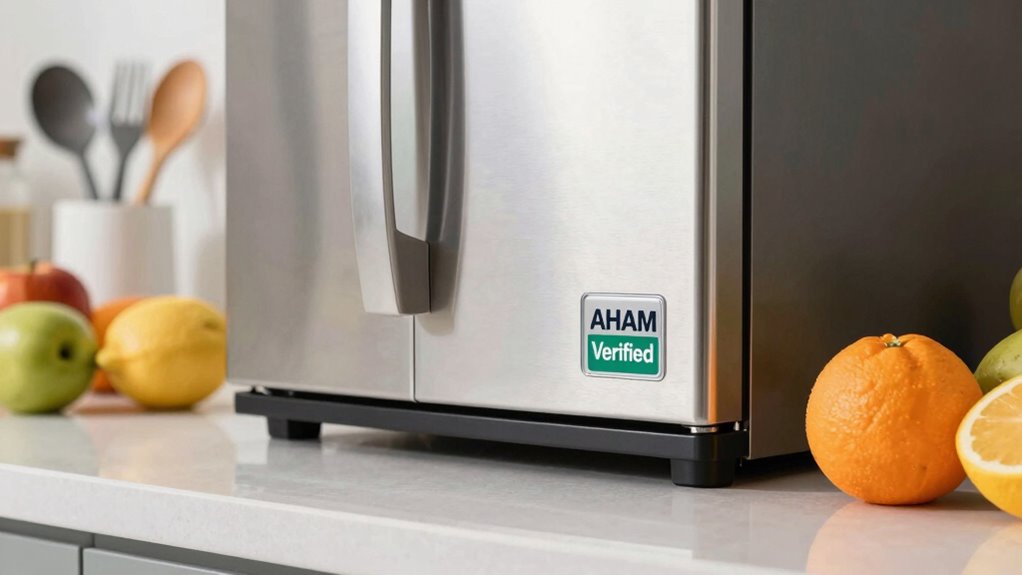

“AHAM Verified” means a product has been independently tested to confirm that it performs as claimed by the manufacturer. This testing is done in AHAM’s labs, using strict standards to ensure the product works reliably and efficiently. It helps you trust that the product will meet your expectations, reducing the risk of false claims. If you’re curious about how this verification truly guarantees quality, there’s more to discover below.
Key Takeaways
- “AHAM Verified” means the product has been tested independently to confirm it performs as advertised.
- It shows the appliance meets specific safety and performance standards set by AHAM.
- The label indicates the product’s claims are proven through rigorous, unbiased laboratory testing.
- It helps consumers trust that the product will work reliably and efficiently over time.
- Being “AHAM Verified” doesn’t guarantee the lowest price or most features, only verified performance.
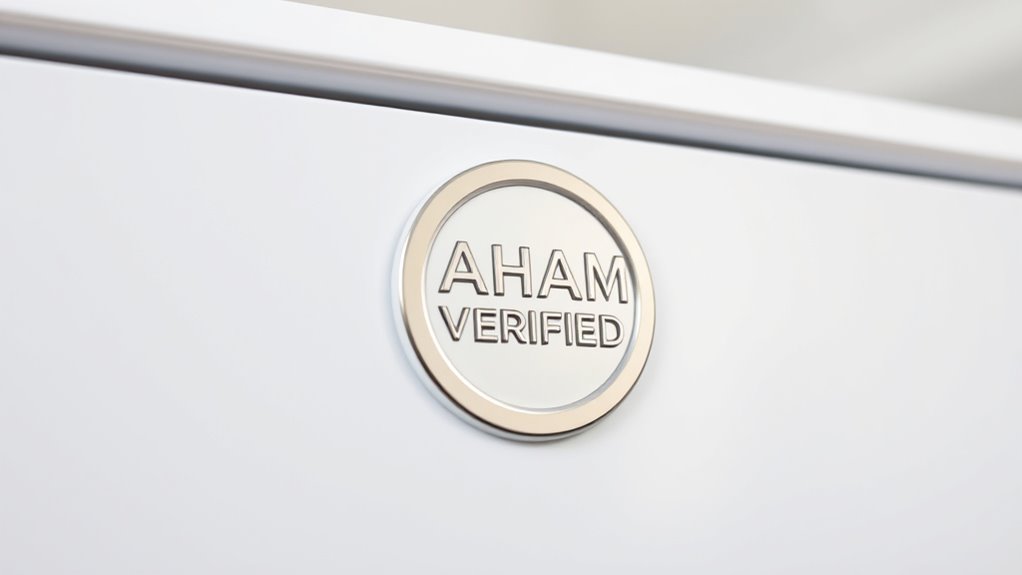
Have you ever wondered what “AHAM Verified” really means and why it matters? If you’re shopping for appliances like dehumidifiers, air purifiers, or fans, you’ve probably seen this label on product packaging or online listings. Understanding what it signifies can help you make better decisions and avoid misleading claims. When a product is “AHAM Verified,” it means it has undergone a specific testing process conducted by the Association of Home Appliance Manufacturers (AHAM). This organization is a trade association that sets standards for various household appliances, ensuring they perform as advertised and meet safety criteria. The verification process involves rigorous testing in AHAM’s laboratories, where the product’s performance is measured against the manufacturer’s claims.
For example, if a dehumidifier claims to remove a certain amount of moisture from the air per day, AHAM testing will confirm whether it actually meets that claim under standardized conditions. The verification process is transparent and independent, which means the results are unbiased and trustworthy. Once a product passes these tests, it receives the “AHAM Verified” label, signaling to consumers that it has been independently tested and verified for performance. This label can give you peace of mind because it reduces the risk of falling for exaggerated or false claims made by manufacturers. It’s particularly useful when comparing similar products, as the verification provides an objective benchmark of how well each performs in real-world conditions.
Knowing about the “AHAM Verified” label can also save you money in the long run. Products that are verified are more likely to perform reliably and efficiently, which can lower your energy bills and reduce the need for repairs or replacements. It also helps you avoid wasting money on products that don’t live up to their promises. Keep in mind that the verification process doesn’t necessarily mean the product is the cheapest or most feature-rich option; it simply confirms that the product performs as claimed based on standardized testing. So, when you see the “AHAM Verified” mark, you can feel confident that the product has been tested objectively and meets performance standards.
Additionally, understanding how juice extraction techniques relate to product testing can give you a broader perspective on product performance and quality.
Frequently Asked Questions
How Long Does the AHAM Verification Process Typically Take?
The AHAM verification process typically takes about 4 to 6 weeks. During this time, your product undergoes rigorous testing to guarantee it meets AHAM standards for safety, performance, and energy efficiency. You should prepare to provide necessary documentation and cooperate with testing procedures. Once approved, you’ll receive the AHAM Verified label, confirming your product’s compliance. Keep in mind that timelines can vary depending on the product and testing facility.
Can a Product Lose AHAM Verification After Certification?
Yes, a product can lose AHAM verification if it no longer meets the required standards. For example, if a refrigerator’s energy efficiency drops due to a defect or modification, it may lose its verified status. You should regularly check for updates or re-evaluate your products to guarantee they maintain compliance. Failing to do so could result in losing AHAM verification, affecting your product’s credibility and sales.
Is AHAM Verification Required by Law for Household Appliances?
No, AHAM verification isn’t required by law for household appliances. You can legally sell and use appliances without AHAM certification. However, many consumers look for the “AHAM Verified” label because it shows the product meets specific safety and performance standards. While it’s voluntary, choosing AHAM-verified appliances can give you added confidence in their quality and reliability, making it a smart choice for your household.
How Often Are Aham-Verified Products Re-Evaluated?
You’ll find AHAM-verified products are re-evaluated every couple of years, like a car getting a routine check-up. This process guarantees appliances meet current standards for safety and efficiency. Think of it as a regular tune-up for your appliance’s performance. Manufacturers submit their products for review, and AHAM updates verification if they continue to meet the criteria, keeping your appliances reliable and safe over time.
Does AHAM Verification Guarantee Product Safety or Durability?
No, AHAM verification doesn’t guarantee your product’s safety or durability. It shows the product meets specific standards set by AHAM for performance and energy efficiency. However, it doesn’t imply the product is completely safe or will last forever. You should still follow safety guidelines and consider reviews or warranties when choosing appliances. Think of AHAM verification as a helpful indicator but not a guarantee of overall safety or durability.
Conclusion
Knowing what “AHAM Verified” truly means helps you make smarter choices, like uncovering a secret behind a trusted seal. It’s more than just a badge—it’s a promise of quality and safety. When you see it, think of it as a lighthouse guiding you through the fog of marketing hype, illuminating the path to reliable appliances. Stay vigilant, and let this knowledge be your compass in steering the often murky waters of consumer claims.