
TL;DR

Get health and wellness essentials delivered free with Prime
- Fast, free delivery on millions of items
- Prime Video, Amazon Music and more included
- Member-only deals all year
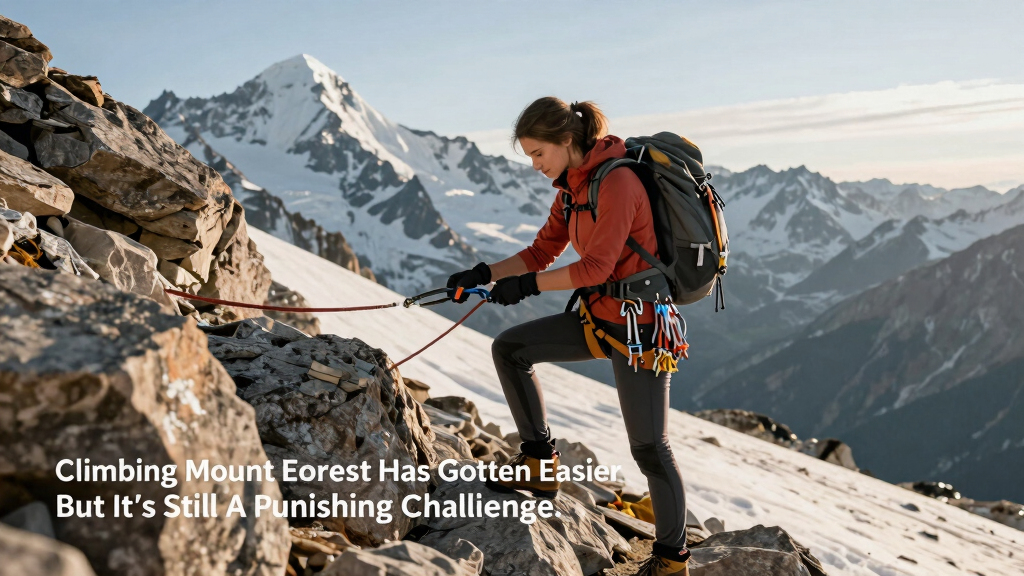
While modern technology and commercial routes have made Everest more accessible, the mountain still presents severe physical and environmental challenges. Experts confirm that climbing remains extremely difficult and dangerous, especially above 26,000 feet.
Despite the perception that climbing Mount Everest has become easier due to technological advancements and commercial expeditions, experts confirm that it remains an extremely demanding and dangerous endeavor, especially above 26,000 feet where the human body deteriorates rapidly.
Veteran climbers and guides emphasize that, although equipment and guided support have improved, the mountain’s extreme altitude and harsh conditions continue to pose severe risks. Mark Synnott, a professional climber, described his 2019 Everest ascent as among the hardest climbs of his life, citing the intense physical toll despite oxygen support. Experts like Arnold Coster note that the longer climbers stay above 20,000 feet, the more their bodies suffer, with organ functions and sleep severely impaired. Even with supplemental oxygen, the ‘Death Zone’ remains a zone of rapid bodily deterioration, making Everest a formidable challenge that demands grit and resilience.
Why It Matters
This development matters because it challenges the popular notion that Everest is now an ‘easy’ mountain accessible to many. While commercial routes have lowered technical barriers, the mountain’s environmental and physiological challenges remain deadly. Understanding these realities is crucial for climbers, guides, and authorities to manage risks and set realistic expectations for future expeditions.
high altitude climbing oxygen system
As an affiliate, we earn on qualifying purchases.
As an affiliate, we earn on qualifying purchases.
Background
Over the past decade, Everest has seen a surge in commercial expeditions, with many climbers reaching the summit with guided support and supplemental oxygen. However, experts warn that the mountain’s altitude and extreme conditions continue to make it one of the most punishing climbs. Historical tragedies and recent reports of fatalities underscore that, despite technological progress, Everest’s inherent dangers persist. Veteran guides like Coster and climbers like Synnott have repeatedly emphasized that the physical toll and environmental hazards have not diminished, only the technical difficulty has somewhat eased.
“People told me that when you’re on oxygen, Everest only feels like you’re at 20,000 feet. I’ve been at 20,000 feet, and it didn’t feel anything like that. It felt at least ten times harder.”
— Mark Synnott
“Even with all the help people get, climbing Everest is still really hard. The longer you stay above 20,000 feet, the worse it gets.”
— Arnold Coster
As an affiliate, we earn on qualifying purchases.
What Remains Unclear
It is still unclear how much technological advances, such as improved oxygen systems or weather forecasting, will reduce the mountain’s inherent risks in the future. The impact of climate change on Everest’s conditions and route safety is also an ongoing concern.
Everest climbing safety equipment
As an affiliate, we earn on qualifying purchases.
As an affiliate, we earn on qualifying purchases.
What’s Next
Next, experts and authorities will likely focus on refining safety protocols, managing increasing commercial traffic, and monitoring environmental changes. Future expeditions may incorporate new technologies, but the fundamental physical and environmental challenges are expected to persist.
As an affiliate, we earn on qualifying purchases.
Key Questions
Has climbing Everest become easier due to technology?
While equipment and guided support have improved, making some aspects easier, the mountain’s extreme altitude and environmental hazards continue to make climbing very difficult and dangerous.
What are the main risks still associated with Everest climbs?
Risks include severe physical deterioration in the ‘Death Zone,’ altitude sickness, avalanches, weather changes, and exhaustion, which can be fatal even with modern support.
Does the increased number of climbers make Everest safer?
Not necessarily. While more support and better communication are available, the higher traffic increases risks of accidents, overcrowding, and environmental degradation, which can complicate rescue efforts.
Will climate change make Everest more dangerous?
Potentially. Melting glaciers and changing weather patterns can destabilize routes and increase the likelihood of avalanches and other hazards, but specific impacts are still being studied.
Columbus Day / Indigenous Peoples' Day Picks
long weekend sales
As an affiliate, we earn on qualifying purchases.