When you undergo radon mitigation, a specialist first inspects your home to identify entry points and the best system setup. They then install a vent pipe system that runs from beneath your house to above the roof, actively venting radon outdoors with a fan. Sealing cracks and monitoring the system afterward helps keep radon levels low. To guarantee ongoing safety, regular checks and maintenance are essential. Keep exploring to discover detailed steps and tips.
Key Takeaways
- Initial assessment identifies radon entry points and the best location for the vent pipe system.
- Installation involves installing a vent pipe system with a fan, usually through minimal drilling or openings.
- The fan actively pulls radon from beneath the house and vents it safely outdoors, sealing entry points for efficiency.
- Post-installation testing ensures the system effectively reduces indoor radon levels and is functioning properly.
- Regular maintenance and testing are essential for continued radon reduction and system performance over time.
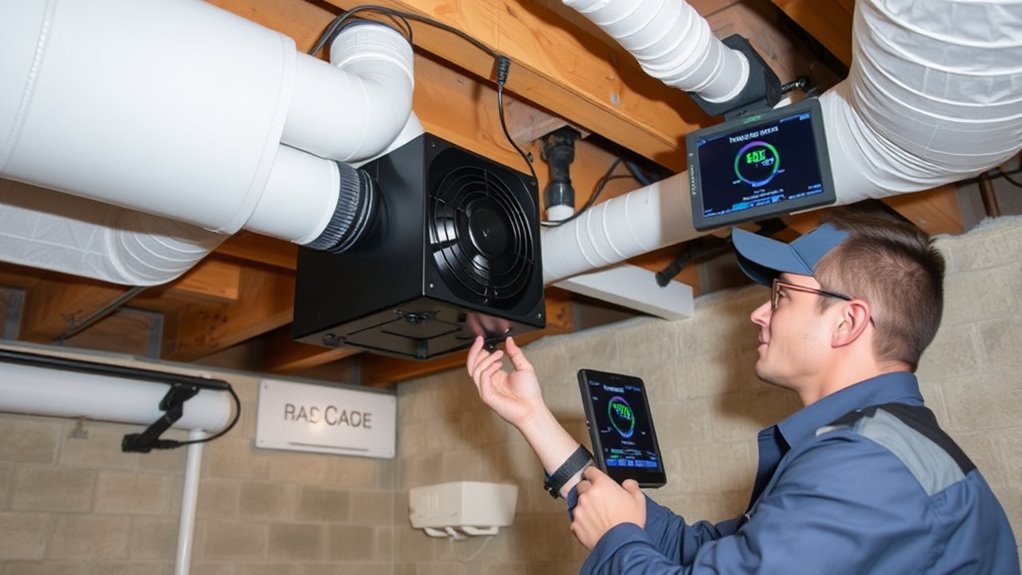
Radon mitigation is essential for reducing indoor radon levels and protecting your health. If you’ve tested your home and found elevated radon levels, you might be wondering what the mitigation process involves and what to expect. The goal is to lower radon concentrations so they’re safe, and that requires installing a system that prevents radon from accumulating indoors. This process typically begins with a thorough assessment of your home’s structure. A professional radon mitigator will inspect your foundation, basement, or crawl space to identify entry points for radon and determine the best way to install a mitigation system. They look for cracks, gaps, or other openings through which radon can seep into your living space.
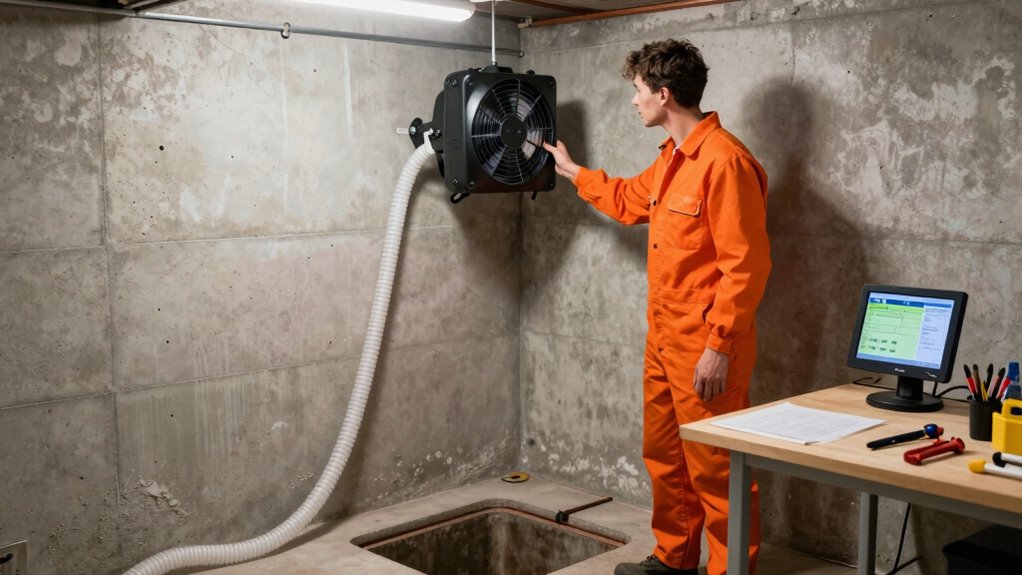
Once the inspection is complete, the mitigation process usually involves installing a vent pipe system, often called a sub-slab depressurization system. This system works by creating a pathway for radon to safely escape outside before it can enter your home. The pipe runs from beneath your foundation or slab to above the roofline, where a fan actively pulls radon from beneath the house and vents it outdoors. During installation, you might hear drilling or see workers making holes in your foundation, but it’s a quick process that aims to be minimally disruptive. The fan and pipe are carefully sealed and secured, ensuring they operate efficiently and don’t compromise your home’s insulation or structure.
Additionally, proper filter maintenance is crucial to keep the system functioning optimally, as neglecting it can reduce its effectiveness. After installation, the technician will test the system to confirm it’s working properly. You might notice a slight increase in noise from the fan, but it’s usually quiet enough not to disturb your daily activities. The technician will also provide instructions on how to maintain the system, such as replacing the fan if needed or checking for any visible damage. Keep in mind that radon mitigation isn’t a one-time fix; it requires ongoing monitoring to ensure your home remains safe. You should conduct regular radon tests, especially after significant weather events or changes in your home’s structure, to verify the system’s effectiveness.
Frequently Asked Questions
How Long Does a Radon Mitigation System Typically Last?
A radon mitigation system typically lasts 10 to 25 years, depending on the quality of materials and installation. You should regularly inspect the system for signs of wear or damage, like a falling or damaged fan or discolored soil pipes. Proper maintenance, such as replacing filters and sealing cracks around the system, can prolong its lifespan. Scheduling professional inspections every few years helps ensure it remains effective and safe.
Can My Existing HVAC System Help Reduce Radon Levels?
Think of your HVAC system as a vigilant guardian, but it alone can’t fight radon effectively. While it circulates air, radon is a gas that seeps from the ground, slipping through cracks. Your HVAC might improve air quality slightly, but you’ll still need a specialized radon mitigation system for real protection. Rely on targeted solutions to keep your home safe, rather than just the daily patrol of your existing system.
Are There Any Health Risks During the Mitigation Installation?
During mitigation installation, you might experience some dust, noise, or minor disturbances, but health risks are minimal if professionals follow safety protocols. You’ll want to stay out of the work area and ensure proper ventilation. The technicians wear protective gear, so exposure is restricted. If you’re concerned about fumes or particles, ask the team about safety measures. Overall, the process is safe, and health risks are very low when handled by experienced experts.
What Are the Signs That My Radon Levels Have Decreased?
Signs your radon levels have decreased include noticeably fresher, cleaner air and fewer concerning radon readings on your test kit. You might also notice a sense of relief, reduced worries about health hazards, and a more comfortable, consistent climate in your home. Regular testing confirms these improvements, providing peace of mind. Keep monitoring periodically to guarantee your mitigation efforts maintain a safe, healthy, and happy home environment.
How Often Should I Test for Radon After Mitigation?
You should test your radon levels at least once every 2 to 5 years after mitigation. Regular testing helps guarantee your mitigation system remains effective and your home stays safe. Keep in mind that environmental factors or changes in your home’s structure can affect radon levels, so periodic testing is vital. If your radon levels rise, consider re-evaluating or adjusting your mitigation system promptly.
Conclusion
So, after all that, you might think radon mitigation is a breeze. But don’t be fooled—it’s not a magic fix, and it won’t eliminate every trace of radon overnight. Ironically, the very effort to protect your home can feel like a never-ending project. Still, it’s worth it to breathe easier, even if it means constantly monitoring and maintaining. Because in the end, a safe home is priceless—even if it takes a little work to keep it that way.