During wildfire smoke events, managing your home’s air exchange is key to maintaining good indoor air quality. Instead of opening windows or relying on standard ventilation, focus on sealing leaks, using HEPA filters in your HVAC system, and running standalone air purifiers. Avoid bringing in outdoor air during high pollution times, and check your local AQI to time ventilations carefully. Want to learn more about smarter ways to protect your indoor air? Keep exploring for practical tips.
Key Takeaways
- Avoid opening windows or vents during smoke events to prevent outdoor pollutants from entering indoors.
- Use HVAC systems with HEPA filters set to recirculation mode to improve indoor air quality.
- Seal leaks around doors and windows to prevent unfiltered outdoor air from entering the home.
- Monitor local AQI to determine safe times for ventilation, such as early mornings or after rain.
- Deploy standalone air purifiers and adjust ventilation plans proactively to maintain cleaner indoor air during smoke episodes.
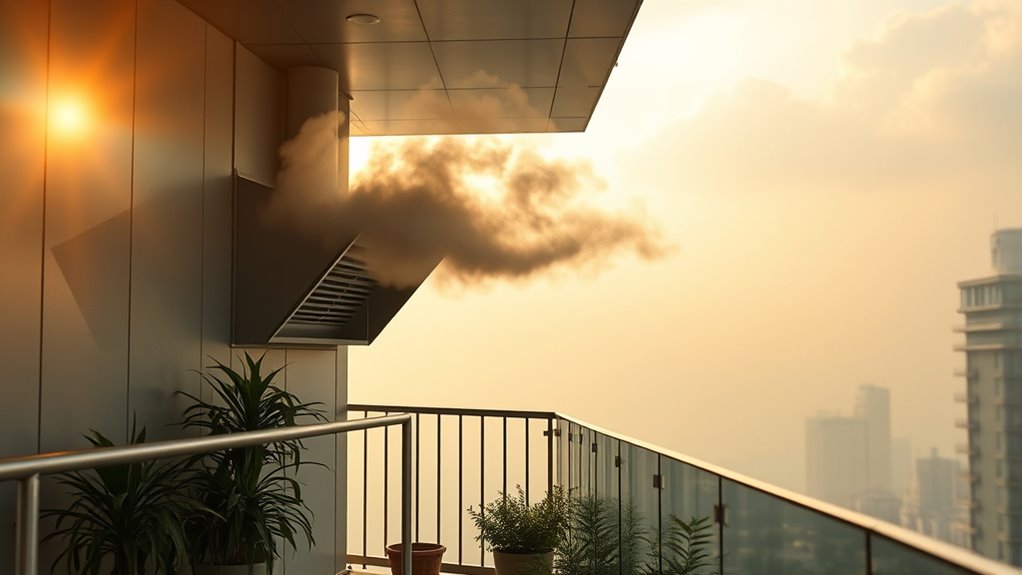
Have you ever wondered how well your home’s air exchange systems work during smoke events? When wildfire smoke clouds the air outside, your indoor air quality becomes a critical concern. Many people assume their HVAC or ventilation systems automatically handle such situations, but that’s not always the case. Understanding how your air exchange system operates during smoke events can help you make smarter decisions to protect your health and comfort.
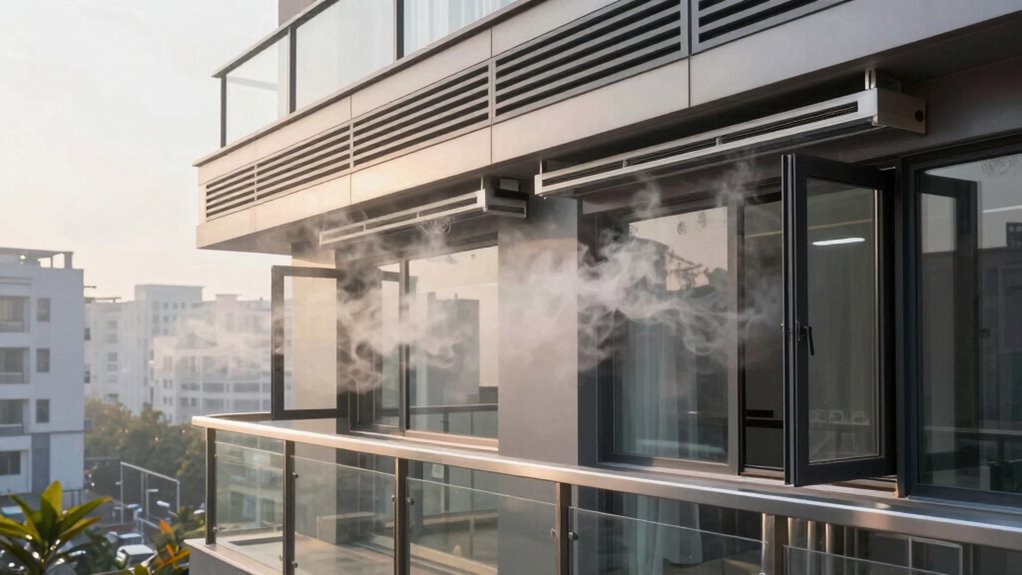
First, it’s crucial to recognize that standard ventilation methods may inadvertently bring smoky air inside if not properly managed. Many homes rely on natural ventilation—opening windows or vents—to improve airflow. During smoke events, this practice can backfire, allowing harmful particles to enter your living space. Even mechanical systems, like exhaust fans or central air conditioning, can draw in outdoor air if not configured correctly. Consequently, simply relying on usual ventilation habits isn’t enough.
Standard ventilation methods can unintentionally bring wildfire smoke indoors if not properly managed.
To ensure your indoor air stays clean, you should consider upgrading or adjusting your ventilation approach. Installing high-efficiency particulate air (HEPA) filters in your HVAC system can markedly reduce indoor pollutants. These filters trap tiny particles from wildfire smoke, providing cleaner air without sacrificing airflow. When outdoor air quality drops, it’s wise to switch your system to a recirculation mode that doesn’t bring in outside air. Many modern systems have settings or controls that allow you to prioritize indoor air filtration over fresh air intake.
Another smart move is to use standalone air purifiers equipped with HEPA filters. Placing them in common areas can further improve indoor air quality during smoke episodes. Ensure they are appropriately sized for your spaces and run them continuously during smoky conditions. Additionally, sealing leaks around doors and windows can prevent unfiltered outdoor air from sneaking inside. Simple measures like closing gaps and using weather stripping help maintain a controlled indoor environment.
Monitoring outdoor air quality is also crucial. Keep an eye on local air quality indexes (AQI) through weather apps or government websites. When AQI indicates unhealthy levels, it’s best to minimize ventilation altogether. If you need to ventilate, do so during times when outdoor pollution levels temporarily decrease, such as early mornings or after rain. Using your home’s ventilation systems wisely, based on real-time data, ensures you don’t inadvertently worsen indoor air quality.
Being aware of your home’s air exchange system’s capabilities and limitations can help you better manage indoor air quality during smoke events. Ultimately, a smarter approach to air exchange during smoke events involves proactive planning and system adjustments. It’s about knowing when and how to optimize your ventilation to keep pollutants out, rather than simply letting outdoor air flow freely. By understanding your home’s systems and taking steps to enhance filtration and control, you can better safeguard your indoor environment and breathe easier even when wildfire smoke threatens your area.

LEVOIT Air Purifier for Home Allergies and Pets Hair Smokers in Bedroom, H13 True HEPA Filter, 24db Filtration System Cleaner Odor Eliminators, Remove 99.97% Dust Smoke Mold Pollen, Core 300, White
- AHAM Verified for Performance: Independently tested for air quality and efficiency
- Powerful Filtration System: 56W motor with 143 CFM CADR
- Effective for Large Rooms: Cleans 222 sq ft 4.8 times/hour
As an affiliate, we earn on qualifying purchases.
As an affiliate, we earn on qualifying purchases.
Frequently Asked Questions
How Do Indoor Air Quality Levels Change During Smoke Events?
During smoke events, your indoor air quality worsens as pollutants from outside seep in, increasing particle levels and reducing air freshness. Without proper ventilation, smoke particles can accumulate, making the air unhealthy to breathe. You might notice a smoky smell, eye irritation, or respiratory discomfort. To improve indoor air quality, you should seal windows and doors, use air purifiers with HEPA filters, and limit ventilation from outdoor sources during such events.
Are There Specific Air Exchange Rates Recommended During Wildfire Smoke?
Yes, during wildfire smoke, it’s recommended you keep your indoor air exchange rate at about 0.3 to 0.5 air changes per hour, or use a HEPA filter to reduce pollutants. You should also limit outdoor air intake, especially when air quality is poor. Keep windows and vents closed, and run your air purifier continuously if possible. This helps minimize smoke infiltration and protects your indoor air quality.
How Effective Are Portable Air Purifiers in Smoke Events?
Portable air purifiers can be quite effective during smoke events if you choose the right one. They help clear out harmful particles and improve indoor air quality, but only if they have a HEPA filter and are properly maintained. Keep in mind, they’re not a silver bullet—ventilation still matters. Use them as part of your overall strategy, and you’ll be better equipped to breathe easier when smoke fills the air.
What Role Do HVAC Systems Play in Managing Indoor Smoke?
Your HVAC system plays a vital role in managing indoor smoke by filtering and circulating air effectively. By upgrading filters to high-efficiency HEPA or MERV-rated ones, you can trap more smoke particles. Running your system on a recirculate setting minimizes outside air entry, reducing indoor smoke levels. Regular maintenance guarantees peak performance, helping you breathe cleaner air during smoke events.
Can Outdoor Air Exchange Worsen Indoor Air Quality During Smoke Episodes?
You might think opening windows helps, but during smoke episodes, outdoor air exchange can actually worsen indoor air quality. Instead of clearing the air, it lets in harmful particles and pollutants. Ironically, your effort to refresh your space could be exposing you to more danger. To stay safe, it’s better to keep windows closed and rely on HVAC systems with proper filters, reducing smoke infiltration and protecting your health.
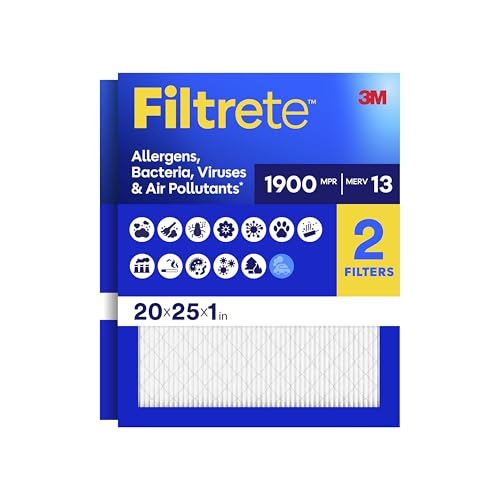
Filtrete 20x25x1 Air Filter, MERV 13, MPR 1900, 2 HVAC Filters
- Package Quantity: 2 filters included
- Filter Size: 20x25x1 inches
- Filter Type: Pleated air filter
As an affiliate, we earn on qualifying purchases.
As an affiliate, we earn on qualifying purchases.
Conclusion
Don’t assume opening windows always worsens indoor air quality during smoke events. By understanding when to increase ventilation and when to seal up your home, you can protect yourself and your family. Using smart air exchange strategies, like HEPA filters and controlled ventilation, makes a real difference. So, instead of panicking, stay informed and act wisely—your health depends on it. With the right approach, you can breathe easier even during smoky days.

Leak Saver Direct Inject AC Leak Sealer | AC Stop Leak for Most HVAC Systems Up to 5 Tons | Works with All Systems & AC Refrigerants | Made in the USA
- Permanent Leak Sealing: Seals small refrigerant leaks permanently within 7 days
- Universal Compatibility: Works with all HVAC systems and refrigerants except ammonia
- Easy Installation: Injects directly using manifold gauge or injection kits
As an affiliate, we earn on qualifying purchases.
As an affiliate, we earn on qualifying purchases.
LEVOIT Air Purifier for Home Allergies and Pets Hair Smokers in Bedroom, H13 True HEPA Filter, 24db Filtration System Cleaner Odor Eliminators, Remove 99.97% Dust Smoke Mold Pollen, Core 300, White
- AHAM Verified for Performance: Independently tested for air quality and efficiency
- Powerful Filtration System: 56W motor with 143 CFM CADR
- Effective for Large Rooms: Cleans 222 sq ft 4.8 times/hour
As an affiliate, we earn on qualifying purchases.
As an affiliate, we earn on qualifying purchases.