
In basements and apartments, understanding CO2 levels isn’t just about the numbers. Biological factors like indoor plants can influence air quality, while mechanical systems, such as ventilation, heavily impact exchange rates. Poor ventilation or recent airing out also change readings. Recognizing these factors helps you determine if air quality is safe or needs improvement. Keep exploring to discover how these variables work together to shape your indoor environment.
Key Takeaways
- CO2 levels are influenced by ventilation, biological activity, and external factors, requiring context for accurate interpretation.
- Indoor plants can lower CO2 during the day but may emit CO2 at night, affecting readings.
- Ventilation system status and habits significantly impact CO2 concentrations in confined spaces.
- Sole CO2 readings can be misleading without considering recent airing or biological influences.
- Combining CO2 data with knowledge of space-specific factors ensures a proper assessment of air quality.
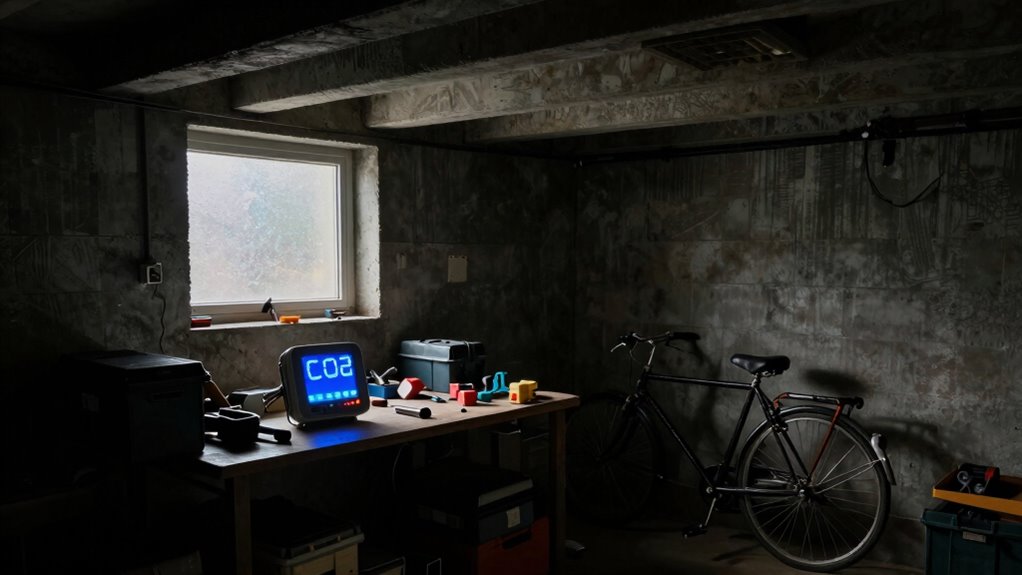
If you’ve ever wondered about the air quality in your basement or apartment, understanding CO2 readings is fundamental. CO2 levels tell you a lot about how well your space is ventilated and whether fresh air is circulating properly. But to truly interpret these readings accurately, you need to consider the context, including factors like indoor plant impact and ventilation system effects. Without this, you might misjudge the safety or comfort of your living environment.
Indoor plants can influence CO2 levels in unexpected ways. While they do absorb CO2 during photosynthesis, they also release moisture and sometimes even CO2 during the night when photosynthesis halts. If your apartment or basement has a large number of indoor plants, the readings might reflect this balance of absorption and emission. This means a high CO2 reading might not necessarily indicate poor ventilation but could be influenced by the plants’ natural cycle. Conversely, a low CO2 level in a space filled with many plants could suggest excellent air exchange, or it might be due to other factors like recent airing out of the room. So, understanding the indoor plant impact helps you interpret whether the CO2 levels are truly due to ventilation efficiency or other biological factors.
Indoor plants can both absorb and emit CO2, affecting readings beyond just ventilation quality.
Ventilation system effects are equally essential. If your space relies on a mechanical ventilation system, its condition and settings greatly influence CO2 readings. A well-maintained system that continuously exchanges indoor air with fresh outside air will keep CO2 levels low. However, if the system is malfunctioning or turned off, CO2 can accumulate rapidly. In apartments or basements with natural ventilation, factors like window opening habits and external air quality become relevant. For example, during cold weather, you might keep windows closed, leading to higher CO2 levels, while opening windows increases ventilation and reduces CO2. Understanding how your ventilation system works and its current status helps you determine whether elevated CO2 levels are due to inadequate air exchange or other causes. Additionally, factors such as air exchange rate play a crucial role in maintaining healthy indoor CO2 levels.
In short, to accurately assess your indoor air quality via CO2 readings, you must consider the broader context. Indoor plant impact can subtly alter CO2 levels, and the effects of your ventilation system—whether mechanical or natural—directly influence how quickly fresh air replaces stale air. Recognizing these factors ensures you don’t jump to conclusions based solely on the numbers. It is also important to understand that air quality monitoring can provide more comprehensive insights when combined with knowledge about your space’s specific conditions. Developing this awareness helps you determine whether your ventilation is adequate or if adjustments are needed to maintain a safe, comfortable living environment in your basement or apartment.
![Aranet4 Home: Wireless Indoor Air Quality Monitor for Home, Office or School [CO2, Temperature, Humidity and More] Portable, Battery Powered, E-Ink Screen, App for Configuration & Data History](https://m.media-amazon.com/images/I/41ioNdi11xL._SL500_.jpg)
Aranet4 Home: Wireless Indoor Air Quality Monitor for Home, Office or School [CO2, Temperature, Humidity and More] Portable, Battery Powered, E-Ink Screen, App for Configuration & Data History
- Real-Time Air Quality Monitoring: Measures CO2, temperature, humidity, pressure
- Long Battery Life: Up to 4 years with e-ink display
- Wireless and Portable: Battery-powered, no cables needed
As an affiliate, we earn on qualifying purchases.
As an affiliate, we earn on qualifying purchases.
Frequently Asked Questions
How Often Should CO2 Levels Be Monitored in Basements and Apartments?
You should monitor air quality and CO2 levels in basements and apartments at least once a day, especially if you spend a lot of time there or have poor ventilation. If levels tend to rise or you notice stuffy air, increase the monitoring frequency to multiple times daily. Regular checks help you stay aware of indoor air quality, ensuring a healthier environment and timely action if CO2 levels become unsafe.
What Are the Health Risks of High CO2 Concentrations Indoors?
Think of indoor pollution like a silent thief stealing your well-being. High CO2 concentrations can cause headaches, dizziness, and fatigue, impairing your focus and overall health. Without proper air exchange, CO2 builds up, making indoor air unsafe. If you ignore these risks, long-term exposure may lead to more serious health issues. Keep your environment safe by monitoring CO2 levels regularly and ensuring good ventilation.
Can CO2 Levels Indicate Other Indoor Air Quality Issues?
Yes, CO2 levels can indicate other indoor air quality issues. High CO2 might signal poor air circulation, which can lead to stuffiness or mold growth. Your indoor plants can impact these readings by absorbing CO2 and releasing oxygen, but if air circulation patterns are stagnant, CO2 can accumulate. Monitoring CO2 helps you identify areas needing better ventilation, improving overall air quality and making your space healthier.
What Devices Are Best for Measuring CO2 Accurately in Small Spaces?
Did you know that small spaces can see CO2 levels rise up to 1,000 ppm quickly? For accurate readings, choose devices with reliable sensor calibration and easy-to-understand displays. Place the sensor at breathing zone height, away from vents or windows, for the best results. Compact models like the Aranet4 or the Netatmo Soul are excellent choices, offering precision and user-friendly features perfect for small spaces.
How Can Ventilation Improvements Reduce CO2 Buildup Indoors?
Ventilation improvements boost airflow efficiency, helping to reduce indoor CO2 buildup. By implementing effective ventilation strategies like opening windows, using exhaust fans, or installing air exchange systems, you increase fresh air circulation. This guarantees CO2 levels don’t rise too high, maintaining healthier indoor air quality. Regularly enhancing airflow efficiency allows you to control CO2 concentrations, making your space more comfortable and safer, especially in enclosed areas like basements and apartments.

GROWNEER 6 Inch Inline Exhaust Fan with Filter, 340 CFM Inline Filter Box, Remote Control Fresh Air Intake and Ventilation System for Bathroom, Attic, Garage and Residential Ventilation Applications
- Dual-Mode Ventilation: Air Purification and Exhaust Modes
- High-Performance Filtration: Pre-filter, Carbon, HEPA filters
- Easy Installation Options: Multiple mounting methods
As an affiliate, we earn on qualifying purchases.
As an affiliate, we earn on qualifying purchases.
Conclusion
Understanding CO2 levels in basements and apartments is vital for your health and safety. Without proper context, you might overlook dangerous air quality issues—like how studies show indoor CO2 can be two to five times higher than outdoor levels, leading to drowsiness or poor concentration. By monitoring and interpreting these readings accurately, you can guarantee your space remains safe and comfortable. Remember, a well-ventilated home isn’t just a preference; it’s indispensable for your well-being.

Easy to Grow Live Houseplants (6 Pack), Deluxe Collection of Assorted Air Purifying Indoor Plants, Peperomia, Spider Plants, No Duplicates, Pothos, Easy Plant Care, 2 in Pots, Begonia, Croton
- Includes 6 Indoor Plants: Assorted houseplants in 2-inch pots
- Variety of Popular Plants: Pothos, Peperomia, Spider Plants, and more
- Compact and Stylish: Small size with big decorative impact
As an affiliate, we earn on qualifying purchases.
As an affiliate, we earn on qualifying purchases.

5-in-1 CO2 Carbon Dioxide Detector, Dienmern Portable Air Quality Monitor Indoor, 1600mAh Powerful Battery CO2 Monitor for CO2/Temp/Humidity, LED Display CO2 Detector for Travel/Office/Home/Grow Tents
- Real-Time Air Quality Monitoring: Tracks CO2, AQI, temperature, humidity
- High-Precision Swiss Sensor: Accurate readings from 400–5000 ppm
- Long-Lasting Battery: Up to 72 hours on a single charge
As an affiliate, we earn on qualifying purchases.
As an affiliate, we earn on qualifying purchases.