If you have a gas stove, good ventilation is essential for your health and home’s safety. It helps control humidity, preventing mold and wood damage, and removes harmful gases and pollutants that can build up from cooking. Proper airflow also reduces the risk of long-term structural issues and health problems caused by indoor air pollution. Keep in mind, maintaining and monitoring your ventilation system can make a big difference — discover how to guarantee your home stays safe.
Key Takeaways
- Gas stoves emit pollutants and gases that can accumulate indoors, posing health risks without proper ventilation.
- Improved ventilation controls humidity and prevents mold growth caused by moisture from gas stove use.
- Proper airflow reduces dangerous gas buildup, protecting residents from potential poisoning or long-term health issues.
- Regular ventilation maintenance ensures efficient removal of indoor pollutants and preserves structural integrity.
- Monitoring indoor air quality helps identify gas emissions early, prompting timely ventilation adjustments for a healthier home.
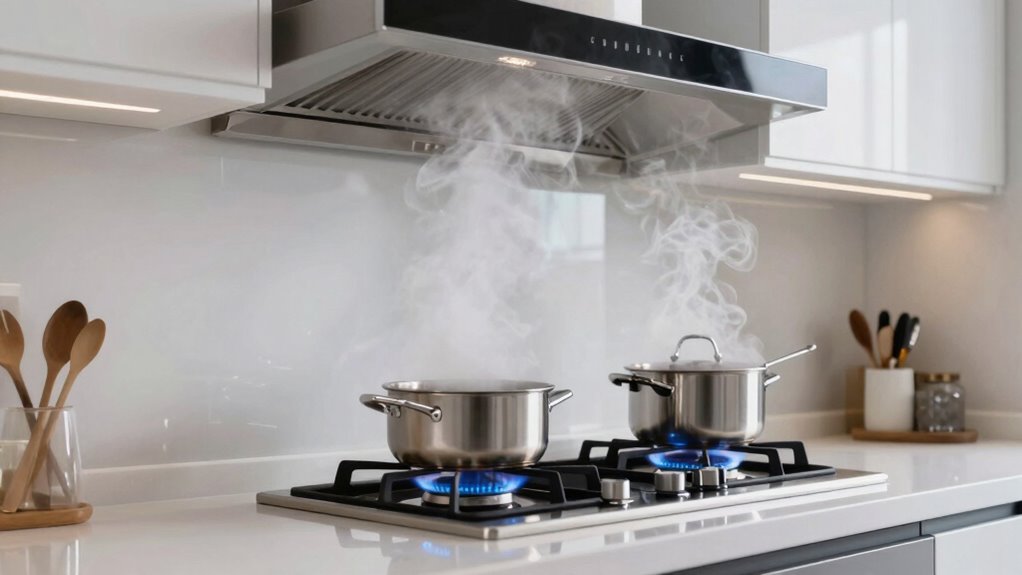
Investing in proper ventilation is also a smart way to preserve your home’s overall indoor air quality. Stale air, moisture, and airborne pollutants can lead to mold growth, wood warping, and other structural issues. A well-maintained ventilation system helps control humidity levels and prevents the buildup of dangerous gases. It also plays a crucial role in reducing indoor air pollutants, which can originate from various household sources. It’s a proactive step that protects your home’s integrity while improving your everyday living conditions. Additionally, understanding the composition of indoor air pollutants can help you make more informed choices about your ventilation needs. Recognizing how gas stove emissions contribute to indoor pollution can further emphasize the importance of effective ventilation. Regular inspections and updates to your ventilation system can help reduce gas-related emissions and improve air quality. Moreover, choosing the right air quality sensors can help you monitor and maintain optimal indoor conditions. Ultimately, if you value your health and the well-being of everyone in your household, paying attention to your ventilation options is a *must*. Good ventilation isn’t just a convenience; it’s a *necessary* part of maintaining a healthy, comfortable living environment.

Amazon Smart Air Quality Monitor – Know your air, Works with Alexa
Know your air – An Alexa air quality monitor that makes it easy to understand what’s in your…
As an affiliate, we earn on qualifying purchases.
As an affiliate, we earn on qualifying purchases.
Frequently Asked Questions
How Often Should I Have My Ventilation System Inspected?
You should have your ventilation system inspected at least once a year to guarantee proper ventilation maintenance and safety. If you notice any unusual odors, decreased airflow, or increased humidity, consider scheduling an inspection sooner. Regular inspection frequency helps prevent buildup of harmful gases and improves indoor air quality. Staying proactive with these maintenance checks keeps your home safe, efficient, and comfortable, especially in homes with gas stoves.
Can Portable Air Purifiers Improve Kitchen Air Quality?
Imagine a gentle shield wrapping your kitchen in a fresh breeze—that’s what a portable air purifier can do for indoor air. While it doesn’t replace proper ventilation, it actively filters out pollutants, odors, and gases, improving air purification. You’ll notice cleaner, crisper air, making your cooking space healthier. Though not a complete solution, it’s a helpful tool, especially when combined with good ventilation practices.
Are There Specific Vent Types Best for Gas Stove Homes?
Yes, certain vent types are best for gas stove homes. A range hood with proper ventilation design efficiently captures fumes and moisture, improving air quality. Make sure to maintain your ventilation system regularly to guarantee optimal performance. Proper ventilation maintenance prevents buildup, keeps the system functioning well, and reduces potential hazards. Choose a vent that suits your kitchen size and stove type, and always keep it clean for the best results.
What Are the Health Risks of Poor Kitchen Ventilation?
Poor kitchen ventilation can lead to increased indoor pollutants, which pose significant health risks. You might experience respiratory issues, headaches, or allergies from exposure to emissions like nitrogen dioxide and carbon monoxide. Without proper ventilation, cooking safety is compromised, and these harmful pollutants accumulate, making your home less healthy. Ensuring good airflow helps reduce these risks, protecting your respiratory health and maintaining a safer cooking environment.
How Does Ventilation Impact Energy Efficiency?
Proper ventilation directly impacts energy efficiency by enhancing airflow optimization. When your ventilation system works well, it reduces the need for additional cooling or heating, conserving energy. Good airflow helps remove excess heat, humidity, and indoor pollutants, allowing your HVAC system to operate more efficiently. As a result, you save on energy costs and extend the lifespan of your appliances, making your home more energy-conscious and comfortable.

Portable Range Hood – 4-Speed Adjustable Exhaust Fan with Telescoping Height & 40° Tilt Low Noise 52dB, Large-Caliber Aluminum Filter + Oil Cup & 10 Carbon Cotton Filters for Indoor BBQ/Hot Pot/RV
【True Air Circulation Mode and Space-Saving Powerhouse】AMZCHEF second-generation Portable range hood have Large-Caliber Dual carbon filters purify smoke…
As an affiliate, we earn on qualifying purchases.
As an affiliate, we earn on qualifying purchases.
Conclusion
You need better ventilation if your home has a gas stove. You need fresh air to breathe, you need a safe environment to cook, and you need peace of mind knowing you’re protected. Improving your ventilation isn’t just about comfort; it’s about health, safety, and well-being. Don’t wait until problems arise—breathe easier, cook safer, and live healthier by prioritizing proper ventilation today. Your home, your health, your life depend on it.

Air Purifiers for Home with High Efficiency Filter Up to 1076 Ft² for Pet Hair, Odors, Pollen, Smoke, Compact Air Cleaner with 3 Speeds, Timer, Aroma Quiet 360°Intake Filter, White
Effortless Operation: Simplified control panel with intuitive design makes it easy to operate. No complicated setup—just one tap,…
As an affiliate, we earn on qualifying purchases.
As an affiliate, we earn on qualifying purchases.

FIREGAS 30 Inch Under Cabinet Range Hood, 300 CFM Powerful & 45dB Quiet Vent Hood, Slim Stainless Steel Stove Hood for Kitchen & Apartments, 2-Speed Exhaust Fan, Ducted/Ductless Convertible
WORK EFFICIENTLY RANGE HOOD: Under cabinet range hood 30 inch with 2-speed exhaust fan quickly remove greese and…
As an affiliate, we earn on qualifying purchases.
As an affiliate, we earn on qualifying purchases.