Effective ventilation guarantees fresh air circulation without sacrificing warmth in your home. You can achieve this by utilizing heat recovery ventilation (HRV) systems that transfer warmth from outgoing air to incoming air. Opening windows during warm parts of the day or using exhaust fans in kitchens and bathrooms also helps regulate air without losing heat. Plus, smart thermostats can optimize airflow based on occupancy. Discover more techniques to keep your home cozy while maintaining good indoor air quality.
Listen free for 30 days with Audible
Thousands of audiobooks and originals — cancel anytime.
As an affiliate, we earn on qualifying purchases.
Key Takeaways
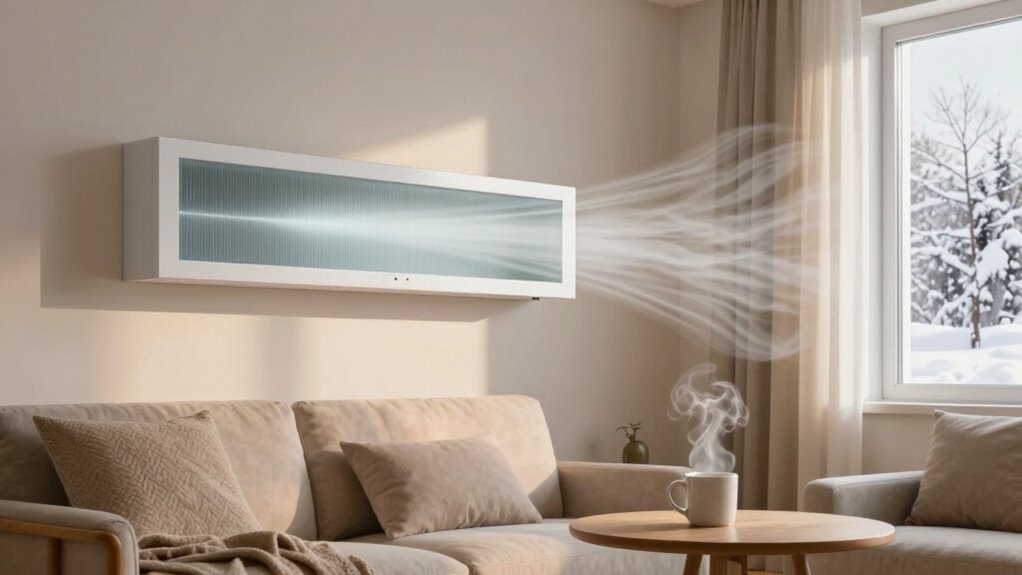
- Utilize Heat Recovery Ventilation (HRV) systems to exchange stale air while retaining warmth from outgoing air, preventing heat loss.
- Open windows during warmer parts of the day to allow fresh air in without significantly dropping indoor temperatures.
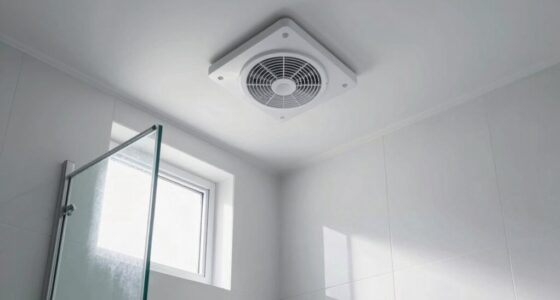
- Install exhaust fans in kitchens and bathrooms to remove humidity and odors without compromising overall warmth.
- Use energy-efficient ventilation solutions to ensure controlled air exchange with minimal impact on heating costs.
- Integrate smart thermostats to adjust airflow based on occupancy, optimizing comfort without wasting energy on heating.
Heat Recovery Ventilation (HRV) system
As an affiliate, we earn on qualifying purchases.
As an affiliate, we earn on qualifying purchases.
Understanding the Importance of Ventilation
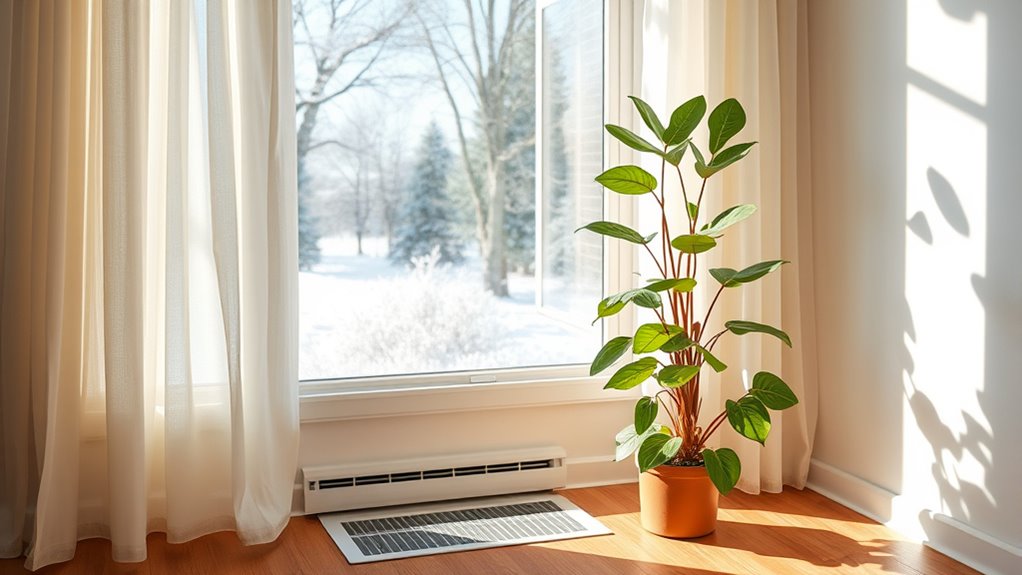
When you think about your home’s comfort and air quality, understanding the importance of ventilation is essential. Proper ventilation ensures effective air exchange, which helps maintain a healthy indoor environment. Without adequate airflow, stale air can accumulate, leading to discomfort and potential health issues. Additionally, moisture control is critical; excess humidity can promote mold growth and damage your home’s structure. By facilitating air exchange, ventilation systems help regulate humidity levels, making your living space more enjoyable. You’ll notice improved air quality and reduced allergens, which is fundamental for your well-being. Moreover, understanding clean-home systems can further enhance your home’s ventilation strategy. High refresh rates can also play a significant role in improving indoor air quality and reducing pollutants. Prioritizing ventilation not only enhances comfort but also safeguards your home from moisture-related problems, creating a healthier atmosphere for you and your family. Furthermore, compassionate caregiving can improve the quality of life for seniors by ensuring they live in a safe and comfortable environment.
energy-efficient kitchen exhaust fan
As an affiliate, we earn on qualifying purchases.
As an affiliate, we earn on qualifying purchases.
Types of Ventilation Systems
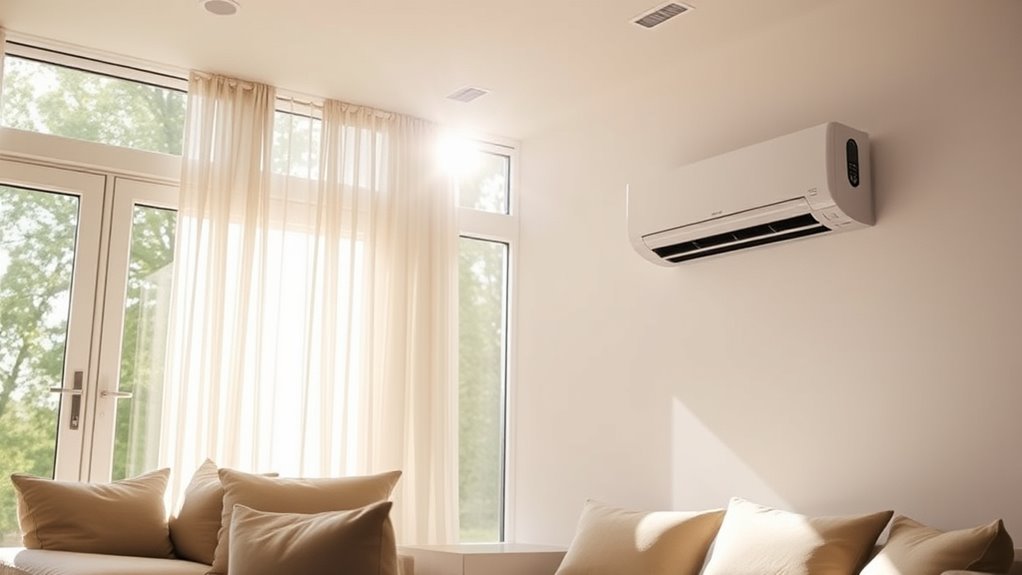
Have you ever wondered which ventilation system is best for your home? Understanding the different ventilation types can help you achieve ideal air exchange without sacrificing comfort. Here are three common systems to contemplate:
Explore the best ventilation systems for your home to enhance air quality and comfort effectively.
- Natural Ventilation: This relies on airflow through windows and vents, offering a simple and cost-effective solution.
- Mechanical Ventilation: Using fans and ducts, this system actively circulates air, ensuring a consistent exchange regardless of outdoor conditions.
- Heat Recovery Ventilation (HRV): This advanced system not only exchanges stale indoor air for fresh outdoor air but also recovers heat, making it energy-efficient. Additionally, utilizing energy-efficient solutions can further enhance your home’s overall sustainability.
smart thermostat for ventilation
As an affiliate, we earn on qualifying purchases.
As an affiliate, we earn on qualifying purchases.
Effective Strategies for Fresh Air Circulation
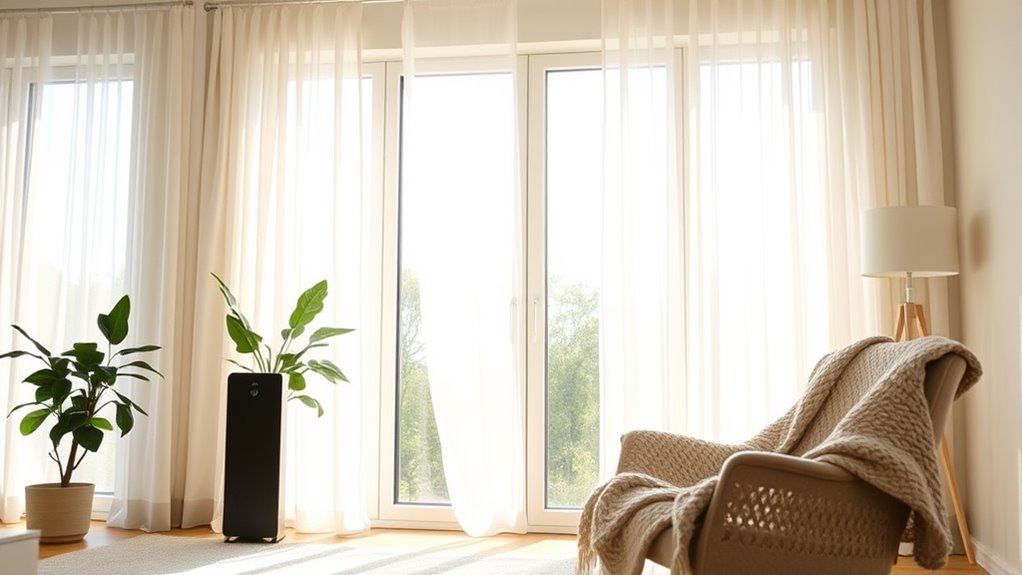
To guarantee your home remains fresh and inviting, implementing effective strategies for air circulation is essential. Start by using air quality sensors to monitor indoor conditions and identify when fresh air is needed. Natural airflow techniques, like strategically opening windows during peak breezes, can appreciably enhance ventilation without added energy costs. Positioning window fans can also help draw in fresh air while pushing out stale air. Additionally, consider utilizing exhaust fans in kitchens and bathrooms to remove humidity and odors. Upgrading your ventilation system can significantly improve air quality and circulation, especially when you prioritize clean installs. By employing proper ventilation techniques, you can increase the efficiency of your air circulation system. Remember that clutter-light homes can contribute to better air quality by reducing dust and allergens. Keep in mind that regularly checking and adjusting your HVAC system can improve overall air circulation. By adopting these strategies, you’ll create a healthier environment while maintaining comfort throughout your home. Furthermore, understanding indoor air quality is crucial for ensuring that the air you breathe is clean and healthy.
As an affiliate, we earn on qualifying purchases.
Balancing Indoor Air Quality and Energy Efficiency
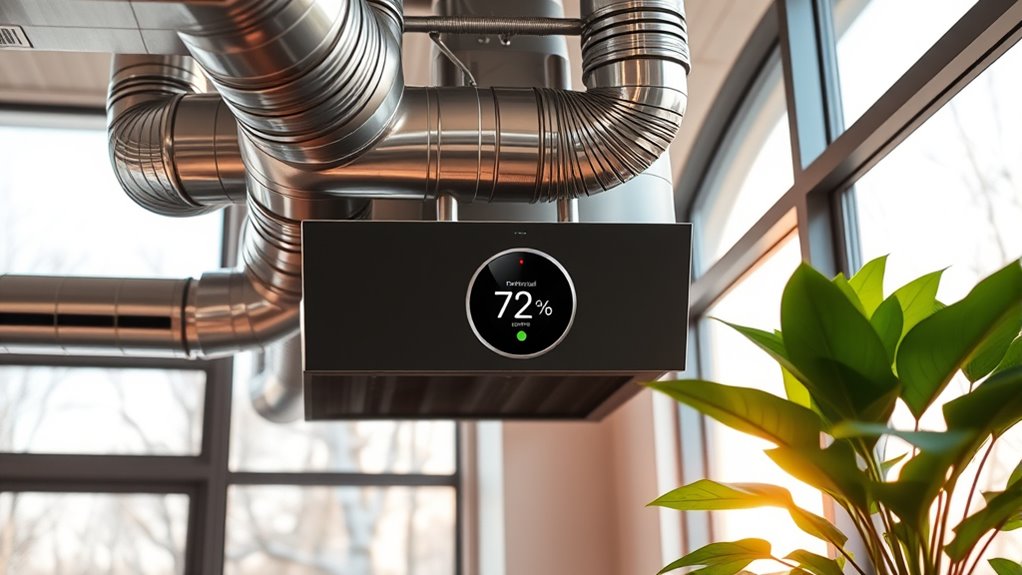
While maintaining a comfortable home, striking the right balance between indoor air quality and energy efficiency is essential. You need to guarantee proper air exchange while keeping your energy bills in check. Here are three key strategies to achieve this balance:
Striking a balance between indoor air quality and energy efficiency is crucial for a comfortable home.
- Optimize Ventilation: Use energy-efficient ventilation systems that allow for controlled air exchange without excessive heat loss. Incorporating efficient ventilation systems can significantly improve air quality while lowering energy consumption. Additionally, consider implementing robotic cleaning solutions to help maintain cleanliness, which also contributes to better indoor air quality.
- Humidity Control: Maintain ideal humidity levels to prevent mold and discomfort. Use dehumidifiers or humidifiers as needed.
- Smart Thermostats: Invest in smart thermostats that can adjust air flow based on occupancy, ensuring energy is used efficiently while still delivering fresh air. Additionally, utilizing modern tech can enhance your home’s ventilation system, leading to improved air quality and energy savings.
Tips for Maintaining Warmth While Ventilating
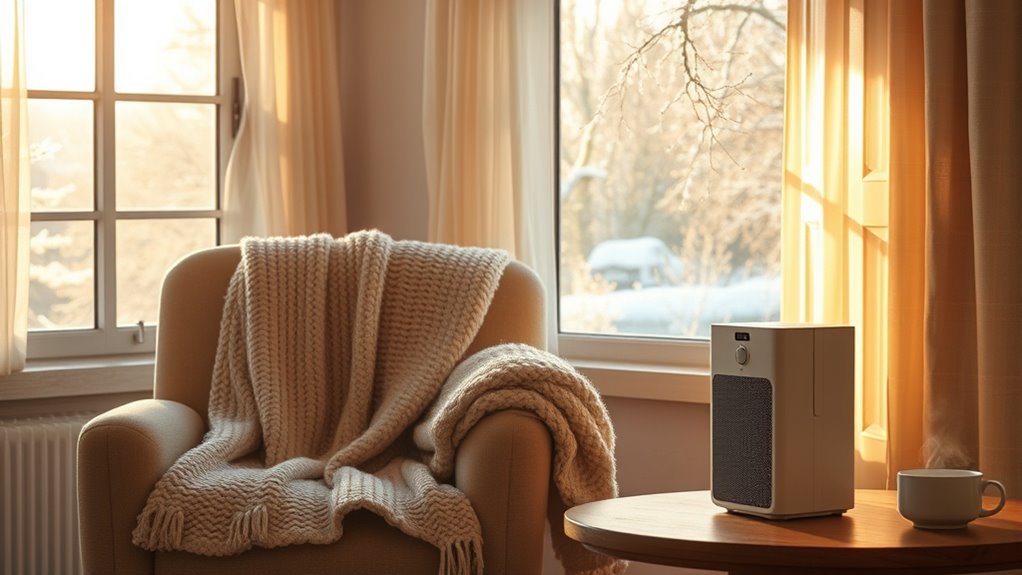
Maintaining warmth in your home during ventilation is key to comfort and energy efficiency. To achieve this, focus on effective air exchange without losing too much heat. Use heat recovery ventilators (HRVs) to transfer warmth from outgoing air to incoming fresh air. This process helps maintain a cozy environment while ensuring proper ventilation. Additionally, consider investing in a whole-home backup power system to ensure your HRVs and other essential systems operate during outages, which can help maintain indoor comfort. Furthermore, integrating smart appliances can optimize the performance of your ventilation systems for enhanced energy efficiency.
Moreover, understanding the principles of home insulation can play a significant role in reducing heat loss during ventilation. Proper insulation techniques can significantly improve your home’s ability to retain heat. Additionally, monitor humidity control in your home. Excess moisture can make your space feel colder, so keep humidity levels between 30% and 50%. You can use a dehumidifier during colder months to manage this effectively. Ultimately, consider ventilating during warmer parts of the day to minimize heat loss. Following these tips will help you enjoy fresh air without sacrificing warmth.
Incorporating smart energy management techniques can also further enhance your home’s energy efficiency while ensuring optimal ventilation.
Frequently Asked Questions
How Often Should I Ventilate My Home?
You should ventilate your home at least once a day, especially if you have indoor plants. This helps maintain proper humidity control, which is essential for their health. Open windows for 10-15 minutes daily to let fresh air in and stale air out. If it’s too cold outside, consider using a fan or a dehumidifier to balance humidity levels while still ensuring your home gets the airflow it needs.
Can I Use Exhaust Fans for Ventilation?
Yes, you can use exhaust fans for ventilation. While they effectively remove moisture and odors from bathrooms, they might not supply fresh air like other systems. Regular exhaust fan maintenance guarantees they run efficiently, preventing issues like mold. So, while your bathroom stays dry, consider balancing it with fresh air sources. By doing this, you’ll keep your home comfortable and healthy, avoiding the stale air that can sometimes linger when relying solely on exhaust fans.
What Is the Best Time to Ventilate?
The best time to ventilate is during mild weather, typically in the early morning or late evening. This helps maintain indoor air quality without letting in extreme temperatures. Use ventilation techniques like opening windows or using exhaust fans to exchange stale air for fresh air. By timing your ventilation wisely, you can improve air quality while keeping your home comfortable, ensuring a healthier living environment without unnecessary heating or cooling costs.
Do Air Purifiers Help With Ventilation?
Air purifiers don’t directly ventilate, but they’re like a shield against indoor pollutants. You’ll find air purifier effectiveness shines when it comes to improving air quality. By capturing dust, allergens, and odors, they create a fresher environment. However, don’t forget about air purifier maintenance; clean or replace filters regularly to guarantee peak performance. While they can’t replace fresh air, they certainly complement your efforts to breathe easier in your home.
How Do I Know if My Home Is Properly Ventilated?
To know if your home’s properly ventilated, check your indoor air quality. You should feel comfortable, with no musty odors or excessive humidity. If your ventilation systems are working well, you’ll notice a consistent airflow, and the air should feel fresh. Regularly inspect filters and make certain vents aren’t blocked. You might also consider using air quality monitors to get real-time feedback on pollutants and overall air quality in your home.
Conclusion
In the grand symphony of home comfort, finding the right balance between fresh air and warmth is key. By embracing effective ventilation strategies, you can create a cozy environment without turning your living space into an icebox. Think of it like crafting the perfect recipe—mix just the right ingredients for a healthier home. So, go ahead, let that fresh air in, and watch your indoor atmosphere transform into a haven of comfort and well-being.
Labor Day sales Picks
labor day deals
As an affiliate, we earn on qualifying purchases.