
To ventilate effectively during allergy season, time your airflow during low pollen periods like early mornings or late evenings, and keep windows closed during peak times. Use exhaust fans, air purifiers with HEPA filters, and make certain your HVAC systems have fresh filters. Maintain a clean home by dusting, vacuuming, and controlling humidity. Combining these strategies helps reduce outdoor allergen entry while improving indoor air quality. Keep exploring for more tips to breathe easier during allergy season.

Get health and wellness essentials delivered free with Prime
- Fast, free delivery on millions of items
- Prime Video, Amazon Music and more included
- Member-only deals all year
Key Takeaways
- Ventilate during early mornings or late evenings when outdoor pollen levels are lowest.
- Use mechanical ventilation and HEPA air purifiers to improve indoor air quality without opening windows.
- Keep windows closed during peak pollen times and rely on controlled airflow systems.
- Utilize exhaust fans in kitchens and bathrooms to reduce moisture and mold growth.
- Regularly maintain HVAC filters and monitor indoor air quality for optimal allergy management.
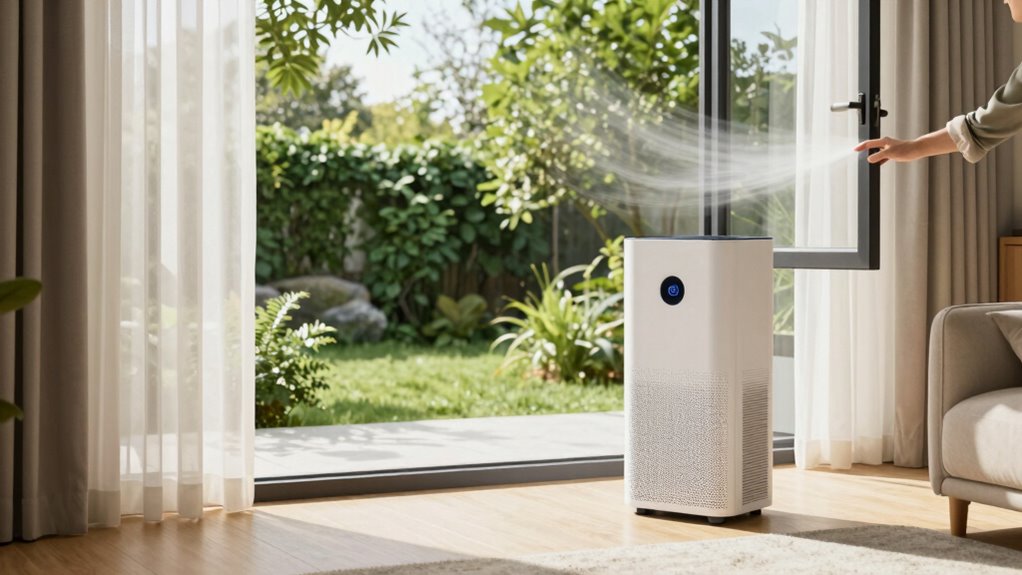
Are you wondering how to keep your home fresh without worsening allergy symptoms? Ventilating properly during allergy season can be tricky, but it’s essential for maintaining good indoor air quality. You want to bring in fresh air, but you also need to avoid introducing allergy triggers like pollen, mold spores, and dust. The key is to find a balance that improves airflow without compromising your health.
First, understand that indoor air quality plays a crucial role in managing allergy symptoms. When you ventilate, you help dilute indoor pollutants, but if you’re not careful, you might invite outdoor allergens inside. During peak allergy seasons, pollen counts tend to be high, making it risky to open windows during certain times of the day. To avoid worsening allergy triggers, check local pollen forecasts and plan to ventilate during times when outdoor pollen levels are lower, typically early mornings or late evenings.
Ventilate during low pollen times, like early mornings or late evenings, to protect indoor air quality during allergy season.
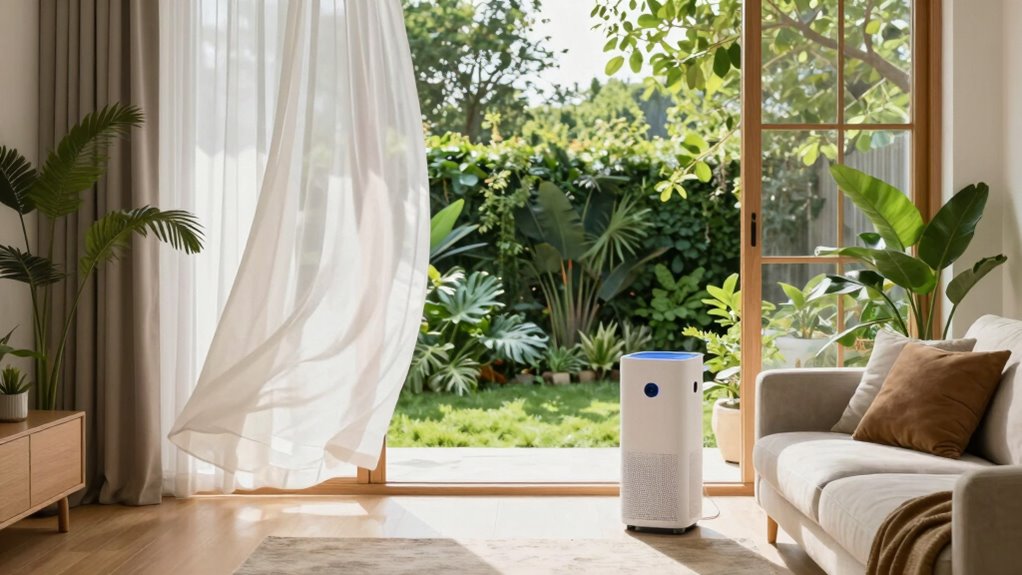
Using mechanical ventilation systems can be your best bet. Air purifiers with HEPA filters can scrub the indoor air, removing common allergy triggers such as pollen, pet dander, and dust mites. When combined with well-timed window opening, you can substantially improve your indoor air quality without exposing yourself to outdoor allergens. Remember to keep windows closed during high pollen periods and rely on air purifiers to circulate clean, filtered air throughout your home.
Another smart strategy is to improve ventilation in a controlled manner. For example, you might open windows briefly during times when outdoor pollen levels are minimal, then close them before outdoor pollen levels spike. Using exhaust fans in kitchens and bathrooms helps remove moisture and indoor pollutants, reducing mold growth—another common allergy trigger. If your home has an HVAC system, ensure it is equipped with high-quality filters and that they’re replaced regularly. This way, your system can considerably circulate fresh air while filtering out allergens. Additionally, proper ventilation techniques can help optimize airflow and minimize allergen intrusion. Regular home maintenance can also prevent the buildup of indoor triggers, further supporting allergy management. Incorporating air exchange systems can further improve indoor air quality by actively bringing in fresh air while exhausting stale air, especially in tightly sealed homes. Furthermore, ensuring proper humidity control can significantly reduce mold and dust mite proliferation, both of which are common allergens.
Additionally, maintaining a clean environment is essential. Regularly dust and vacuum with a HEPA-filtered vacuum cleaner, and wash bedding frequently in hot water. This reduces indoor allergy triggers, making your home a healthier place to breathe. Incorporating air quality monitoring devices can further help you track indoor and outdoor conditions, enabling smarter ventilation decisions. Overall, the smartest way to ventilate during allergy season involves a combination of timing, mechanical aids, and cleanliness. By controlling when and how you bring outdoor air inside, you can enjoy the benefits of fresh airflow without compromising your indoor air quality. With these strategies, you’ll breathe easier and keep allergy symptoms at bay during the busiest times of the year.
Products Worth Considering

Levoit Eleva 300X HEPA Air Purifier for Home and Bedroom

Levoit Vital 100S-P Air Purifier with Washable Pre-Filter

LEVOIT Vital 200S-P Smart Air Purifier for Large Rooms
As an affiliate, we earn on qualifying purchases.
Frequently Asked Questions
How Often Should I Change My HVAC Filters During Allergy Season?
You should change your HVAC filters every 30 to 60 days during allergy season. Regularly replacing filters enhances air purifier benefits by removing allergens more effectively. Consider using a humidifier versus a dehumidifier to manage indoor humidity, which can help reduce mold and dust mites. Maintaining clean filters guarantees ideal airflow, improves air quality, and minimizes allergy symptoms, making your home a healthier environment during allergy season.
Can Opening Windows Worsen Indoor Allergy Symptoms?
Opening windows can worsen your indoor allergy symptoms by letting in outdoor allergens, dust infiltration, and pollutants, which decrease your air quality. When you open windows during allergy season, you risk introducing pollen, mold spores, and dust into your home. To improve air quality without exacerbating allergies, consider using air purifiers or ventilate during times when outdoor allergens are lower, like after rain or late evening.
What’s the Best Time of Day to Ventilate?
You should ventilate early in the morning or late in the evening when outdoor air tends to have better air quality and fewer allergens. During these times, air circulation is ideal without bringing in pollen or pollution. Avoid midday hours when air quality may decline due to heat and pollution buildup. Ventilating at the right times helps improve indoor air quality while minimizing allergy symptoms.
Are There Specific Ventilation Methods for Allergy-Sensitive Individuals?
Imagine you’re allergy-sensitive and want fresh air without triggers. You should use air purifiers placed strategically in your living space, especially near bedrooms and common areas. Keep humidity levels between 30-50% to reduce mold and dust mites. Ventilate during low pollen times, like early mornings, and combine this with air purifier placement and humidity control to minimize allergy symptoms effectively.
How Do I Know if My Ventilation System Is Effectively Reducing Allergens?
You can tell if your ventilation system effectively reduces allergens by monitoring indoor air quality and noticing fewer allergy symptoms. Guarantee proper air purifier placement, ideally in high-traffic or allergen-heavy areas, to maximize filtration. Additionally, maintain humidity control between 30-50%, as it helps prevent mold and dust mites. If symptoms persist, consider upgrading filters or consulting an allergist for personalized advice.
Conclusion
Now that you know the secrets to smarter ventilation during allergy season, are you ready to take control of your home’s air? Imagine breathing easier, free from sneezing fits and congestion—yet, there’s one essential step you might be missing. Don’t let allergens catch you off guard. Stay vigilant, follow these tips, and uncover the final, surprising trick that could change your allergy game forever. Are you prepared to breathe your best? The answer awaits.