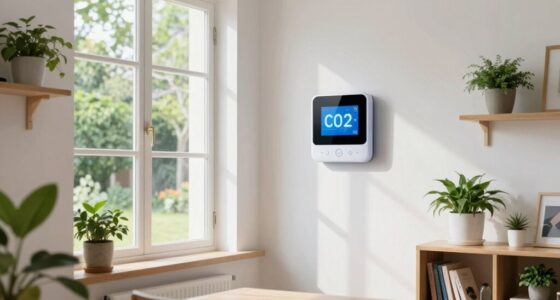
To ventilate a bedroom with the door closed, open windows on opposite sides to encourage cross-breeze and improve airflow. Use fans to circulate air inside, directing them toward the room’s interior. If possible, install vents or air transfer grills for continuous exchange or run your HVAC system’s fan to promote air movement. Small adjustments make a big difference. For more effective strategies, keep exploring how to optimize airflow in your space.

Get health and wellness essentials delivered free — and shop member deals
- Fast, free delivery on millions of items
- Access to Prime Big Deal Days deals on October 6–7
- Prime Video, Amazon Music and more included
Key Takeaways
- Open windows on opposite sides of the room to create cross-ventilation without opening the door.
- Use small oscillating fans to circulate air and promote airflow within the room.
- Install or open vents or air transfer grills to facilitate air exchange between rooms.
- Run the HVAC fan continuously to improve indoor air circulation with the door closed.
- Position fans or vents strategically to optimize airflow patterns and maximize fresh air intake.

Have you ever wondered if it’s possible to keep your bedroom door closed while still maintaining good ventilation? It’s a common concern, especially when you want privacy or to block out noise but also want fresh air circulating. The good news is that with the right strategies, you can achieve effective ventilation without leaving the door wide open. The key lies in understanding how air moves within your space and making use of alternative airflow paths.
First, consider the placement of your windows. If your bedroom has a window that can be opened, it becomes easier to create a cross-breeze. By opening the window opposite the door, you allow fresh air to flow into the room while stale air exits, even if the door remains closed. This simple step can considerably improve air quality without sacrificing privacy or noise control. If cross-ventilation isn’t an option, then using a fan becomes essential.
Using a small, oscillating fan placed near the window can help draw in fresh air from outside or push stale air out of the room. Positioning the fan so it directs airflow toward the interior of the room encourages circulation, even with the door shut. Conversely, a fan placed near the door can help pull air from other parts of your home into the bedroom, especially if your home’s ventilation system or HVAC setup allows for it. Remember, the goal is to promote airflow through the room without needing to open the door fully.
Another effective approach involves the use of vents or air transfer grills installed in the door or walls. These fixtures allow air to pass between rooms while maintaining visual privacy. If your home has such features, opening or adjusting them can facilitate continuous air exchange. If not, installing a small vent grill or a magnetic vent cover can be a worthwhile upgrade, enabling air to flow freely without compromising your privacy. Additionally, understanding airflow dynamics can help optimize your setup for better ventilation.
Finally, consider your HVAC system’s role. Running your air conditioner or heater with the fan set to “on” or “auto” mode circulates indoor air efficiently. If your system has an air exchange feature or ventilation mode, activating it will help bring in fresh air from outside and expel stale indoor air. Regular maintenance of your filters and ensuring proper airflow can also improve overall ventilation.
In essence, good ventilation with the door closed is achievable through strategic window use, fans, vents, and your HVAC system. By understanding how air moves and making small adjustments, you can keep your bedroom private while still enjoying fresh, healthy air.
small oscillating fan for bedroom
As an affiliate, we earn on qualifying purchases.
As an affiliate, we earn on qualifying purchases.
Frequently Asked Questions
Can Air Purifiers Effectively Ventilate a Closed Bedroom?
Air purifiers don’t effectively ventilate a closed bedroom because they don’t bring in fresh air; instead, they clean the air already inside. To improve air quality, use an air purifier along with other methods like opening a window briefly or running a fan. This combination helps to circulate fresh air and reduce indoor pollutants, making your room healthier and more comfortable even when the door stays closed.
How Long Should I Run Ventilation Devices for Optimal Airflow?
Think of your ventilation device as a heartbeat for fresh air. Run it for about 15-30 minutes, or until you notice the air feels clearer and more refreshed. If you’re using an air purifier, keep it on continuously during the day for steady airflow. Adjust the time based on your room size and air quality, but don’t let it run endlessly—just enough to breathe new life into your space.
Is It Safe to Use Fans Overnight With the Door Closed?
Yes, it’s generally safe to use fans overnight with the door closed, but you should take some precautions. Make sure the fan is in good working condition and doesn’t overheat. Keep the room well-ventilated by opening windows occasionally if possible. Avoid leaving the fan on high for extended periods, and never block air vents. Always prioritize safety and comfort to prevent potential hazards like overheating or poor air quality.
Do Humidity Levels Affect Ventilation Efficiency in a Closed Room?
Humidity levels can make or break your ventilation efforts. When it’s too humid, moisture lingers, making it harder for fresh air to circulate and for your room to dry out. Conversely, low humidity helps air flow more freely, boosting ventilation efficiency. Think of it as a well-oiled machine—if the humidity’s out of whack, everything slows down. Keep humidity balanced to guarantee your ventilation works smoothly and keeps your room comfortable.
Are There Specific Window Types That Enhance Ventilation With the Door Shut?
Yes, certain window types can improve ventilation with the door shut. Casement windows, which open outward, allow for better airflow and cross-ventilation when paired with other open windows. Awning windows, hinged at the top, also enhance airflow even when partially open. Sliding windows offer convenience but may not provide as much ventilation. To maximize airflow, choose windows that open fully and are positioned to promote cross-ventilation.
As an affiliate, we earn on qualifying purchases.
Conclusion
Even if you think leaving the door closed traps bad air, proper ventilation methods still work effectively. Using a vent fan or opening a window slightly can improve airflow without sacrificing privacy. Don’t let the fear of losing privacy stop you from freshening up your room. With these simple tips, you can keep your bedroom airy and comfortable, even with the door shut. Just give it a try—you’ll notice the difference almost immediately.
As an affiliate, we earn on qualifying purchases.
As an affiliate, we earn on qualifying purchases.
Fall Picks
fall essentials
As an affiliate, we earn on qualifying purchases.