
When comparing NDIR and eco₂ sensors, you should know that NDIR uses infrared light absorption for highly accurate, stable, and reliable measurements, making it ideal for critical environments. Eco₂ sensors rely on chemical reactions and are more affordable and compact but tend to need frequent calibration and are less precise over time. Understanding these differences helps you pick the right sensor for your needs. Keep exploring to uncover more details that can guide your decision.
Key Takeaways
- NDIR sensors use infrared light absorption for high accuracy and long-term stability, while Eco₂ sensors rely on chemical or electrochemical reactions.
- NDIR sensors are more expensive but offer better reliability and less drift over time compared to Eco₂ sensors.
- Eco₂ sensors are typically more affordable, smaller, and suitable for portable or short-term applications.
- NDIR sensors perform consistently across varying environmental conditions, unlike Eco₂ sensors which are more susceptible to drift and contamination.
- The choice depends on application needs: NDIR for precision and durability, Eco₂ for cost-effectiveness and simple use.
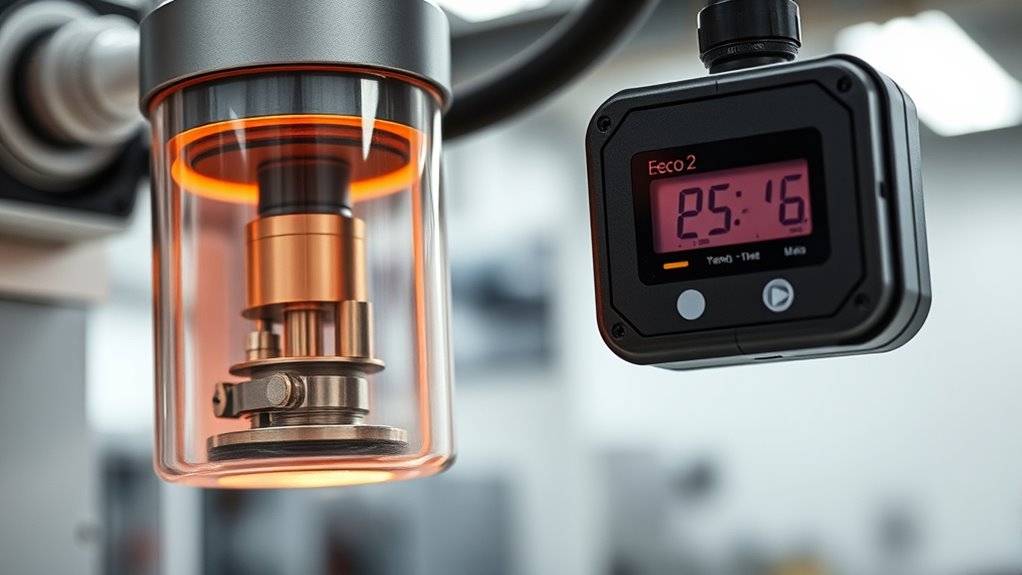
Are you trying to decide between NDIR and Eco₂ sensors for your carbon dioxide monitoring needs? If so, understanding the core differences can help you make a smarter choice. NDIR, or Non-Dispersive Infrared sensors, use infrared light to detect CO₂ levels. When CO₂ molecules absorb infrared light, the sensor measures this absorption to determine concentration. These sensors are known for their accuracy, stability, and long-term reliability. They perform well in a variety of environments and can provide precise readings over extended periods, making them ideal for applications where consistent performance is critical. However, NDIR sensors tend to be more expensive upfront and often require more maintenance, such as calibration, to sustain their accuracy over time.
NDIR sensors offer accurate, stable, and long-term reliable CO₂ monitoring across various environments.
Eco₂ sensors, on the other hand, are typically based on chemical or electrochemical principles. These sensors detect CO₂ by reacting with it chemically or through electrochemical reactions, producing a measurable electrical signal. They are generally more affordable and compact, which makes them attractive for portable devices or situations where cost is a major concern. Eco₂ sensors can provide quick readings and are easy to install, but they often lack the long-term stability and precision of NDIR sensors. Over time, their accuracy can drift, requiring more frequent calibration or replacement to maintain reliable measurements. This makes them more suitable for short-term or less critical monitoring where budget constraints outweigh the need for perfect accuracy.
When it comes to performance, NDIR sensors shine in environments where precise, stable readings are vital—like laboratories, industrial settings, or building management systems. They handle temperature and humidity changes better, maintaining accuracy over long periods. Additionally, temperature and humidity resilience are important factors that influence sensor performance in various conditions. Eco₂ sensors, while convenient and cost-effective, may struggle in more challenging environments or over extended use due to their susceptibility to drift and contamination. If your application demands high accuracy, minimal maintenance, and durability, NDIR sensors are likely the better choice. But if you need a quick, affordable solution for basic monitoring in controlled environments, Eco₂ sensors can serve you well.
Ultimately, your decision depends on your specific needs. Consider factors like budget, environment, required accuracy, and maintenance capacity. Knowing these differences ensures you select a sensor that matches your expectations and operational demands. In the end, understanding whether you need the precision and longevity of NDIR or the simplicity and affordability of Eco₂ will save you time and money, helping you monitor CO₂ levels more effectively.
Amazon Product B0B723FQQ7
As an affiliate, we earn on qualifying purchases.
Frequently Asked Questions
How Do Maintenance Needs Differ Between NDIR and Eco₂ Sensors?
You’ll find that NDIR sensors require less maintenance because they have no consumable parts and are highly stable over time. Eco₂ sensors, on the other hand, may need periodic calibration and sensor replacements due to their reliance on chemical or electrochemical components that can degrade. Regular checks guarantee accurate readings, but overall, NDIR sensors offer a lower-maintenance solution for long-term, reliable CO₂ monitoring.
Which Sensor Offers Better Long-Term Stability and Accuracy?
Ever wonder which sensor truly lasts and stays precise? NDIR sensors generally offer better long-term stability and accuracy because they rely on stable infrared light absorption principles, which don’t drift over time. Eco₂ sensors, often based on chemical or electrochemical principles, might need more frequent recalibration to maintain their accuracy. So, if you want reliable performance over years, NDIR sensors are your best bet for consistency and precision.
Are There Specific Environments Where One Sensor Outperforms the Other?
You’ll find that NDIR sensors excel in environments with high humidity, dust, or fluctuating temperatures because they’re more resistant to interference and maintain accuracy over time. Eco₂ sensors, often based on chemical or photoacoustic principles, might perform well in controlled indoor environments but could struggle with environmental changes. So, choose NDIR sensors for outdoor or industrial settings, and Eco₂ sensors for stable indoor air quality monitoring.
What Are the Initial Cost Differences Between NDIR and Eco₂ Sensors?
You’ll find that NDIR sensors generally cost more upfront than Eco₂ sensors. NDIR units involve advanced optics and precise manufacturing, which drives up prices. Eco₂ sensors, often based on chemical or other less complex technologies, tend to be more affordable initially. If budget is your priority, Eco₂ sensors offer a lower entry point, but consider long-term accuracy and maintenance costs when choosing between them.
How Do Calibration Requirements Vary Between the Two Sensor Types?
Think of calibration as tuning a musical instrument—you need the right adjustments to keep it sounding perfect. With NDIR sensors, you’ll find calibration to be more stable and less frequent, like tuning once for a concert. Eco₂ sensors, however, often require more regular calibration, akin to tuning before each practice session. This means you’ll spend more time maintaining Eco₂ sensors to guarantee accurate readings.

LEVOIT Air Purifier for Home Pets Hair Allergies in Bedroom, Covers Up to 1073 ft² by 56W High Torque Motor, AHAM VERIFIDE, 3-in-1 Filter with HEPA Sleep Mode, Remove Dust Smoke Odor, Core300-P, White
WHY CHOOSE AHAM VERIFIDE AIR PURIFIERS: AHAM (Association of Home Appliance Manufacturers) is an ANSI-accredited organization that sets...
As an affiliate, we earn on qualifying purchases.
Conclusion
When choosing between NDIR and Eco₂ sensors, you see the difference clearly. NDIR offers precision and reliability, your trusted partner in accurate readings. Eco₂ provides affordability and simplicity, making it accessible. Both serve their purpose, but your needs dictate the choice. One measures with science, the other with convenience. Ultimately, it’s the sensor’s core difference that matters—precision versus practicality—that guides your decision. Know what you need, and choose the sensor that truly fits your environment.

LEVOIT Smart Air Purifier for Home Large Room up to 1875 Ft² Vital 200S-P
𝐖𝐇𝐘 𝐂𝐇𝐎𝐎𝐒𝐄 𝐀𝐇𝐀𝐌 𝐕𝐄𝐑𝐈𝐅𝐈𝐃𝐄 𝐏𝐑𝐎𝐃𝐔𝐂𝐓𝐒: AHAM (Association of Home Appliance Manufacturers) is an ANSI-accredited organization that sets strict...
As an affiliate, we earn on qualifying purchases.
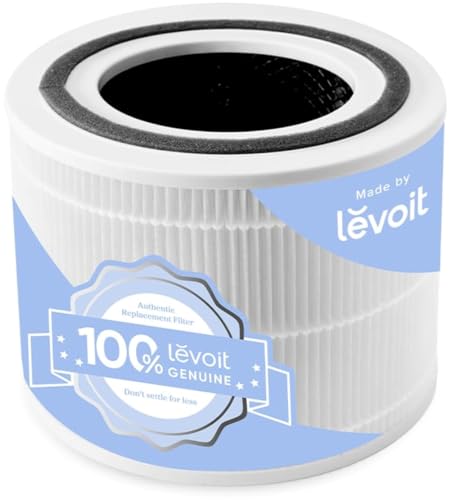
Levoit Core 300-P Air Purifier Genuine Replacement Filter, Core300S-P Filter, AHAM VERIFIDE, Supports HEPA Sleep Mode, High-Efficiency Activated Carbon, Removes Smoke Odor, Allergens,Core 300-RF,1Pack
𝐆𝐄𝐍𝐔𝐈𝐍𝐄 𝐑𝐄𝐏𝐋𝐀𝐂𝐄𝐌𝐄𝐍𝐓 𝐅𝐈𝐋𝐓𝐄𝐑: Designed specifically for the Core 300-P / Core 300S-P air purifiers to maintain its peak...
As an affiliate, we earn on qualifying purchases.