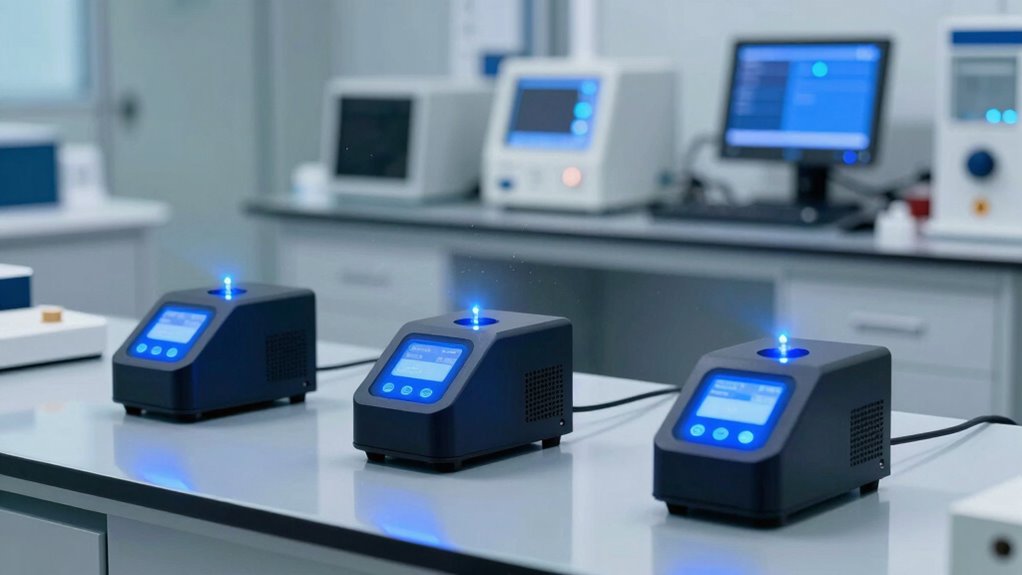
Choosing the right laser particle counter for HVAC testing involves balancing accuracy, ease of use, and suitability for your environment. For professionals needing precise, multi-size measurement, the JD-3000 stands out with its extensive data storage and environmental sensors. For those prioritizing portability and straightforward operation, the Handheld Dust Particle Counter ABS offers reliable indoor air quality monitoring at a lower price point. Meanwhile, the CEM DT-9881 provides robust data management and high accuracy for cleanroom environments. Each of these options involves tradeoffs between complexity, cost, and measurement scope, so understanding your specific needs is key.

Get health and wellness essentials delivered free with Prime
- Fast, free delivery on millions of items
- Prime Video, Amazon Music and more included
- Member-only deals all year
Key Takeaways
- The JD-3000 offers multi-size particle measurement with extensive data storage, ideal for industrial and HVAC environments requiring detailed analysis.
- The Handheld Dust Particle Counter ABS is best suited for indoor air quality assessments, emphasizing user-friendliness and portability over advanced environmental sensing.
- The CEM DT-9881 combines high accuracy and large data capacity, making it suitable for cleanroom and critical HVAC testing, despite its lack of built-in wireless connectivity.
- Battery life and data sharing capabilities vary significantly; consider whether real-time data access or extended field operation is more important for your applications.
- Calibration and detailed specifications are crucial for professional settings, so verify these features before proceeding with higher-end models.
| Handheld Dust Particle Counter ABS Air Quality Analyzer 0.3um 2.5um 10um for Indoor Air Quality Monitoring |  | Best for Portable Indoor Air Quality Monitoring | Particle Detection Range: 0.3um, 2.5um, 10um | Display: 2.8-inch full color | Power: Rechargeable battery | VIEW ON AMAZON | See Our Full Breakdown |
| JD-3000 8-Channel Air Particle Counter, PM2.5 & PM10 Monitor |  | Best for Professional and Industrial HVAC Testing | Channels: 8 | Particle sizes measured: 0.3, 0.5, 1.0, 3.0, 5.0, 10 μm | Airflow: 2.83 L/min | VIEW ON AMAZON | See Our Full Breakdown |
| Temtop Professional Handheld Particle Counter, Pump Suction Air Meter |  | Best for Comprehensive Field Monitoring | Particle Sizes Measured: 0.3µm, 0.5µm, 1.0µm | Air Quality Indices: PM2.5, PM10, TSP | Temperature Sensor: Yes | VIEW ON AMAZON | See Our Full Breakdown |
| PerfectPrime AQ9600 Air Quality Particle and Dust Detector |  | Best for Adjustable Sampling and Portable Dust Detection | Particle Sizes: 0.3μm, 2.5μm, 10μm | Light Source: Semiconductor lasers | Alarm Levels: 1~100,000 (FED209E), 2~9 (ISO14464-1) | VIEW ON AMAZON | See Our Full Breakdown |
| CEM DT-9881 Cleanroom Particle Counter with TFT Color LCD Display |  | Best for High-Precision Cleanroom and Critical HVAC Testing | Particle Sizes Detected: 0.3µm, 0.5µm, 1µm, 2.5µm, 5µm, 10µm | Flow Rate: 2.83L/min (1 CFM) | Particle Count Capacity: up to 2,000,000 particles/ft³ | VIEW ON AMAZON | See Our Full Breakdown |
| laser particle counter for hvac testing | Display | Power |
|---|---|---|
| Handheld Dust Particle Counter | 2.8-inch full color | Rechargeable battery |
| JD-3000 8-Channel Air Particle | 2.8-inch color screen | — |
| Temtop Professional Handheld P | — | — |
| PerfectPrime AQ9600 Air Qualit | — | 9 V DC battery (not included) |
| CEM DT-9881 Cleanroom Particle | 2.8 inch TFT Color LCD | Charger included |
More Details on Our Top Picks
Handheld Dust Particle Counter ABS Air Quality Analyzer 0.3um 2.5um 10um for Indoor Air Quality Monitoring
This handheld device excels at detecting small particles like 0.3μm and is designed for indoor air quality checks, making it ideal for quick spot assessments. Its user-friendly 2.8-inch color display and customizable data logging make it accessible for non-experts, while the rechargeable battery supports extended field operations. Compared with bulkier or more complex analyzers, this model sacrifices some measurement depth—like environmental sensing or multi-size analysis—limiting its use mainly to indoor environments. It’s a solid pick for those who need quick, reliable data without fuss, but less suitable for detailed professional HVAC diagnostics.
Pros:- Accurate detection of small particles down to 0.3μm
- Intuitive color display with multiple language options
- Robust data logging and alert features
- Rechargeable for extended use in the field
Cons:- Limited to indoor air quality applications
- No detailed specifications on measurement speed or calibration procedures
Best for: Indoor air quality testing in homes, offices, and small cleanrooms
Not ideal for: Industrial or cleanroom environments requiring detailed particle size analysis or environmental sensors
- Particle Detection Range:0.3um, 2.5um, 10um
- Display:2.8-inch full color
- Power:Rechargeable battery
- Usage:Indoor air quality, cleanrooms, HVAC
Our verdict“A straightforward, portable choice for indoor air quality checks but not suited for complex HVAC testing.”
JD-3000 8-Channel Air Particle Counter, PM2.5 & PM10 Monitor
The JD-3000 offers comprehensive particle measurement across eight channels, making it suitable for detailed HVAC and industrial air quality analysis. Its ability to measure various sizes from 0.3μm to 10μm, combined with environmental sensors and large data storage, makes it a versatile tool for professionals who need precise data. Its stable airflow and calibration report support accuracy, but it requires calibration for optimal results and might be overkill for simple applications. Compared with simpler handhelds, this model is more complex but provides the depth of data needed in demanding environments.
Pros:- Measures multiple particle sizes and environmental parameters
- Large data storage with USB export
- Includes calibration report for accuracy assurance
- Portable with rechargeable power
Cons:- Calibration may be necessary for precise results
- Limited to specific particle sizes and sensors
Best for: HVAC professionals, laboratories, industrial environments
Not ideal for: Budget-conscious users or those needing only basic indoor air quality checks
- Channels:8
- Particle sizes measured:0.3, 0.5, 1.0, 3.0, 5.0, 10 μm
- Airflow:2.83 L/min
- Data storage:Over 2 million records
- Display:2.8-inch color screen
- Battery:2000 mAh rechargeable
Our verdict“A high-precision, multi-channel counter ideal for detailed HVAC testing and professional environments.”
Temtop Professional Handheld Particle Counter, Pump Suction Air Meter
The Temtop model provides detailed measurement of PM2.5, PM10, and TSP, along with temperature and humidity sensors, making it suitable for thorough environmental assessments. Its extended 3500mAh battery supports over four hours of continuous operation, and the large internal storage allows for extensive data collection. While it’s easy to operate, it lacks advanced connectivity features like Wi-Fi or Bluetooth, which could hinder real-time data sharing. Compared to simpler models, its combination of environmental sensors and large display makes it a flexible choice for field professionals needing comprehensive data.
Pros:- Accurate measurement of multiple particulate sizes
- Includes temperature and humidity sensors
- Large display and simple controls
- Extended battery life
Cons:- Limited battery life for prolonged sessions
- No direct data sharing or connectivity features
Best for: Environmental field testing, HVAC technicians needing detailed data
Not ideal for: Users requiring real-time wireless data transfer or long-term continuous monitoring
- Particle Sizes Measured:0.3µm, 0.5µm, 1.0µm
- Air Quality Indices:PM2.5, PM10, TSP
- Temperature Sensor:Yes
- Humidity Sensor:Yes
- Battery Capacity:3500mAh
- Battery Life:Over 4 hours
- Internal Storage:32GB
Our verdict“A well-rounded handheld device suited for detailed environmental assessments in the field.”
PerfectPrime AQ9600 Air Quality Particle and Dust Detector
The PerfectPrime AQ9600 stands out for its adjustable sampling times and customizable alarm levels, making it flexible in various testing scenarios. It detects particles at 0.3μm, 2.5μm, and 10μm, suitable for dust and airborne particle monitoring. The device runs on a 9V DC battery, which is common but requires users to procure it separately. Its main tradeoff is limited detailed specifications and calibration instructions, which could challenge users needing verified accuracy. Nonetheless, its portability and adjustable settings make it a good choice for quick, on-the-go assessments, especially in environments where customized sampling is necessary.
Pros:- Detects multiple particle sizes accurately
- Adjustable alarm and sampling times
- Portable with battery operation
Cons:- Battery not included
- Limited detailed specs and calibration info
- No built-in calibration or advanced data management
Best for: Rapid field assessments, dust monitoring, environments needing customizable sampling
Not ideal for: Professional HVAC testing requiring certified calibration or detailed environmental data
- Particle Sizes:0.3μm, 2.5μm, 10μm
- Light Source:Semiconductor lasers
- Alarm Levels:1~100,000 (FED209E), 2~9 (ISO14464-1)
- Sampling Time:1s to 59min 59s
- Sampling Frequency:1~99/Continuous
- Power:9 V DC battery (not included)
Our verdict“A flexible, portable detector suited for quick dust assessments and environments needing adjustable sampling parameters.”
CEM DT-9881 Cleanroom Particle Counter with TFT Color LCD Display
The CEM DT-9881 offers high-accuracy, simultaneous detection of multiple particle sizes, including 0.3μm to 10μm. Its large 2.8-inch TFT color LCD makes data viewing straightforward, while its extensive data storage capacity supports detailed logging—up to 5,000 records—and supports data export via USB or RS-232. While it’s a powerful tool for cleanroom and sensitive HVAC environments, it requires calibration certification and involves accessories that can be cumbersome to carry. Its lack of wireless connectivity might be a drawback for those who want instant data sharing, but for certified, high-precision testing, it stands as a reliable option.
Pros:- Detects multiple particle sizes simultaneously
- Large, easy-to-read color display
- Stores and exports large data logs
- High accuracy with certification support
Cons:- Requires calibration certificate for certification
- Multiple accessories may be cumbersome
- No built-in Wi-Fi or Bluetooth
Best for: Cleanrooms, critical HVAC environments, regulatory compliance testing
Not ideal for: Budget-conscious users or those needing wireless data transfer on the fly
- Particle Sizes Detected:0.3µm, 0.5µm, 1µm, 2.5µm, 5µm, 10µm
- Flow Rate:2.83L/min (1 CFM)
- Particle Count Capacity:up to 2,000,000 particles/ft³
- Data Storage:up to 5000 records
- Display:2.8 inch TFT Color LCD
- Power:Charger included
Our verdict“A professional-grade particle counter ideal for regulated cleanroom environments and high-precision HVAC testing.”

How We Picked
Our selection process focused on the core needs of HVAC testing: measurement accuracy, ease of use, portability, and data management. We prioritized products that measure multiple particle sizes relevant to air quality, particularly those that include PM2.5, PM10, and smaller particles like 0.3μm. Battery life, data storage capacity, and connectivity options were critical for field use, especially for professionals conducting regular testing. Price and user-friendliness were also considered, ensuring there are options suitable for different skill levels—from beginners to advanced technicians. Finally, we balanced features with real-world tradeoffs, such as calibration requirements and device size, to recommend versatile and reliable tools.
Factors to Consider When Choosing Laser Particle Counter For Hvac Testing
Choosing the right laser particle counter for HVAC testing hinges on understanding your specific needs—whether you prioritize portability, measurement detail, or data management. Key factors include the range of particle sizes measured, data logging capabilities, battery life, and connectivity options. For quick indoor assessments, simplicity and cost-effectiveness matter most. For detailed, professional HVAC or cleanroom testing, accuracy, calibration, and data export features are essential. This guide breaks down these considerations to help you find a device that matches your testing environment and operational requirements.
Measurement Range and Particle Sizes
The core of any particle counter is its ability to detect relevant sizes. For HVAC testing, measuring particles from 0.3μm to 10μm covers most indoor air quality concerns, including PM2.5 and larger dust particles. Devices like the JD-3000 excel here with multiple channels, while simpler models like the PerfectPrime AQ9600 focus on adjustable sampling for dust or airborne particles. Consider your environment—if you need to detect ultrafine particles or TSP, select a model that covers these sizes comprehensively.
Data Storage and Connectivity
Data management capabilities differ widely. For HVAC professionals monitoring multiple sites or conducting detailed analysis, large onboard storage and easy export options are vital. The CEM DT-9881 offers extensive storage and multiple export options, but lacks wireless connectivity. Conversely, models with Wi-Fi or Bluetooth, although not present here, would enable real-time data sharing. Think about whether you need immediate access to data on-site or prefer to analyze it later via PC or cloud.
Portability and Power
Field testing demands portable, durable devices with reliable battery life. The Handheld Dust Particle Counter ABS and Temtop models provide extended battery life suitable for hours of use, while larger, more complex units like the CEM DT-9881 might be less convenient to carry. Battery capacity and charging options are especially critical if you’re working in locations where power outlets are scarce. Consider your operational environment and choose accordingly.
Ease of Use and Calibration
Simple interfaces and straightforward calibration procedures help reduce training time and improve measurement reliability. The Handheld Dust Particle Counter ABS offers ease of use with minimal setup, but may lack detailed calibration instructions. High-end models like the CEM DT-9881 require certified calibration for compliance, which adds complexity but ensures accuracy. Decide if you need certified results or if approximate data suffices for your application.
Frequently Asked Questions
What particle sizes should I measure for HVAC testing?
For most HVAC testing scenarios, measuring particles from 0.3μm to 10μm captures the full range of indoor air pollutants, including ultrafine particles (PM2.5) and larger dust or pollen. Devices like the JD-3000 provide multiple channels to measure these sizes simultaneously, offering detailed insight into air quality. If your focus is on specific issues, such as dust or allergens, select a model that emphasizes those particle ranges.
Is data connectivity important for a particle counter?
Yes, especially if you need to share or analyze data remotely. Devices with USB, RS-232, or wireless options facilitate easier transfer and long-term storage. The CEM DT-9881 excels in data capacity but lacks built-in wireless, which can hinder real-time sharing. For fieldwork requiring immediate data access, look for models with Wi-Fi or Bluetooth, even if they come at a higher cost or slightly reduced data capacity.
How critical is calibration for professional HVAC testing?
Calibration ensures the measurements are accurate and compliant with standards, which is vital in regulated environments like cleanrooms or certification processes. The CEM DT-9881 includes a calibration report, making it suitable for such applications. Less expensive or simpler models may not include certified calibration, which could lead to less reliable results over time. Always verify calibration options before choosing a device for critical testing.
How long should the battery last during testing?
Battery life varies depending on the device and usage. For extended field testing, a device like the Temtop with over four hours of operation is advantageous. Smaller handhelds, like the ABS, also offer good battery longevity, but always check battery capacity and rechargeability to ensure your testing isn’t interrupted. If testing involves long sessions, prioritize models with higher capacity batteries or replaceable power sources.
What are the key features distinguishing professional from consumer-grade particle counters?
Professional-grade counters typically offer multi-channel measurement, extensive data logging, calibration support, and high accuracy, suitable for regulatory compliance. Consumer-grade or basic models focus on ease of use, portability, and quick readings, often with limited measurement scope and data management. In HVAC testing, precision and reliability matter—so if your work requires certified results, investing in a higher-end, calibrated device is advisable.
Conclusion
If you’re conducting routine indoor air quality checks or need a portable device for quick assessments, the Handheld Dust Particle Counter ABS offers great value. For professionals working in HVAC systems, laboratories, or environments where detailed data is crucial, the JD-3000 or CEM DT-9881 provide the precision, data management, and certification necessary. Budget-conscious users or those new to particle testing should prioritize simplicity and affordability, while specialists in cleanrooms or regulated environments should focus on high accuracy and verified calibration. Ultimately, your choice depends on balancing measurement needs, data handling, and operational context.
Columbus Day / Indigenous Peoples' Day Picks
long weekend sales
As an affiliate, we earn on qualifying purchases.