
If you notice a strong smell of mothballs indoors, it means chemicals like naphthalene or paradichlorobenzene are vaporizing and spreading through your space. This odor indicates that toxins are seeping into your clothes and air, which can be harmful, especially over time. Persistent fumes also signal ongoing chemical off-gassing. To stay safe, you should remove mothballs, ventilate the area, and consider healthier storage options—there’s more to learn about protecting your environment.
Key Takeaways
- The smell indicates active off-gassing of chemicals like naphthalene or paradichlorobenzene.
- Persistent odor suggests ongoing chemical release and potential buildup in your environment.
- The scent warns of potential health risks from inhaling toxic fumes over time.
- Detecting the smell means mothballs are improperly stored or overused indoors.
- It’s advisable to remove mothballs, ventilate the area, and consider safer pest prevention methods.
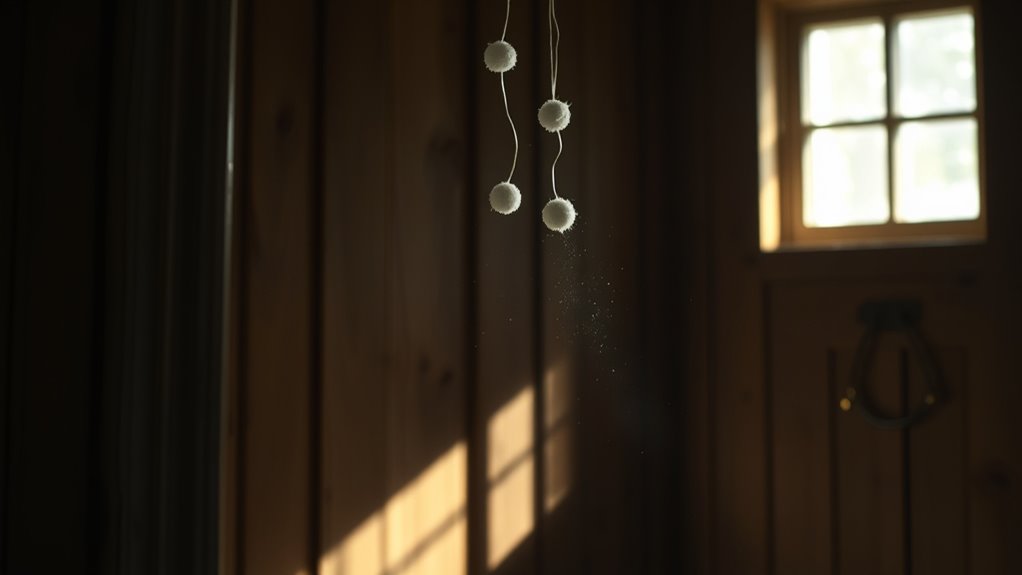
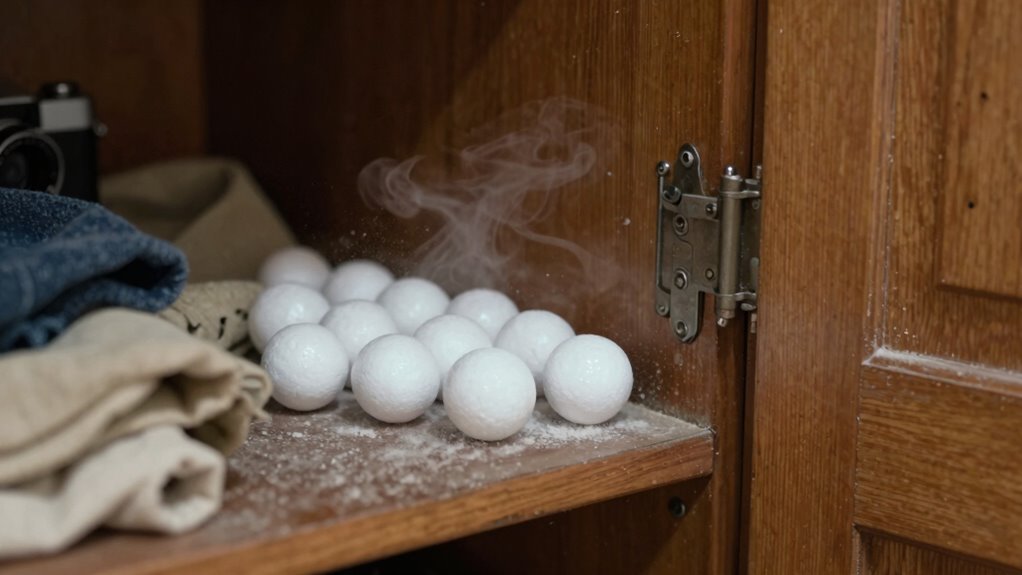
Mothballs are commonly used to protect clothing and fabrics from pests, but using them indoors can pose health risks. When you notice a strong, unusual smell coming from your closet or storage area, it’s often linked to mothballs. These small, usually white or blue pellets release a distinct chemical odor that’s hard to ignore. The scent isn’t just unpleasant; it’s a sign that chemicals are vaporizing into the air, which can be harmful when inhaled over time. If you’re detecting this smell, it’s important to understand what it means and how to address it.
The smell of mothballs indicates the presence of naphthalene or paradichlorobenzene, the chemicals typically used in these products. Both are volatile substances, meaning they easily turn into gas at room temperature. When you open a box or drawer lined with mothballs, these fumes seep out and fill the surrounding space. While the scent might seem like a simple odor, it’s actually a sign that chemicals are actively off-gassing. The stronger and more persistent the smell, the higher the concentration of these chemicals in your environment. Prolonged exposure can cause headaches, nausea, dizziness, and respiratory issues, especially in children, pregnant women, or those with respiratory sensitivities.
A strong mothball smell signals chemicals off-gassing, which can harm health over time.
If you notice the smell lingering in your home, it’s a clear warning that mothballs are either improperly stored or being used excessively. Many people keep mothballs in closets or storage chests, thinking they’re a safe solution for moth prevention. However, the chemicals don’t just stay contained; they vaporize and spread into the air. This means that even if you’re not directly handling mothballs, you’re still exposed to their fumes. The smell may fade initially, but over time, it can build up in the air and on fabrics. If you find yourself constantly battling this odor, it’s a sign to remove mothballs and ventilate the space thoroughly.
Recognizing what the smell means helps you take swift action to protect your health. Never ignore the odor, especially if it’s strong or persistent. Removing mothballs from your home involves thoroughly cleaning affected areas, airing out closets, and replacing stored fabrics. Consider switching to safer alternatives, like airtight containers or natural repellents, to prevent pests without risking chemical exposure. To put it plainly, that smell is a warning sign; it’s your cue to eliminate mothballs and prioritize your health and safety. Additionally, understanding the residual effects of chemical vapors can help in making safer pest control choices.
Frequently Asked Questions
Are Mothballs Safe for Pets Indoors?
Mothballs are not safe for pets indoors. You should keep them out of your pet’s reach because they contain chemicals like naphthalene or paradichlorobenzene, which can be toxic if ingested or inhaled. If you suspect your pet has been exposed, watch for symptoms like vomiting, difficulty breathing, or lethargy, and contact your veterinarian immediately. It’s best to find safer, pet-friendly ways to protect your clothing and belongings.
How Long Do Mothballs Last Indoors?
Mothballs typically last between 2 to 4 months indoors, but their effectiveness can vary depending on temperature and humidity. As the scent diminishes, the chemicals become less active, so you might need to replace them sooner. Keep an eye on the smell and any visual signs of evaporation. To guarantee your belongings stay protected, check regularly and replace mothballs when the scent weakens or disappears completely.
Can Mothball Smell Cause Health Issues?
Yes, the smell of mothballs can cause health issues. When you breathe in the fumes, you might experience headaches, dizziness, nausea, or respiratory problems. Long-term exposure could lead to more serious health concerns, especially for children, pregnant women, or those with respiratory conditions. To stay safe, make certain proper ventilation, avoid direct contact, and consider using alternative methods to protect your clothes from pests.
Are There Natural Alternatives to Mothballs?
Yes, there are natural alternatives to mothballs. You can use cedarwood blocks, lavender sachets, or herbal sachets made from rosemary, thyme, or mint. These options release pleasant scents that repel moths without the harmful chemicals found in traditional mothballs. Place them in your closets, drawers, or storage areas to protect your clothing naturally, and enjoy fresh, chemical-free spaces.
How Do I Remove Mothball Odor From Furniture?
You can banish mothball odor from your furniture faster than a superhero saves the day! Start by opening windows wide to flood the room with fresh air—this is your secret weapon. Then, wipe the furniture with a solution of equal parts vinegar and water, and sprinkle baking soda on surfaces overnight. Vacuum it up in the morning. Repeat as needed until that foul smell vanishes like magic.
Conclusion
If you notice the overpowering smell of mothballs indoors, it’s more than just a nuisance—it’s a warning sign that your home’s air has turned into a chemical battleground. Ignoring this scent could turn your living space into an uninhabitable wasteland faster than you can say “hazardous fumes.” Don’t let this odor hijack your home’s serenity. Act promptly, ventilate thoroughly, and keep safety at the forefront—your lungs will thank you for preventing a scent disaster of epic proportions.