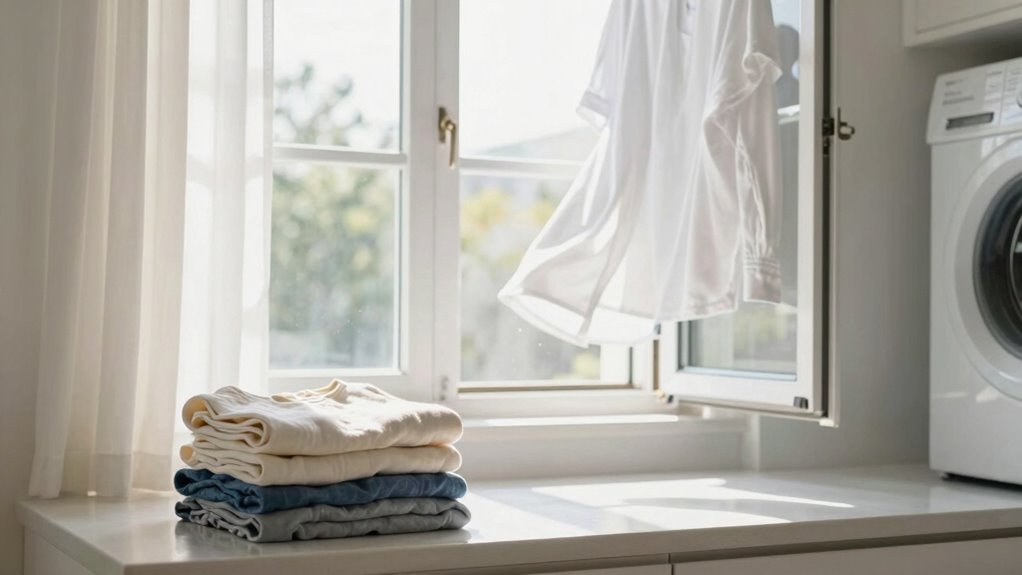

To safely air out dry-cleaned odors at home, hang your clothes outdoors in a shaded, well-ventilated area, ensuring good airflow to help neutralize chemical smells. If outdoor space isn’t available, use a breezy room with open windows and a fan. Avoid direct sunlight and excessive heat to prevent fabric damage. For lingering odors, gentle steaming or natural absorbers like baking soda or vinegar sprays can help. Stay with us to discover more effective tricks.

Get health and wellness essentials delivered free — and shop member deals
- Fast, free delivery on millions of items
- Access to Prime Big Deal Days deals on October 6–7
- Prime Video, Amazon Music and more included
Key Takeaways
- Hang dry-cleaned clothes outdoors in shaded areas with good airflow to naturally dissipate chemical odors safely.
- Use gentle steaming or hang in a steamy bathroom to help break down lingering odors without damaging fabrics.
- Place garments in breathable bags with activated charcoal or baking soda, replacing absorbers regularly to absorb chemical smells.
- Avoid direct sunlight and heat sources like dryers, as excessive heat can set odors or harm delicate fabrics.
- Combine airing with natural odor neutralizers like a water-vinegar spray for effective, safe odor removal at home.

If you’ve ever noticed that your freshly laundered clothes still carry a strong dry-cleaning smell, you’re not alone. Many people find that despite washing, certain garments retain that chemical scent, which can be unpleasant and difficult to remove. The good news is, you can air out your clothes safely at home to diminish or eliminate that odor without risking damage or overexposure to harsh chemicals. The key lies in proper ventilation and some simple techniques to refresh your garments.
Struggling with lingering dry-cleaning smells? Air out your clothes naturally at home with simple ventilation and gentle methods.
Start by hanging your clothes outdoors if weather permits. Fresh air and sunlight work wonders for neutralizing odors naturally. Find a shaded spot to avoid direct sunlight, which can fade colors, but ensure good airflow around your clothing. If outdoor space isn’t available, hang your clothes in a well-ventilated room with open windows and doors. Using a fan can further enhance airflow, helping to carry away the chemical scent. Be patient—sometimes, it takes several hours or a day for the smell to noticeably fade.
Avoid rushing the process by using heat sources like a dryer or direct sunlight without proper precautions. Excessive heat can set certain odors or damage delicate fabrics. Instead, opt for gentle airing. If the smell persists, try lightly steaming your garments with a handheld steamer or hanging them in a steamy bathroom after a hot shower. The steam helps break down odor molecules and refreshes the fabric, but don’t overdo it to prevent water spots or fabric damage.
Another effective method is using natural odor absorbers. Placing your clothes in a breathable garment bag with activated charcoal or baking soda can help absorb lingering smells. Just remember not to pour chemicals directly onto your clothes; instead, use open containers or sachets nearby. Regularly swapping these out can improve results over time. Additionally, spritzing your clothes lightly with a mixture of equal parts water and white vinegar can help neutralize chemical odors. Spray from a distance to avoid soaking the fabric and let the clothes air dry afterward.
It’s essential to check fabric care labels before applying any scent-neutralizing methods. Some delicate fabrics or specialty garments might require professional cleaning or special handling. If you’re unsure, testing a small hidden area first can prevent surprises. Incorporating air purifiers into your home environment can also help improve overall air quality and reduce residual odors from indoor sources. By combining proper airing techniques, natural odor absorbers, and gentle steaming, you can greatly reduce or eliminate that dry-cleaning smell at home safely. Patience and care are your best allies in making your clothes smell fresh and clean again without harsh chemicals or damaging your garments.
Frequently Asked Questions
Can I Use Vinegar to Eliminate Dry-Cleaning Odors Safely?
Yes, you can use vinegar to eliminate dry-cleaning odors safely. Fill a spray bottle with a mixture of equal parts white vinegar and water, then lightly spritz your clothing or fabric items. Vinegar neutralizes odors effectively without damaging your clothes. After spraying, hang the items in a well-ventilated area to air out and let the vinegar scent dissipate. This method is simple, inexpensive, and safe for most fabrics.
How Long Should I Air Out Clothes After Dry Cleaning?
Ever wonder how to banish that lingering dry-cleaning smell? You should air out your clothes for at least 24 to 48 hours after dry cleaning. Hang them in a well-ventilated area, ideally outdoors or near an open window, to let fresh air work its magic. This window of time allows the odor to dissipate naturally, leaving your clothes smelling clean and fresh without risking damage.
Are There Any Risks in Using Home Remedies to Remove Odors?
Yes, there are risks in using home remedies to remove odors. You might damage fabrics or cause discoloration if you use harsh chemicals or incorrect methods. Some remedies, like vinegar or baking soda, can be safe if used properly, but overdoing them might leave residual odors or weaken fabrics. Always test a small area first, follow recommended guidelines, and avoid mixing multiple remedies to prevent unintended damage.
What Types of Fabrics Are Most Sensitive to Air-Out Methods?
Like a delicate dance on a fragile stage, silk and wool are most sensitive to air-out methods. Their fibers, tender and prone to damage, can weaken or distort with excessive exposure or improper handling. You should handle these fabrics gently, avoiding prolonged airing or direct sunlight, which can cause fading or deterioration. Instead, opt for gentle ventilation in shaded areas, and always test a small spot first to preserve their grace.
Can Frequent Airing Damage Delicate or Special-Care Garments?
Frequent airing can sometimes damage delicate or special-care garments if you’re not careful. You might cause fading, stretching, or weakening of fibers, especially with fabrics like silk, lace, or embellished items. To avoid this, limit how often you air them out and guarantee you do it in a shaded, breezy spot. Always follow care label instructions, and consider professional cleaning for truly delicate or valuable pieces.
Conclusion
To keep your clothes smelling fresh, always air them out properly after dry cleaning. Remember, even a quick hang outdoors can do wonders. Did you know that according to recent studies, lingering dry-cleaning odors can take up to a week to fully dissipate without proper airing? So, take extra time to give your garments some fresh air. It’s a simple, effective way to maintain that clean, crisp scent and ensure your clothes stay fresh longer.
Fall Picks
fall essentials
As an affiliate, we earn on qualifying purchases.