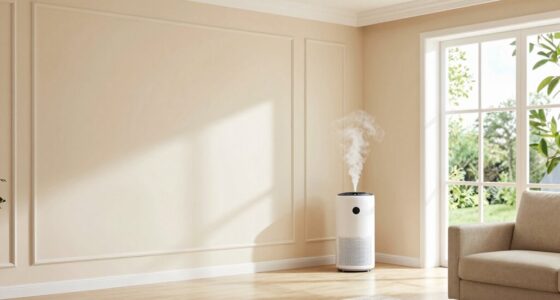
Bedrooms often trap stale air because they are small, enclosed spaces with limited airflow, especially if doors and windows stay closed for long periods. High humidity from breathing, sweat, or damp laundry adds to the problem, making the air heavy and musty. Without proper ventilation, pollutants and odors build up, leading to discomfort. If you want to discover simple ways to improve your air quality, keep exploring how to create a healthier sleep environment.

Get health and wellness essentials delivered free — and shop member deals
- Fast, free delivery on millions of items
- Access to Prime Big Deal Days deals on October 6–7
- Prime Video, Amazon Music and more included
Key Takeaways
- Bedrooms are small, enclosed spaces with limited airflow, causing stale air to linger longer.
- Closed doors and windows restrict fresh air exchange, trapping indoor pollutants and odors.
- Brief window openings often don’t provide sufficient ventilation to clear stale air.
- High humidity from breathing, sweating, and houseplants increases moisture, making stale air feel heavier.
- Lack of proper ventilation systems allows pollutants, odors, and moisture to accumulate over time.
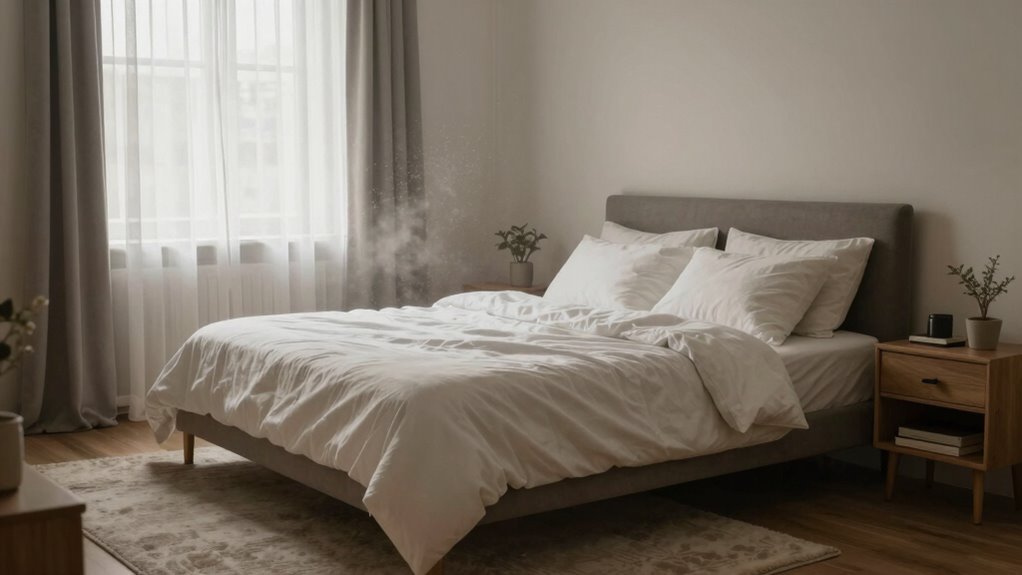
Have you ever wondered why your bedroom often feels stuffy or musty, even after airing it out? The answer lies in how air circulation and humidity control work—or rather, how they often don’t work as well as you think. Bedrooms tend to trap stale air because they’re small, enclosed spaces with limited airflow. When you close the door and windows, you cut off fresh air sources, causing the air inside to become stagnant. Even if you open a window briefly, the exchange of air isn’t always enough to refresh the space fully, especially if outdoor conditions are humid or polluted.
Bedrooms trap stale air due to limited airflow and closed windows, making proper ventilation essential for freshness.
Air circulation is crucial in preventing stale air from lingering. Without consistent movement, the air stays in place, and airborne pollutants, odors, and moisture accumulate. Fans can help, but only if they are positioned properly to promote cross-ventilation. Simply turning on a fan near the bed isn’t enough if there’s no fresh air coming in. You need proactive air circulation that actively replaces the stale air with cleaner, drier air from outside. Otherwise, the air remains trapped, making your bedroom feel stuffy and uncomfortable. Proper airflow management is essential for maintaining a healthy indoor environment. Realistically, many homes lack the adequate ventilation systems necessary to keep indoor air fresh without additional assistance.
Humidity control is another vital factor. Bedrooms often have higher humidity levels because of daily activities like breathing, sweating, and even the presence of houseplants or damp laundry. When humidity levels rise, the air feels heavier and more oppressive, which contributes to that musty smell. If humidity isn’t properly managed, it creates a perfect environment for mold and dust mites, further degrading air quality. Using a dehumidifier can help regulate moisture levels, ensuring the air doesn’t become overly damp and reducing that stale, damp odor. Proper humidity control also makes air circulation more effective since dry air can move freely and carry away moisture and pollutants.
You might think that airing out your bedroom is enough, but without addressing airflow and humidity, the stale air persists. Opening windows for a few minutes isn’t a long-term solution if outdoor air isn’t fresh or if humidity is high. Investing in good ventilation—like exhaust fans or air purifiers with humidity control features—can make a significant difference. These tools help maintain a steady flow of fresh air and keep moisture levels balanced, preventing the buildup of stale, musty air. Additionally, understanding how indoor air quality can be improved through proper ventilation and humidity management is essential for creating a healthier living environment. Remember, your bedroom’s air quality depends on continuous, active management of air circulation and humidity control. When you pay attention to these factors, your space will feel fresher, cleaner, and more inviting every time you step inside.
As an affiliate, we earn on qualifying purchases.
Frequently Asked Questions
How Does Humidity Affect Stale Air Buildup in Bedrooms?
High humidity levels in your bedroom make stale air buildup worse because moisture creates an ideal environment for mold growth. When humidity is too high, it prevents proper air circulation, trapping stale, damp air inside. This not only reduces fresh airflow but also encourages mold, which can impact your health. Keeping humidity levels balanced helps ventilate your room better, reducing stale air and preventing mold growth for a healthier, more comfortable space.
Can Houseplants Improve Air Quality in Bedrooms?
Houseplants can drastically improve your bedroom air quality, almost like turning it into an indoor jungle! Certain indoor plant varieties, such as snake plants or pothos, absorb toxins and release oxygen, making your air fresher. Combined with effective air purification techniques like proper ventilation and air filters, plants offer a natural way to combat stale air buildup. Incorporating them makes your space healthier and more vibrant.
What Role Do Bedding Materials Play in Air Quality?
Bedding materials considerably influence your bedroom’s air quality by affecting bedding allergies and fabric breathability. If you choose breathable fabrics like cotton or linen, you allow better airflow, reducing moisture buildup and mold growth. Conversely, non-breathable materials trap stale air and allergens, worsening allergies. Regularly washing your bedding and opting for hypoallergenic, breathable fabrics helps improve air circulation and reduces the buildup of dust, keeping your bedroom fresher and healthier.
How Often Should I Change My Bedroom Air Filters?
You should change your bedroom air filters every 30 to 60 days, depending on the filter type and household conditions. Regular filter maintenance guarantees ideal air quality and prevents buildup of dust and allergens. For different air filter types, such as HEPA or electrostatic filters, follow the manufacturer’s recommended filter maintenance schedule. This keeps stale air and potential irritants out, maintaining a healthier sleeping environment.
Do Bedroom Size and Layout Influence Air Circulation?
Think of your bedroom as a tiny island, where ventilation strategies shape the breeze that keeps it fresh. Your room size and layout directly influence room airflow patterns—I.e., how air circulates and escapes. Larger spaces may need more ventilation, while cramped layouts can trap stale air. By understanding these dynamics, you can optimize airflow, ensuring your bedroom stays invigorating rather than stuffy.
As an affiliate, we earn on qualifying purchases.
Conclusion
So, next time you think your bedroom’s just a place to sleep, realize it’s actually a fortress trapping stale air like a vault. Over time, it becomes a breeding ground for invisible pollutants and odors that cling to every corner. Don’t let your sanctuary turn into an air prison—air it out regularly. Otherwise, you risk breathing in a fog so thick it could rival a jungle’s canopy, hiding unseen dangers right under your nose.
As an affiliate, we earn on qualifying purchases.
ventilation system for small rooms
As an affiliate, we earn on qualifying purchases.
As an affiliate, we earn on qualifying purchases.
Fall Picks
fall essentials
As an affiliate, we earn on qualifying purchases.