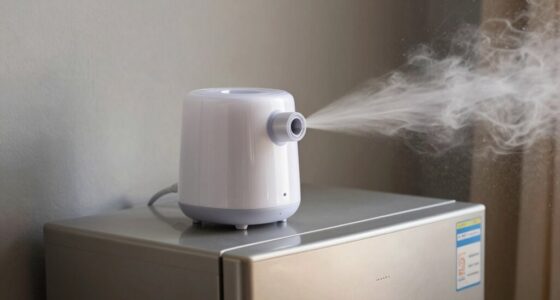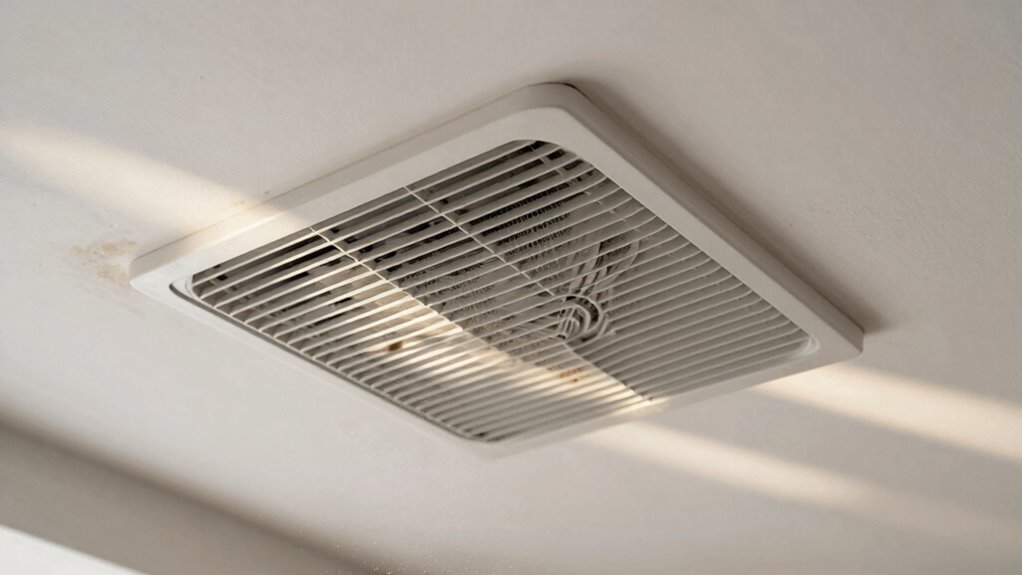

Uneven airflow in your HVAC system can often be caused by overlooked issues like dirty airflow sensors or poor duct design. If sensors are dirty or malfunctioning, they send incorrect signals, leading to uneven distribution. Similarly, poorly designed or sealed ducts can restrict airflow, creating pressure imbalances and inconsistent comfort. Addressing these hidden problems can improve your system’s performance. Keep exploring to discover how these issues might be affecting your home’s comfort and energy efficiency.

Get health and wellness essentials delivered free with Prime
- Fast, free delivery on millions of items
- Prime Video, Amazon Music and more included
- Member-only deals all year
Key Takeaways
- Dirty or malfunctioning airflow sensors can send incorrect signals, causing uneven airflow distribution.
- Poor duct design, including long runs and sharp bends, restricts airflow and creates pressure imbalances.
- Leaks and inadequate sealing in ducts disrupt airflow balance and reduce system efficiency.
- Improper duct sizing or inadequate vents lead to uneven air distribution across rooms.
- Lack of regular maintenance and balancing prevents optimal airflow, resulting in inconsistent heating and cooling.

Have you ever noticed uneven temperatures or strange noises coming from your HVAC system? If so, you’re not alone. Many homeowners experience inconsistent airflow, which can make parts of your home uncomfortably warm or chilly. While dirty filters or malfunctioning thermostats often come to mind first, a less obvious culprit lies in your duct design and the airflow sensor. These components play an essential role in how well your system distributes air, yet they’re frequently overlooked.
The airflow sensor, typically located within your HVAC system, measures the amount of air moving through your ducts. If it malfunctions or becomes dirty, it sends incorrect signals to your system’s control board. This miscommunication can lead to uneven airflow, causing certain rooms to receive too much or too little conditioned air. Sometimes, the sensor might get dirty or coated with dust, which prevents it from accurately detecting airflow. When this happens, your system struggles to adjust properly, resulting in inconsistent temperatures across different areas of your home.
Another significant factor often overlooked is duct design. If your ducts are poorly designed or improperly installed, airflow won’t be evenly distributed. For example, long runs, sharp bends, or inadequate sizing can restrict or redirect air, creating pressure imbalances. These issues can cause some vents to blow strong while others barely produce airflow. Over time, poor duct design can also lead to uneven heating or cooling, making certain rooms uncomfortable and increasing your energy bills as your system works harder to compensate. Additionally, proper duct sealing can prevent leaks that further disrupt airflow balance. Regular system maintenance can also help identify and resolve minor duct issues before they become major problems. Moreover, investing in an airflow optimization assessment can pinpoint specific areas where improvements are needed for better circulation. Sometimes, using airflow balancing techniques can also help distribute air more evenly across your home.
Poor duct design causes uneven airflow and increased energy costs by creating pressure imbalances and restricted air distribution.
Furthermore, understanding the importance of airflow sensors and their maintenance can prevent many airflow issues from developing into larger problems. Addressing these issues involves a few straightforward steps. First, check the airflow sensor for dust or debris and clean it if necessary. If the sensor is damaged or not functioning correctly, replacing it can restore proper airflow signals. Second, having a professional evaluate your duct design can identify areas where airflow is restricted or uneven. They might recommend duct resizing, adding additional vents, or sealing leaks to improve circulation. Properly designed and maintained ducts ensure that conditioned air reaches every corner of your home equally.
In the end, understanding the role of your airflow sensor and duct design can make a significant difference in how evenly your HVAC system performs. Neglecting these components often leads to frustration and higher energy costs. By paying attention to these overlooked factors, you can enjoy a more comfortable home environment and extend the lifespan of your HVAC system. Remember, sometimes the root of uneven airflow isn’t as obvious as dirty filters but lies deeper within the system’s design and sensors.
HVAC airflow sensor cleaning kit
As an affiliate, we earn on qualifying purchases.
As an affiliate, we earn on qualifying purchases.
Frequently Asked Questions
Can Outdoor Air Quality Affect Indoor Airflow Consistency?
Yes, outdoor air quality can affect indoor airflow consistency. Poor air purity outside can lead to clogged filters or increased pollutants inside, disrupting ventilation balance. When outdoor air quality drops, your HVAC system may work harder or poorly, causing uneven airflow. Ensuring good outdoor air quality and maintaining your ventilation system helps keep airflow steady and indoor air fresh, promoting a healthier, more comfortable environment.
How Does Duct Insulation Impact Airflow Distribution?
Duct insulation plays a vital role in airflow distribution by preventing heat loss or gain, ensuring your system maintains consistent temperature and pressure. When ducts are properly sealed, it reduces leaks that cause uneven airflow. Good insulation enhances insulation effectiveness, maintaining balanced airflow throughout your home. If your ducts lack sealing or insulation, you might notice some rooms feel colder or warmer, highlighting the significance of quality duct sealing and insulation for even HVAC performance.
Do Window Placements Influence Airflow Patterns Inside?
Yes, window placement influences airflow patterns inside your space. Your window orientation determines how outside air enters and circulates, affecting overall airflow. Additionally, vent placement works with windows to direct air efficiently. If vents are poorly positioned relative to windows, you might notice uneven airflow or drafts. Adjusting vent locations or choosing window orientations that promote natural cross-ventilation can improve airflow consistency and comfort inside your home.
Can Ceiling Fan Usage Improve Airflow Unevenness?
Imagine you’re adjusting a ceiling fan in a room with uneven airflow; proper fan placement strategies can notably improve efficiency. Ceiling fans help circulate air better, making the space feel more balanced. By strategically positioning the fan—preferably in the center of the room—you enhance airflow distribution. This simple step boosts ceiling fan efficiency, making the room more comfortable and reducing workload on your HVAC system, ultimately creating a more even airflow pattern.
How Often Should HVAC System Filters Be Replaced for Optimal Airflow?
You should replace your HVAC system filters every 1 to 3 months for ideal airflow. The replacement frequency depends on filter materials—pleated filters last longer than fiberglass ones—and your household’s needs, like pets or allergies. Regularly changing filters prevents dust buildup and maintains proper airflow. Check your filters monthly, especially during peak seasons, to guarantee your system runs efficiently and keeps indoor air quality high.
As an affiliate, we earn on qualifying purchases.
Conclusion
If your HVAC airflow feels uneven, you’re not alone—about 75% of homeowners experience similar issues at some point. Often, the overlooked culprit is ductwork problems or blocked vents, not just the thermostat. Addressing these issues can improve comfort and save you money on energy bills. Remember, regular maintenance isn’t just a chore; it’s the key to ensuring your system works efficiently and keeps every room feeling just right. Don’t ignore the signs—your comfort depends on it.
HVAC duct design and installation tools
As an affiliate, we earn on qualifying purchases.
As an affiliate, we earn on qualifying purchases.
As an affiliate, we earn on qualifying purchases.
Evergreen bestsellers Picks
bestsellers
As an affiliate, we earn on qualifying purchases.