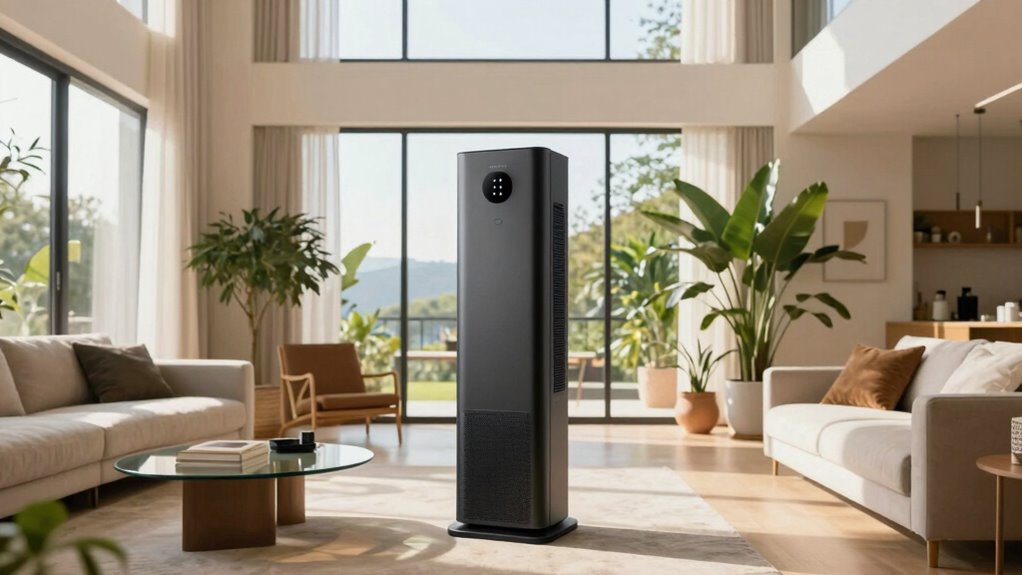
To optimize a large-room purifier, place it centrally to guarantee balanced airflow and elevate it on a stand or table for better circulation. Keep it a few feet away from walls and furniture, avoiding corners and tight spaces. Make certain airflow isn’t obstructed in any direction and consider using multiple units if the space is very large. Proper placement improves efficiency and air quality. If you want to learn more about achieving the best results, keep exploring the details.

Get health and wellness essentials delivered free with Prime
- Fast, free delivery on millions of items
- Prime Video, Amazon Music and more included
- Member-only deals all year
Key Takeaways
- Place the purifier centrally in the room to ensure even airflow coverage.
- Elevate the unit on a stand or table to improve circulation and prevent airflow restrictions.
- Keep the purifier a few feet away from walls and furniture, avoiding corners and tight spaces.
- Position near pollution sources for targeted filtration, especially in large spaces.
- Use multiple units if necessary, placing them strategically to cover all areas evenly.
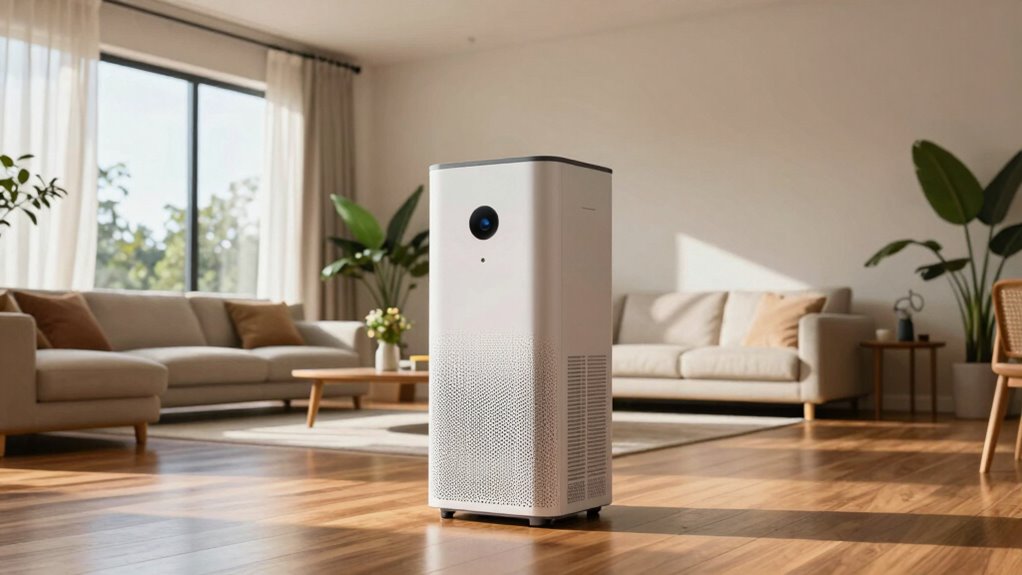
Proper placement of large-room purifiers is crucial to maximize their effectiveness in improving air quality. When you position your purifier correctly, it can efficiently filter out pollutants, allergens, and airborne particles, creating a healthier environment. To do this, you need to focus on airflow optimization, which means placing the unit where it can draw in the most contaminated air and disperse clean air evenly throughout the room. Proper airflow ensures that the purifier doesn’t work harder than necessary and that the entire space benefits from fresh, purified air.
Start by avoiding corners or tight spaces. If you place the purifier too close to walls or furniture, airflow becomes restricted, reducing its efficiency. Instead, position the unit in a central location, ideally a few feet away from obstacles, so it can circulate air freely in all directions. Elevated positions, such as on a table or stand, often work better than on the floor, especially if the purifier’s intake is at a higher level. This placement helps the device access higher concentrations of airborne pollutants, which tend to accumulate near breathing zones. Additionally, understanding airflow optimization principles can significantly enhance your purifier’s performance.
Place your purifier centrally, elevated, and a few feet from obstacles for optimal airflow and efficiency.
Another key aspect of placement is ensuring your purifier is calibrated correctly. Proper calibration means adjusting it to match room size and air quality levels, which guarantees ideal airflow and filtration performance. Many purifiers have settings or indicators that guide you in this process. When you set the purifier to an appropriate mode or fan speed, you improve airflow optimization, allowing the device to operate efficiently without overworking itself. Regularly check and recalibrate if necessary, especially after moving the unit or if you notice a decline in air quality. Proper calibration can prevent unnecessary energy consumption and prolong the lifespan of your device. Additionally, maintaining good air circulation around the unit helps prevent stagnant air pockets and ensures consistent purification. It’s also helpful to consider ventilation strategies, such as controlled fresh air intake, to support ongoing air quality improvements.
Furthermore, positioning the purifier away from sources of air pollution can enhance its effectiveness by reducing the load on the filter. Additionally, keep doors and windows closed when using your purifier. This minimizes the influx of new pollutants, making the device’s job easier and more effective. If your room has multiple sources of pollution, like smokers or pets, consider placing the purifier near these sources to capture contaminants at their origin. For larger rooms, you might need more than one unit or a high-capacity purifier to ensure uniform air quality, but always follow manufacturer guidelines for placement to avoid dead zones where airflow is poor. Correct placement and airflow management are essential for achieving optimal air purification results.
As an affiliate, we earn on qualifying purchases.
Frequently Asked Questions
How Often Should I Change the Purifier’s Filters?
You should change your purifier’s filters based on the recommended replacement schedule, usually every 6 to 12 months, depending on usage and air quality. Regular filter maintenance is essential to keep your purifier working efficiently. Check the manufacturer’s guidelines and monitor filter visibility or performance indicators. Replacing filters on time guarantees maximum air purification, prevents strain on the device, and maintains a healthy environment in your large room.
Can Large-Room Purifiers Be Used Outdoors?
Large-room purifiers are generally not designed for outdoor use. Outdoor airflow and weather resistance are key factors that affect their performance and durability. Exposure to rain, wind, or extreme weather can damage the purifier’s components and reduce its effectiveness. If you want cleaner air outside, look for devices specifically designed for outdoor environments, which are built to withstand weather conditions and provide efficient air purification outdoors.
Do Different Room Shapes Affect Placement?
Room shape is like a maze, affecting how air flows, so it definitely impacts placement. You should position your purifier where airflow dynamics are optimized, avoiding corners and obstructions. Long, narrow rooms might need multiple units or strategic placement at center points, while open, square spaces allow for more flexible positioning. Keep it in a spot with good circulation to maximize air purification and breathe easier.
Is It Safe to Place Purifiers Near Electronics?
It’s generally safe to place purifiers near electronics if you follow proper electronics safety guidelines. Keep the purifier a few feet away from sensitive electronics to avoid placement hazards like overheating or accidental spills. Avoid placing purifiers directly on top of or too close to devices that generate heat or moisture. Proper placement guarantees both your electronics and purifier operate safely, minimizing risks and maximizing air quality benefits.
How Do I Measure Room Size Accurately?
You can measure your room size easily by calculating its length, width, and height using a tape measure. Don’t worry about being perfect—just get close enough for effective airflow enhancement. Place your purifier at an ideal height, usually around eye level, to maximize airflow and purification efficiency. Accurate room measurements guarantee you choose a purifier that fits well, providing better air quality and more effective coverage.
As an affiliate, we earn on qualifying purchases.
Conclusion
To get the most out of your large-room purifier, follow these placement rules carefully. Think of it like a secret weapon against indoor pollutants—position it wisely, and it works more efficiently. Some say placing it near windows or vents boosts performance, but studies suggest central locations maximize airflow and purification. Don’t just guess—test different spots in your space. When you optimize placement, you’ll breathe easier, and your purifier truly becomes a powerful ally in creating a healthier home.
As an affiliate, we earn on qualifying purchases.
As an affiliate, we earn on qualifying purchases.
Cold & flu season Picks
humidifiers
As an affiliate, we earn on qualifying purchases.