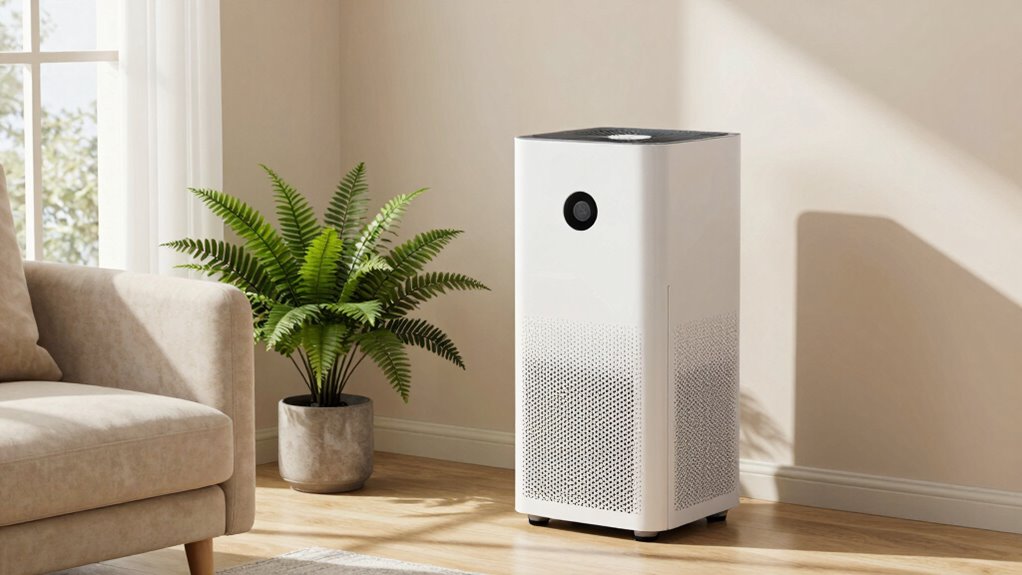
Proper placement of your air purifier is crucial because it guarantees ideal airflow and pollutant removal. If you position it too close to walls, furniture, or in a corner, airflow gets blocked, reducing its effectiveness. Placing it in the center of smaller rooms or near pollution sources in larger spaces improves circulation and filtration. Knowing where to position it makes a noticeable difference—keep exploring to discover how to maximize its performance even further.
Open a free Amazon Business account
Business pricing, bulk buying and tax-exempt orders.
As an affiliate, we earn on qualifying purchases.
Key Takeaways
- Proper placement ensures optimal airflow, maximizing the purifier’s ability to filter dust, allergens, and pollutants effectively.
- Placing the purifier near pollution sources or in the room’s center enhances air circulation and purification efficiency.
- Obstructions like furniture and walls restrict airflow, reducing the device’s ability to clean the air thoroughly.
- Elevating the purifier improves circulation and prevents blockage from floor-level objects.
- Room size influences placement decisions to ensure effective air exchange and pollutant removal.
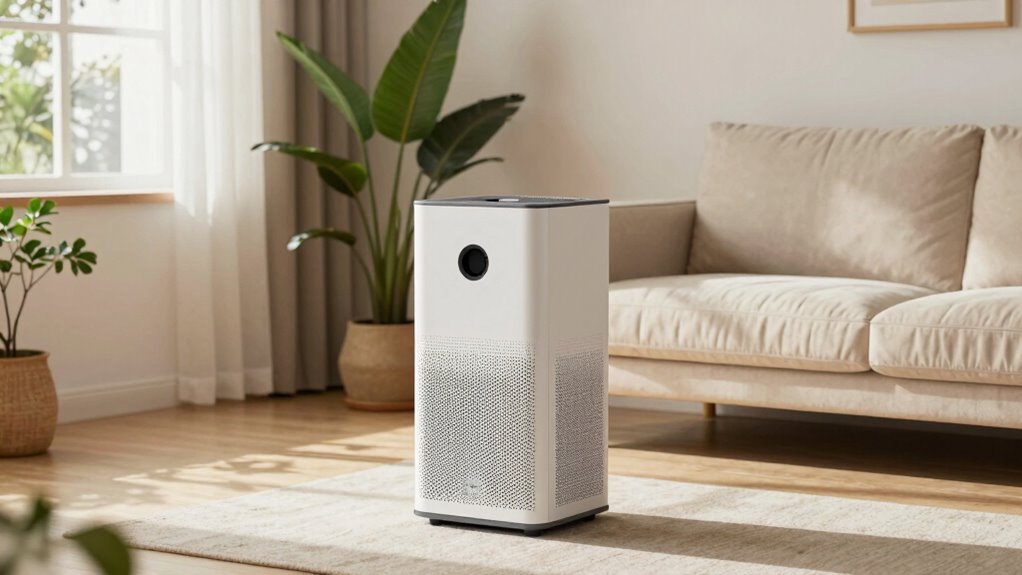
Proper placement of your air purifier is vital to maximize its effectiveness in improving indoor air quality. When you position it correctly, you guarantee ideal airflow, which directly influences how well it filters out dust, allergens, and pollutants. Airflow optimization depends heavily on understanding the room size and how air circulates within the space. If you place your purifier in the wrong spot, it might not draw in contaminated air efficiently or circulate purified air evenly, reducing its overall performance.
Proper placement ensures optimal airflow and maximum air purification efficiency.
Your goal should be to position the purifier where it can access the most air possible without obstructions. For smaller rooms, placing the device near the center often works best because it allows the air to circulate freely around it. In larger rooms, you might need to move the purifier closer to the main source of pollution, like a smoker’s area or a pet zone, to maximize airflow and purification efficiency. The key is to avoid corners or tight spaces, which can hinder air movement and create dead zones where pollutants linger.
Another vital aspect is to keep the purifier away from walls, furniture, or curtains that block airflow. When airflow is restricted, the purifier can struggle to pull in contaminated air and push out clean air effectively. Positioning it on a raised surface, such as a table or shelf, can improve circulation, especially if the device has a downward or side intake. This elevation prevents it from being blocked by objects on the floor and helps distribute clean air more thoroughly throughout the room. Additionally, understanding the importance of air circulation can guide you in selecting the best placement for optimal results. Ensuring proper airflow patterns can further enhance the efficiency of your air purifier by promoting better distribution of clean air. Recognizing the room size and its impact on air quality can help you choose the most effective location, especially in larger spaces. Proper placement also involves considering air exchange rates, which determine how quickly the air in a room is refreshed and cleaned.
As an affiliate, we earn on qualifying purchases.
Frequently Asked Questions
How Does Room Size Affect Air Purifier Placement?
Room size considerably affects your air purifier placement because larger spaces require strategic positioning to optimize airflow patterns. You should consider room layout to avoid placing the purifier near walls or furniture that obstructs airflow. Position it centrally or in high-traffic areas where air circulates well. Proper placement guarantees the purifier covers the entire room effectively, enhancing air quality and making your investment worthwhile.
Should I Place the Purifier Near Windows or Vents?
You should avoid placing the air purifier near windows or vents. Window proximity can let in outdoor pollutants, and placing the purifier nearby might recirculate those pollutants instead of filtering them out. Similarly, vent placement can introduce dust or other particles directly into the purifier, reducing its efficiency. Instead, position your purifier in a central location away from windows and vents to maximize air cleaning and improve indoor air quality.
How Often Should I Reposition My Air Purifier?
You should reposition your air purifier every few months to optimize airflow patterns and maintain efficiency. Regular adjustments help prevent stagnant air zones and keep the purifier working effectively. Keep noise levels in mind—avoid placing it where the sound becomes disruptive. By periodically changing its location, you guarantee consistent air quality and minimize noise disruption, making your purifier more effective and comfortable to use over time.
Can Placement Impact Allergen Removal Efficiency?
Yes, placement impacts allergen removal efficiency. By optimizing airflow, you guarantee the purifier effectively circulates air through the filter, capturing allergens better. Position it in central locations away from obstructions to maximize coverage. Also, consider filter accessibility; placing the unit where you can easily change filters ensures consistent performance. Proper placement guarantees your air purifier works efficiently, reducing allergens and improving your indoor air quality.
Is It Better to Place the Purifier High or Low?
You should place your air purifier higher for guaranteed airflow and allergen removal. Many worry about noise, but positioning it high minimizes disruption and maximizes circulation. Airflow enhancement is key—placing it low can block air pathways, reducing efficiency. If you want cleaner air without constant disturbance, elevate your purifier. This strategic placement ensures it works effectively while keeping noise levels manageable, giving you peace of mind and fresher air.
best location for air purifier in room
As an affiliate, we earn on qualifying purchases.
As an affiliate, we earn on qualifying purchases.
Conclusion
By choosing the right spot, you maximize airflow, minimize obstructions, and optimize purification. By understanding your space, you guarantee cleaner air, healthier lungs, and a fresher environment. By positioning your air purifier wisely, you prevent dust buildup, reduce allergens, and enhance overall comfort. Remember, placement isn’t just a detail—it’s the key. Make smart choices, place strategically, and enjoy the benefits of truly purified air every day.
air purifier with adjustable height
As an affiliate, we earn on qualifying purchases.
As an affiliate, we earn on qualifying purchases.
As an affiliate, we earn on qualifying purchases.
Fall Picks
fall essentials
As an affiliate, we earn on qualifying purchases.