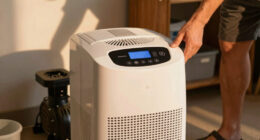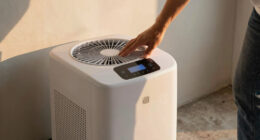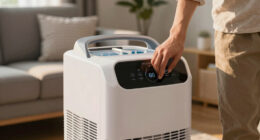
You need to keep realistic expectations for VOC monitors because they provide only a snapshot of indoor air chemical levels, not a full profile. They can alert you to possible issues but can’t identify all specific VOCs or sources. Calibration is essential for accuracy, and environmental factors can affect readings. Understanding these limits helps prevent unnecessary worries or false reassurance. If you want to learn more about how to interpret and use VOC monitor data effectively, keep exploring.
Key Takeaways
- VOC monitors provide real-time data but cannot detect all VOCs or identify exact sources.
- Detection limits may result in false negatives or positives, requiring cautious interpretation.
- Proper calibration is essential for accurate readings; without it, data reliability diminishes.
- Readings indicate potential issues but do not guarantee comprehensive air quality assessment.
- Understanding device limitations prevents overreliance and promotes balanced indoor air management.
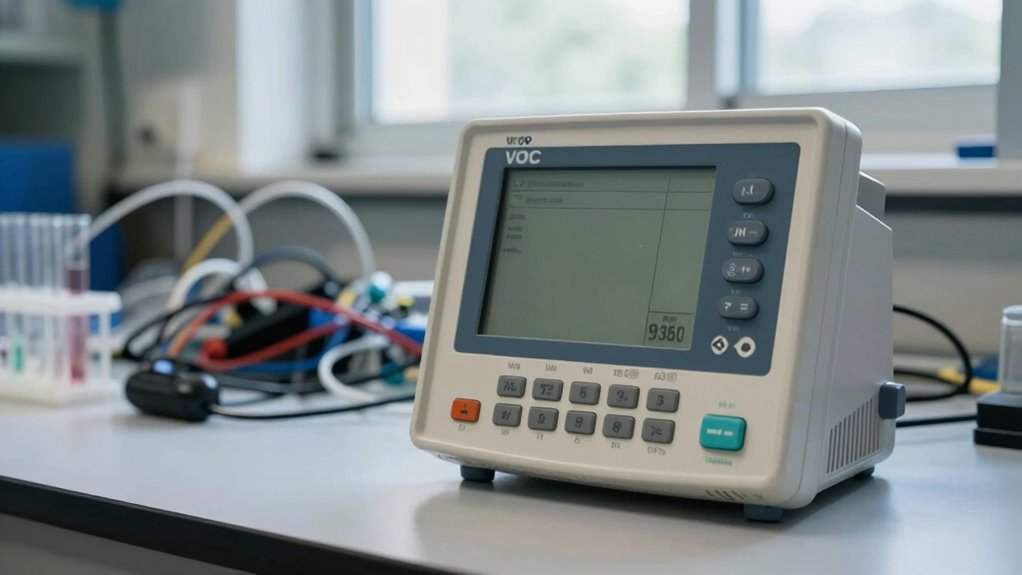
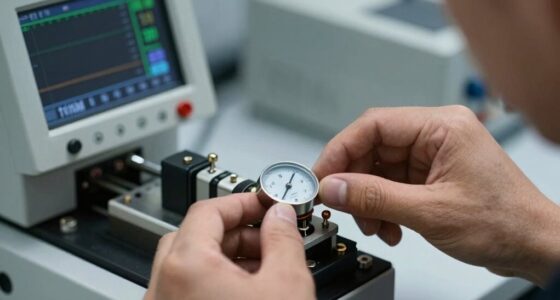
When it comes to monitoring volatile organic compounds (VOCs) in your environment, it’s important to set realistic expectations about what VOC monitors can achieve. These devices are valuable tools for assessing indoor air quality, but they aren’t perfect detectors of every pollutant or source of contamination. Understanding their capabilities and limitations helps you make informed decisions and avoid unnecessary alarm or complacency. VOC monitors can provide real-time data, giving you a snapshot of the air’s chemical composition at a specific moment. However, they often can’t identify every VOC present or determine the exact source without further analysis. This means that while they are useful for detecting potential issues, they shouldn’t be seen as definitive or comprehensive solutions. Proper calibration techniques play a vital role in ensuring your VOC monitor delivers accurate readings over time. Calibration involves adjusting the device to match a known standard, ensuring the measurements reflect reality as closely as possible. Regular calibration is necessary because sensor performance can drift due to environmental factors, aging, or exposure to certain chemicals. Without proper calibration, your device may produce inaccurate results, leading you to misjudge your indoor air quality. Many manufacturers provide specific calibration procedures, which you should follow diligently, whether through professional calibration services or using calibration gases and reference materials. By maintaining your device with routine calibration, you improve its reliability and the credibility of the data it provides. It’s also essential to remember that VOC monitors have detection limits. They are designed to identify VOC concentrations within certain ranges, but extremely low or high levels may fall outside their detection capabilities. This means that a “safe” reading doesn’t necessarily mean your indoor air quality is perfect—it merely indicates that VOC levels are below the device’s detection threshold. Conversely, higher readings might not always pinpoint the exact source or pollutant. Instead, they serve as alerts that something may need attention, prompting you to investigate further or improve ventilation. Understanding these limitations can help you use VOC monitors more effectively as part of a comprehensive indoor air quality management strategy. Additionally, staying informed about sensor performance helps you interpret readings more accurately and maintain confidence in your monitoring efforts. Recognizing the detection thresholds of your device allows you to better interpret its readings and avoid false assumptions about air safety. Being aware of the potential for false positives or negatives can also aid in making more balanced decisions based on the data collected.

Multigas 4 Gas Monitor | with USA NIST Calibration Certificate | CO, H2S, CO, EX LEL |
🌈 COLOR DISPLAY: Color screen and Graph functions.
As an affiliate, we earn on qualifying purchases.
As an affiliate, we earn on qualifying purchases.
Frequently Asked Questions
How Often Should VOC Monitors Be Calibrated?
You should calibrate VOC monitors regularly, typically every three to six months, to guarantee sensor accuracy. Calibration frequency depends on your specific device and usage environment, but more frequent calibration helps maintain reliable readings. Over time, sensors drift, affecting accuracy. By sticking to a consistent calibration schedule, you ensure your VOC monitor provides precise data, keeping your indoor air quality assessments trustworthy and effective.
Can VOC Monitors Detect All Types of Volatile Compounds?
Think of VOC monitors as your vigilant watchtower, but even the sharpest sensors can’t see every shadow. They excel at VOC detection, yet their sensor sensitivity varies, so they might miss certain compounds or low concentrations. You can’t expect them to detect all volatile compounds perfectly, especially complex or low-level ones. Recognize their limits, and you’ll better interpret their readings, trusting them as valuable allies rather than infallible detectives.
What Are the Common Limitations of Portable VOC Monitors?
Portable VOC monitors have limitations like sensor sensitivity, which can affect their ability to detect low concentrations of volatile compounds accurately. You might also struggle with data interpretation, as readings can be influenced by environmental factors or cross-sensitivity to other chemicals. These factors mean you shouldn’t rely solely on these devices for thorough air quality assessments. Instead, use them as part of a broader strategy for monitoring VOC levels effectively.
Do VOC Monitors Require Special Maintenance or Cleaning?
Think of your VOC monitor as a delicate garden that needs regular care. You don’t just water it once and forget; you need to clean and calibrate it regularly. To guarantee sensor durability and accurate readings, check the sensor regularly and perform calibration as recommended. Keep the sensors dust-free and protected from harsh environments. Proper maintenance keeps your monitor reliable and prolongs its lifespan, much like nurturing a thriving garden.
How Do Environmental Factors Affect VOC Readings?
Environmental factors considerably influence VOC readings in indoor air. External sources like outdoor pollution can seep inside, raising VOC levels unexpectedly. Temperature and humidity also impact sensor accuracy; high humidity can cause false readings, while temperature fluctuations may affect sensor sensitivity. To guarantee reliable data, you should monitor these environmental conditions and understand their effects, so you can interpret VOC readings accurately and avoid misjudging indoor air quality.
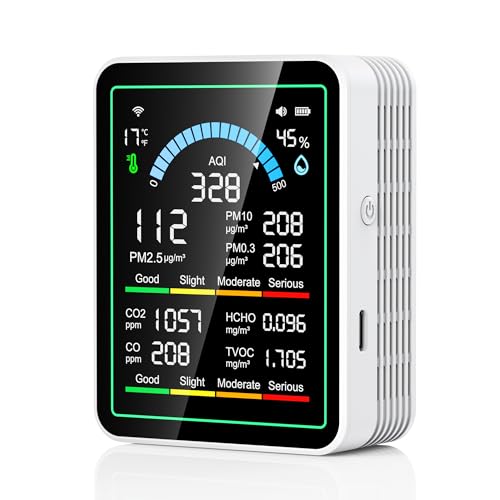
Air Quality Monitor Indoor, 10 in 1 Portable Smartair Quality Tester for CO2 | CO | TVOC | HCHO | Temp | AQI | PM0.3-1 Detection Suitable for Home, Cars, Plants, Pets and Hotels
【10-in-1 Smart Air Quality Monitor: Your All-Round Environmental Guardian】 This portable intelligent air quality tester delivers ultra-precise multi-gas…
As an affiliate, we earn on qualifying purchases.
As an affiliate, we earn on qualifying purchases.
Conclusion
Remember, VOC monitors are like trusty navigators—they guide you, but can’t steer the ship entirely. You need to set realistic expectations about their capabilities and limitations. They’ll help you spot potential issues, but won’t catch every tiny wave or gust. By understanding this, you keep your journey smooth and avoid chasing false alarms. Embrace your VOC monitor as a helpful companion, not a crystal ball, and navigate your indoor air quality with confidence and clarity.

5-in-1 Air Quality Monitor Indoor – CO2, HCHO, TVOC Detector with Temperature & Humidity Display – Portable Air Quality Tester for Home, Office, Bedroom
5-IN-1 AIR QUALITY MONITOR: Monitor CO2 (Carbon Dioxide), HCHO (Formaldehyde), TVOC, Temperature and Humidity in real time. Daily…
As an affiliate, we earn on qualifying purchases.
As an affiliate, we earn on qualifying purchases.

BREATHE Airmonitor Plus Indoor Air Quality Monitor – Smart CO2, PM1 PM2.5 PM10, VOC & Formaldehyde Sensor | Professional-Grade Air Monitor with App
PROFESSIONAL INDOOR AIR QUALITY MONITORING: Accurately track CO₂, PM1, PM2.5, PM10, TVOC, Formaldehyde (HCHO), Temperature and Humidity in…
As an affiliate, we earn on qualifying purchases.
As an affiliate, we earn on qualifying purchases.