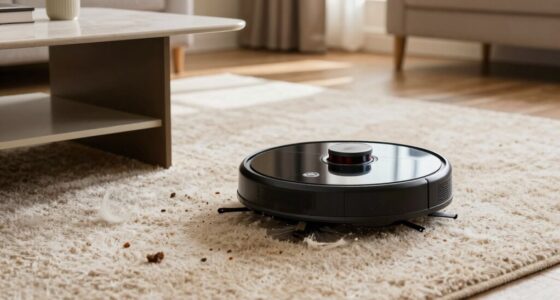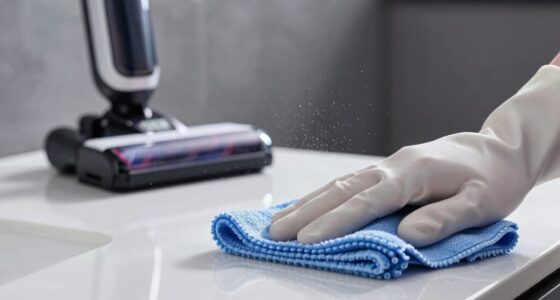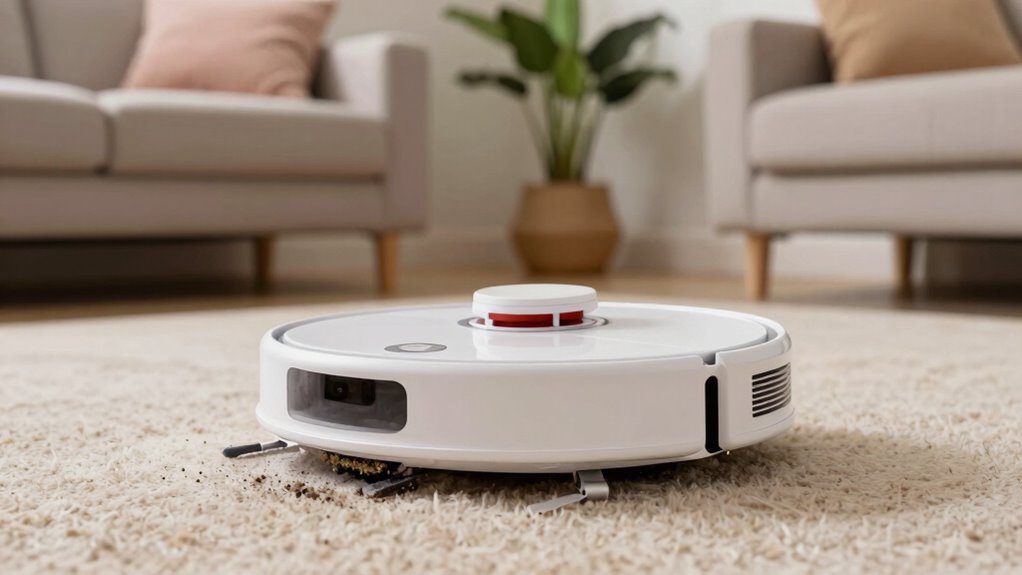

Self-empty robot vacuums appeal to allergy households because they automatically handle waste, reducing your exposure to dust, pet dander, and allergens. They use advanced filters like HEPA to trap tiny particles, keeping your air cleaner. With self-emptying and automation features, you spend less time maintaining them and minimize allergen disturbance. Plus, smart controls let you schedule cleanings remotely. Keep going to discover how these devices help create a healthier, allergy-friendly home environment effortlessly.

Get health and wellness essentials delivered free — and shop member deals
- Fast, free delivery on millions of items
- Access to Prime Big Deal Days deals on October 6–7
- Prime Video, Amazon Music and more included
Key Takeaways
- Self-emptying vacuums reduce allergen exposure by minimizing manual handling of dustbins contaminated with pet dander and dust.
- Advanced HEPA filters and sealed bins effectively trap microscopic allergens, improving indoor air quality.
- Automation ensures consistent cleaning, maintaining low allergen levels during peak allergy seasons.
- Smart features allow remote monitoring and scheduling, enhancing allergen management with minimal effort.
- Overall, these vacuums create a cleaner, healthier environment, reducing allergy symptoms and promoting better indoor air safety.

If allergies often leave you sneezing and uncomfortable, a self-emptying robot vacuum could be a game-changer. These devices aren’t just about convenience; they’re about creating a cleaner, healthier living space. For allergy households, they offer a considerable advantage by reducing the amount of dust, pet dander, and other allergens that circulate through the air. Unlike traditional vacuums, which require frequent manual emptying and can stir up allergens, self-emptying models handle waste automatically, minimizing your exposure to these irritants. This means you can enjoy a more allergy-friendly environment with less effort and less risk.
Self-emptying robot vacuums reduce allergens and simplify cleaning for a healthier, allergy-friendly home.
One of the key reasons these vacuums appeal to allergy sufferers is their ability to maintain a high level of cleanliness with minimal fuss. They are designed to perform allergy-friendly cleaning by effectively capturing tiny particles that often trigger allergic reactions. Their advanced filters, like HEPA filters, trap microscopic allergens, preventing them from being released back into the air as you clean. Since they empty themselves into sealed bins, the typical dust and allergen escape that often occurs with manual vacuuming is greatly reduced. This not only keeps your home cleaner but also ensures that allergens stay contained, reducing your allergy symptoms over time.
Another benefit is how self-empty robot vacuums simplify what can be a tedious chore—robot vacuum maintenance. You don’t have to worry about frequently emptying the dustbin or dealing with messy debris. Instead, you can set the vacuum to run regularly without fuss, knowing it will handle its own waste management. This consistency helps keep allergen levels down, especially during peak allergy seasons. Plus, many models alert you when the self-emptying bin needs a quick check, so you’re always in control without the hassle. This ongoing, automated maintenance means you can focus on enjoying your home rather than constantly cleaning or troubleshooting. Additionally, the integration of smart technology in these devices enhances their efficiency and makes managing allergens even easier. Incorporating smart home features further optimizes their performance by enabling remote monitoring and scheduling.
In allergy households, every step toward cleaner air matters. Self-empty robot vacuums offer a proactive way to keep allergens at bay, especially when it comes to allergy-friendly cleaning. They reduce the airborne particles that make allergies worse and make it easier for you to maintain a healthier environment. With less manual intervention, fewer allergens stirred up during cleaning, and smarter waste disposal, these vacuums can considerably improve your quality of life. They’re not just a luxury—they’re a practical investment in your health, providing consistent, efficient, and allergy-conscious cleaning that fits seamlessly into your daily routine. Additionally, their ability to contain allergens aligns with the importance of air quality management in allergy-prone households. Embracing these devices can also contribute to a broader commitment to biodiversity, as maintaining a cleaner indoor environment supports overall health and sustainability. Furthermore, the reduction in allergen circulation can positively impact indoor air quality, making your home safer and more comfortable for everyone.
self-empty robot vacuum with HEPA filter
As an affiliate, we earn on qualifying purchases.
As an affiliate, we earn on qualifying purchases.
Frequently Asked Questions
How Often Should the Vacuum’s Filters Be Replaced?
You should replace your vacuum’s filters every 3 to 6 months, depending on the filter lifespan and your usage. Regular replacement guarantees peak filtration and prevents allergen buildup. If you have pets or allergies, consider replacing filters more frequently. Keep an eye on the filter’s condition, and follow the manufacturer’s recommendations for replacement frequency to maintain your vacuum’s performance and keep your home allergen-free.
Are Self-Empty Vacuums Effective Against Pet Dander?
Yes, self-empty vacuums are effective against pet hair, dust mites, and other allergens. Their powerful suction and large capacity help trap pet hair and dust mites more efficiently, preventing them from circulating back into the air. Plus, their automatic emptying feature reduces allergen exposure during disposal, making them ideal for allergy households. Regularly maintaining filters and brushes enhances their ability to keep pet hair and dust mite allergens under control.
Do These Vacuums Require Special Allergy-Friendly Bags?
Did you know that 30% of allergy sufferers find traditional vacuum bags ineffective? Self-empty robot vacuums typically don’t require special allergy-friendly bags; they use built-in dust disposal systems that help contain allergens. However, it’s essential to regularly empty and maintain these systems to reduce dust disposal risks. Using allergy-friendly bags, if available, can further minimize allergen spread and improve indoor air quality.
Can They Be Programmed for Specific Allergen-Prone Areas?
Yes, you can program your self-empty robot vacuum for allergen zones, allowing targeted cleaning in areas prone to dust or pet dander. With custom cleaning settings, you set specific schedules or zones for the vacuum to focus on, ensuring those allergen-prone areas get extra attention. This tailored approach helps reduce allergens more effectively, making your home healthier and more comfortable, especially if you have allergy sensitivities.
Are There Any Health Risks Associated With Robot Vacuum Dust Disposal?
There are minimal health risks with robot vacuum dust disposal, but dust exposure can still occur if the dustbin isn’t sealed properly. When emptying the bin, you might release allergens into the air, affecting air quality and potentially triggering allergies. To reduce risks, empty the dustbin in a well-ventilated area and wear a mask if you’re sensitive. Regular maintenance helps keep dust exposure and air quality concerns at bay.
automatic dustbin robot vacuum for allergies
As an affiliate, we earn on qualifying purchases.
As an affiliate, we earn on qualifying purchases.
Conclusion
Imagine stepping into a home where dust and allergens are no longer lurking, where your robot vacuum empties itself and keeps the air pure. Feel the relief of cleaner floors, the ease of hands-free maintenance, and the confidence that your allergy symptoms will lessen. With a self-empty robot vacuum, you’re not just cleaning—you’re creating a sanctuary, a gust of fresh air, a haven where allergens can’t hide, and comfort is always within reach.
smart self-empty robot vacuum cleaner
As an affiliate, we earn on qualifying purchases.
As an affiliate, we earn on qualifying purchases.
As an affiliate, we earn on qualifying purchases.
Evergreen bestsellers Picks
bestsellers
As an affiliate, we earn on qualifying purchases.