
TL;DR
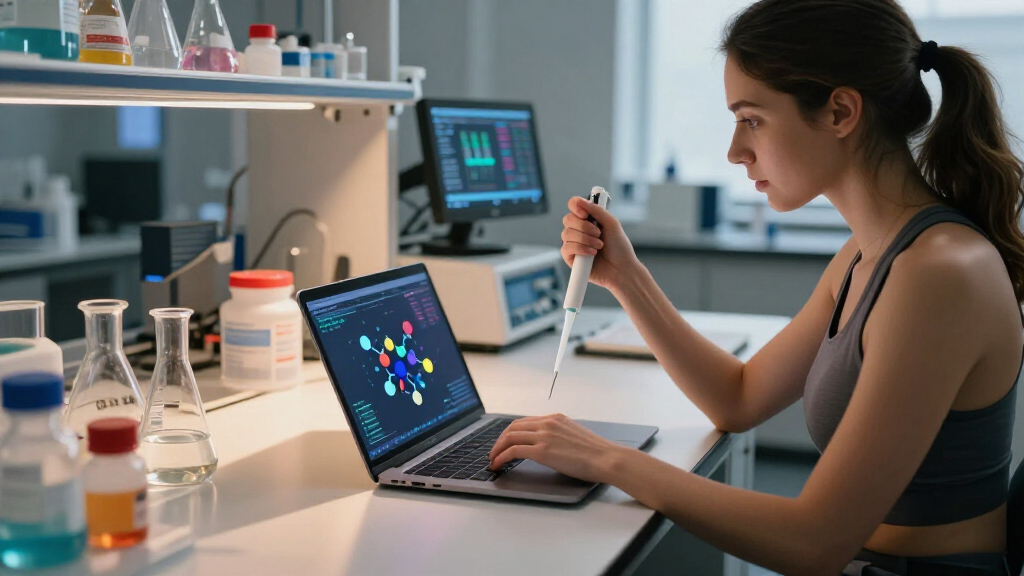
AI is increasingly used in drug discovery, with recent breakthroughs accelerating development pipelines. Experts highlight both progress and ongoing challenges, shaping the future of medicine.
Recent advances in artificial intelligence (AI) have significantly accelerated drug discovery processes, with multiple companies and research institutions reporting successful applications of AI algorithms to identify promising drug candidates. This development marks a major shift in pharmaceutical research, as AI tools are increasingly integrated into traditional workflows, promising faster and more cost-effective development of new medicines.

Get health and wellness essentials delivered free with Prime
- Fast, free delivery on millions of items
- Prime Video, Amazon Music and more included
- Member-only deals all year
Multiple biotech firms, including Insilico Medicine and DeepMind, have announced successful use of AI models to predict molecular structures and identify potential drug compounds. For instance, Insilico reported that its AI platform identified several candidate molecules for diseases with unmet medical needs within months, a process that traditionally takes years.
Industry experts confirm that AI-driven approaches are now being adopted in early-stage drug discovery, with some pharmaceutical companies investing heavily in AI research units. However, experts also acknowledge that these methods are still in the early stages of validation and widespread clinical adoption.
Implications of AI-Driven Drug Discovery for Healthcare Innovation
This shift to AI-enabled drug discovery could revolutionize healthcare by reducing the time and cost required to bring new drugs to market. Faster development pipelines may lead to earlier access to treatments for patients with rare or urgent conditions. However, reliance on AI also raises questions about validation, regulatory approval, and ethical considerations, which are still being addressed.
Products Worth Considering

Blueair Blue Pure 211i Max Smart Air Purifier for Large Rooms

Philips Sonicare ProtectiveClean 5300 Rechargeable Electric Toothbrush with 3 Brush Heads, Black

Oura Ring 5 Smart Ring – Silver – Size 8
As an affiliate, we earn on qualifying purchases.
Recent Progress and Industry Adoption of AI in Pharma
Over the past few years, AI has transitioned from experimental to practical in pharmaceutical research. Companies like Atomwise and Schrödinger have developed AI platforms that predict drug-target interactions with increasing accuracy. Regulatory agencies, including the FDA, have begun to explore frameworks for evaluating AI-based drug candidates, signaling a recognition of AI’s role in future drug development.
Despite these advances, challenges remain, such as ensuring data quality, model transparency, and reproducibility. Industry leaders emphasize that AI is a tool to augment, not replace, human expertise in drug discovery.
Unresolved Challenges and Regulatory Hurdles for AI in Drug Discovery
While AI has shown promising results, it is still uncertain how quickly regulatory agencies will develop comprehensive frameworks for approving AI-designed drugs. Data quality, model interpretability, and reproducibility remain significant hurdles, with some experts questioning whether AI predictions can be reliably validated at scale. The long-term safety and efficacy of AI-identified compounds are also still under investigation.
Next Steps for AI Integration and Validation in Pharma
Industry and regulators are expected to collaborate on establishing standards and validation protocols for AI-based drug candidates over the coming year. Continued investment in AI research, along with pilot programs in clinical trials, will likely shape the pathway toward broader adoption. Monitoring these developments will be crucial for understanding how quickly AI can transform drug discovery into routine practice.
Key Questions
How is AI currently used in drug discovery?
AI is primarily used to predict molecular structures, identify potential drug candidates, and analyze biological data to accelerate early-stage research.
What are the main challenges facing AI in drug development?
Challenges include ensuring data quality, model transparency, regulatory approval processes, and validating the safety and efficacy of AI-identified compounds.
Will AI replace human researchers in drug discovery?
AI is expected to augment human expertise by handling data-intensive tasks, but human oversight and judgment will remain essential in decision-making and clinical validation.
When might AI-designed drugs reach the market?
While some AI-identified candidates are progressing toward clinical trials, widespread market availability is likely still several years away, depending on regulatory approval and validation success.
Source: hn