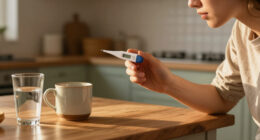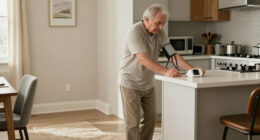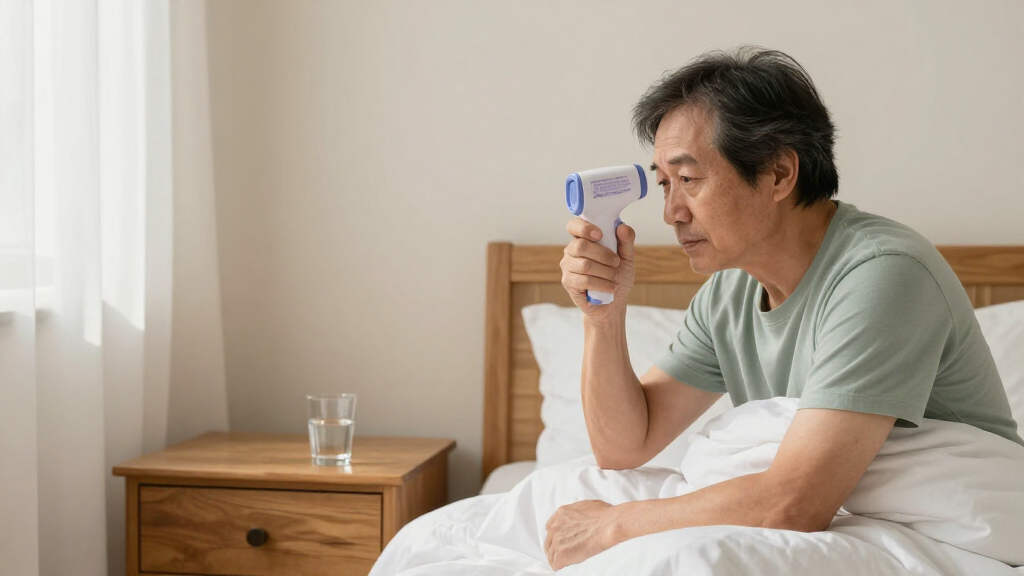

Use this guide to take an adult’s temperature with a non-contact infrared forehead thermometer and decide what to do with the result. It is for adults or caregivers who have the thermometer’s instructions and want a quick, repeatable reading. The task takes about 5-10 minutes and requires no special medical training.

Get health and wellness essentials delivered free with Prime
- Fast, free delivery on millions of items
- Prime Video, Amazon Music and more included
- Member-only deals all year

Goodbaby No-Touch Forehead Thermometer for Adults and Kids
- ✔ Measurement modes: Forehead, room and object
- ✔ Units: Celsius or Fahrenheit
- ✔ Forehead distance: 1.5 inches

ANMEATE Non-Contact Forehead Thermometer for Adults and Kids
- ✔ Type: Non-contact digital infrared forehead thermometer
- ✔ Response time: 1 second
- ✔ Temperature range: 89.6°F to 109.2°F

GoodBaby Non-Contact Forehead Thermometer for Adults and Kids
- ✔ Type: Non-contact infrared forehead thermometer
- ✔ Response time: 1 second
- ✔ Temperature range: 89.6°F to 100.3°F
Forehead readings can be affected by room conditions, sweat, distance, and device settings. Follow the specific model’s instructions whenever they differ from general guidance here. A temperature reading is one part of assessing illness; seek medical advice if symptoms are severe or you are concerned, regardless of the number.
Difficulty: Beginner | Time: 5-10 minutes
What You’ll Need
Tools & Materials:
- A non-contact infrared forehead thermometer with working batteries
- The thermometer’s user manual
- A clean, dry cloth if the forehead needs drying
Knowledge:
- Basic ability to operate the thermometer and read its display
- Awareness that the device must be set to body or forehead mode
Check the device manual for its measurement site, distance, operating range, and any required adjustment or mode. Infrared thermometers designed for objects or food are not suitable for measuring body temperature. If the adult has severe symptoms, do not delay urgent care to repeat measurements.
Goodbaby No-Touch Forehead Thermometer for Adults and Kids
Goodbaby leads this group because it can measure forehead, room and object temperatures. That extra flexibility makes it more useful around a household than ANMEATE or the GoodBaby model, both of which are presented primarily as forehead thermometers. For adults who want one device for a quick personal check and occasional household measurements, the added modes are the clearest reason to choose it.The operation is deliberately simple: a one-button interface switches between Celsius and Fahrenheit, and the described forehead measurement distance is 1.5 inches. It includes two AAA batteries and a 12-month replacement warranty. Those details make it a practical ready-to-use pick, though the warranty period is not a replacement for checking the instructions or contacting support if readings seem inconsistent.Its main tradeoff is sensitivity to surroundings. The supplied description warns that unstable room temperatures can affect readings, and calls for a 10-minute wait after cleaning skin plus 10 seconds between measurements. That is more procedural care than ANMEATE’s short feature summary suggests, and less appealing for rapid repeated checks. GoodBaby has a large display and silent mode, which may better suit quiet use, while Goodbaby’s advantage is broader measurement choice. We should follow the manual and avoid treating a single forehead reading as definitive when it conflicts with how we feel.
Pros:
- Measures forehead, room and object temperatures
- One-button operation with Fahrenheit and Celsius
- Includes two AAA batteries
- Lists a 12-month replacement warranty
Cons:
- Readings may be affected by unstable room temperatures
- Instructions call for a 10-minute wait after cleaning skin
- Requires 10 seconds between measurements
Best for: Adults who want a simple forehead thermometer that can also check room and object temperatures.
Not ideal for: Buyers who want the fewest waiting steps, or who need readings in a room outside the stated 50°F to 104°F operating range.
Bottom line: Choose Goodbaby when its extra room and object modes matter more than minimizing measurement wait steps.
“Choose Goodbaby when its extra room and object modes matter more than minimizing measurement wait steps.”
ANMEATE Non-Contact Forehead Thermometer for Adults and Kids
ANMEATE is the clearest choice for adults who want a focused forehead thermometer with a quick readout and visible alerts. Its stated one-second response time and color-coded green, yellow and red backlight are designed to make a check easy to read at a glance. Compared with Goodbaby, it skips room and object modes; that narrower purpose keeps the feature set centered on temperature checks rather than broader household use.The 35-set memory can help us review a sequence of readings instead of relying on recall, and one-touch mute adds flexibility for quiet settings. Fahrenheit and Celsius switching, a backlit display and included AAA batteries round out the essentials. These features also make it more informative than a bare-bones thermometer, without the larger display and silent-mode emphasis of the GoodBaby model.There are limits to that simplicity. The listed temperature range is 89.6°F to 109.2°F, and the device is specified for indoor use. As with the other forehead options here, non-contact readings can differ from oral or rectal measurements, so we should use consistent positioning and consult the instructions. ANMEATE’s supplied details describe it as clinically tested, but do not provide a protocol or independent results for us to compare. It makes sense for routine home checks; buyers looking for extra measurement modes should choose Goodbaby instead.
Pros:
- Stated one-second response time
- Three-color backlight and fever alarm
- Stores up to 35 readings
- Mute mode and Fahrenheit/Celsius switching
Cons:
- Specified for indoor use
- Forehead readings may differ from oral or rectal methods
- Does not list room or object measurement modes
Best for: Adults who want a quick, indoor forehead check with memory and easy-to-read fever alerts.
Not ideal for: People who want room or object measurements, or need a thermometer specified for outdoor use.
Bottom line: ANMEATE is a practical pick for quick, readable indoor forehead checks when extra modes are unnecessary.
“ANMEATE is a practical pick for quick, readable indoor forehead checks when extra modes are unnecessary.”
GoodBaby Non-Contact Forehead Thermometer for Adults and Kids
GoodBaby earns its place through a combination of large backlit LCD, silent mode and 35-reading memory. That package is especially relevant when we want to read the display easily or avoid audible alerts. Its one-second response time is similar to ANMEATE’s, but GoodBaby makes the display and quiet operation more prominent. Compared with the top-ranked Goodbaby, it lacks the listed room and object modes, so its appeal is more specialized.The non-contact design means no cleaning between uses is required according to the product description, and the thermometer switches between Fahrenheit and Celsius. A three-color fever alarm adds a quick visual cue, while stored readings can help us follow a trend over time. Two AAA batteries are included. These practical touches are useful, though they do not remove the need to follow the manual’s positioning guidance and use readings as one part of assessing how we feel.The key concern is the listed 89.6°F to 100.3°F range. That upper limit is substantially lower than ANMEATE’s stated 109.2°F maximum, so buyers should check whether the range fits their intended use and consult the manufacturer for clarification if needed. The description also notes possible failure from incorrect battery installation or electronic malfunction. GoodBaby is therefore most compelling when quiet, readable forehead checks are the priority; for broader readings, Goodbaby is more flexible, and for a wider stated temperature span ANMEATE is the stronger fit.
Pros:
- Large backlit LCD with three-color fever alert
- Silent mode for quiet checks
- Stores up to 35 readings
- No cleaning between uses is required by its description
Cons:
- Listed temperature range tops out at 100.3°F
- No room or object modes are listed
- Description notes possible battery-installation or electronic malfunction
Best for: Adults who value a large, backlit display, silent operation and a stored history of forehead readings.
Not ideal for: Buyers who need a listed upper measurement limit above 100.3°F or want room and object modes.
Bottom line: Pick GoodBaby for its quiet, readable interface, after confirming its stated temperature range suits your needs.
“Pick GoodBaby for its quiet, readable interface, after confirming its stated temperature range suits your needs.”
As an Amazon Associate we earn from qualifying purchases.
Before You Start
Bring the adult and thermometer into the same room and allow them to rest away from direct sunlight, drafts, heaters, or air conditioning. Follow the manual’s acclimation time; if it gives none, allow about 10-30 minutes after coming in from a markedly different temperature. Avoid measuring just after exercise, bathing, or a hot or cold drink. Remove hats or hair covering the forehead, and wait until the skin is dry and uncovered.
Use the thermometer only as its manufacturer directs. Some models require a particular distance or a scan across the forehead; others measure at a fixed point. Do not assume readings from different thermometer types or body sites are interchangeable.
Step-by-Step Instructions
Step 1: Check the thermometer
Read the manual’s instructions for forehead measurement. Confirm that the display is clear, the batteries are working, and the device is set to body, forehead, or human mode rather than object or surface mode. Select Celsius or Fahrenheit if the device allows it, and note which unit the display uses.
Tip:Do not use a device labeled only for objects, food, or surfaces to estimate body temperature.
Check: The thermometer is powered on, shows the expected unit, and is set to the correct body-temperature mode.
Step 2: Prepare the adult and forehead
Have the adult sit quietly in the room. Move hair, hats, or headbands away from the measurement area. If the forehead is sweaty or wet, gently dry it and wait for the skin to settle before measuring. Follow the manual’s waiting guidance after exercise, bathing, or exposure to outdoor heat or cold.
Tip:Make the measurement on bare skin, not over hair, clothing, a bandage, or a head covering.
Check: The adult has rested in the room, and the forehead is uncovered, dry, and free from direct sunlight or airflow.
Step 3: Position the thermometer
Hold the sensor perpendicular to the forehead and aim it at the spot specified in the manual. Keep it at the stated distance. If the model calls for a scan, move it along the described path at a steady pace; if it calls for a stationary reading, hold it still. Keep the sensor clean and avoid touching the skin unless the manual says contact is required.
Tip:Distance and angle affect readings. Do not guess if your manual gives a precise range or target location.
Check: The sensor is aimed at the correct bare-skin area from the distance and angle specified by the manufacturer.
Step 4: Take the reading
Press the measurement button once, then keep the thermometer in position until it beeps, flashes, or otherwise signals completion. Read the display and record the number, unit, time, and measurement site if you are tracking a fever. Do not move the device before it finishes.
Tip:If the screen shows an error code, check the manual’s code list instead of treating the code as a temperature.
Check: The device signals a completed measurement and displays a temperature in the selected unit.
Step 5: Repeat an unexpected reading
Check that the mode, distance, target area, and forehead conditions were correct if the result seems inconsistent with how the adult feels or differs substantially from recent readings. Wait briefly, then take another reading using the same site and technique. Follow the manual if it specifies a pause between measurements. Record both values rather than selecting the one that seems preferable.
Tip:Repeatedly measuring different sites or switching between devices can make comparisons confusing. Use the same thermometer and method when tracking changes.
Check: You have a consistent repeat reading or have identified a reason the first measurement may not be reliable.
Step 6: Interpret the result and act
Compare the reading with the thermometer manual’s guidance and the advice of a health professional. A forehead reading may not match an oral, ear, or rectal reading, and normal temperature varies among people and across the day. If the adult feels unwell, consider symptoms and medical history as well as the number. Contact a healthcare professional for advice when the temperature is concerning, persistent, or accompanied by worsening symptoms.
Tip:Seek urgent care for severe symptoms such as trouble breathing, confusion, fainting, or difficulty waking, regardless of the thermometer result.
Check: You have recorded the value with its unit and measurement site and have chosen an appropriate next action based on symptoms and clinical guidance.
Step 7: Clean and store the device
Turn the thermometer off. Clean the sensor and housing only as directed in the manual; do not immerse the device or use a cleaning product that could damage its lens. Let it dry if needed, then store it in its case or a clean, dry place within the specified temperature range.
Tip:A smudged or scratched sensor can affect measurements. Avoid touching the sensor window with fingers.
Check: The thermometer is clean, dry, switched off, and stored as its manufacturer directs.
Common Mistakes to Avoid
- Measuring immediately after coming in from the cold or heat. — Let the adult and thermometer adjust to the room for the time stated in the manual; wait longer after a large temperature change.
- Taking a reading over sweat, hair, a hat, or makeup buildup. — Expose a dry forehead and follow the manual’s instructions for the measurement spot.
- Holding the thermometer too close, too far away, or at an angle. — Use the stated distance and keep the sensor aimed perpendicular to the specified area.
- Using object mode or comparing a forehead reading directly with another body site. — Select body mode and record the site; use the same device and method for follow-up readings.
Troubleshooting
Problem: The display shows an error or no result.
Solution: Check the manual’s error-code chart, confirm body mode, replace weak batteries if indicated, and retry at the specified distance and room conditions.
Problem: Repeated readings differ noticeably.
Solution: Check for sweat, airflow, sunlight, incorrect distance, or movement. Allow the person and device to settle, then repeat using one consistent technique.
Problem: The reading seems low or does not match how the adult feels.
Solution: Verify the unit and mode, then repeat according to the manual. Consider using a thermometer approved for another measurement site and follow its directions; contact a healthcare professional if concern remains.
Problem: The forehead is wet, covered, or cannot be measured as directed.
Solution: Wait until the skin is dry and uncovered, or use a suitable thermometer and site that the device instructions support.
What Success Looks Like
A successful measurement produces a completed temperature display in a known unit after the thermometer has been used in body mode at the instructed site and distance. You have recorded the value with the time and site, considered the adult’s symptoms, and know whether to monitor, contact a clinician, or seek urgent care. If a result is unexpected, you have checked the technique and repeated it appropriately.
Next Steps
Keep a brief record of temperature, time, measurement site, and symptoms if the adult remains ill. Clean the device after use and check the manual for battery care, calibration, and storage instructions. Follow a healthcare professional’s advice about when to recheck or seek care. Get medical help promptly if symptoms worsen or severe symptoms develop.
Frequently Asked Questions
What temperature counts as a fever on a forehead thermometer?
Use the threshold and interpretation guidance provided by your thermometer’s manufacturer or a healthcare professional. Readings vary by device and measurement site, so do not apply an oral or ear threshold automatically to a forehead reading.
How far away should I hold the thermometer?
Use the distance printed in the manual for your model. Non-contact thermometers differ, and an incorrect distance can change the result.
Can I take a temperature over hair or a hat?
No. Expose the bare measurement area specified by the manual. Hair, fabric, sweat, and other barriers can interfere with the reading.
Why does the infrared reading differ from an oral thermometer?
The devices measure at different sites and use different methods, so their numbers may not match. Record which site you used and follow the guidance for that method rather than directly converting between readings.
How often should I recheck an adult’s temperature?
Follow the advice from a healthcare professional and the thermometer’s instructions. Recheck when it will help guide care, using the same method; seek medical advice sooner if symptoms worsen.
Halloween Picks
halloween
As an affiliate, we earn on qualifying purchases.