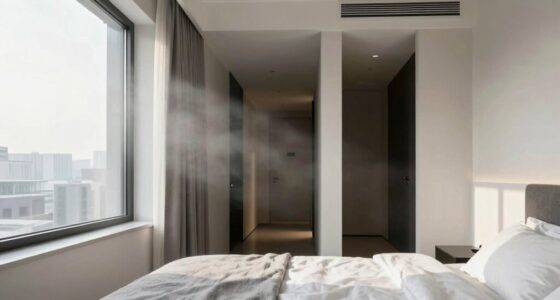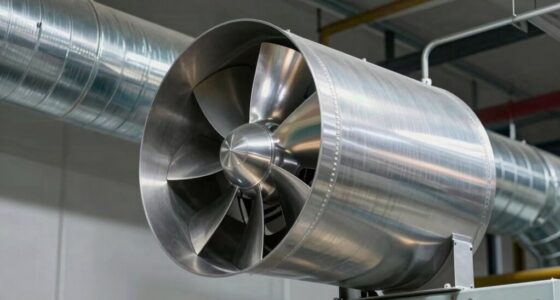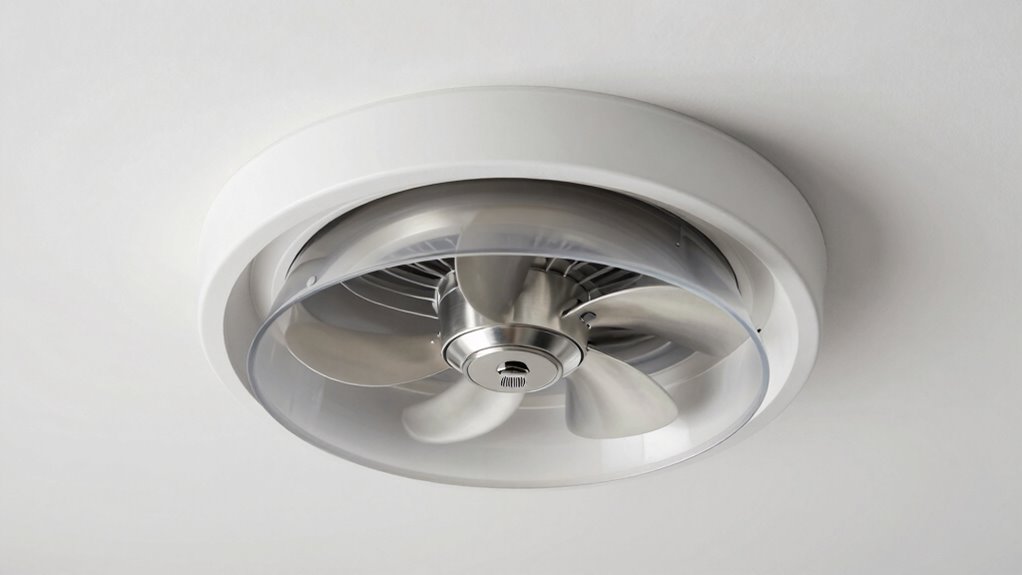
Makeup air is the fresh air you need to replace what exhaust fans pull out of your building. Without it, negative pressure can cause drafts, difficulty closing windows, and even dangerous backdrafting of gases. Proper ventilation doesn’t just rely on exhaust fans; it needs a balanced flow of outdoor air entering the space. Ensuring the right makeup air prevents indoor air quality issues and protects your safety. To understand how this all works together, keep exploring further.
Open a free Amazon Business account
Business pricing, bulk buying and tax-exempt orders.
As an affiliate, we earn on qualifying purchases.
Key Takeaways
- Makeup air replaces the air exhausted from a building, maintaining balanced ventilation and indoor air quality.
- It prevents negative pressure, drafts, and backdrafting of dangerous gases from appliances.
- Proper makeup air systems are often required by building codes for large exhaust fans.
- These systems can be natural (open windows) or mechanical (fans, dampers, sensors).
- Factors like building size, climate, and energy efficiency influence the choice of makeup air solutions.

Makeup air is the fresh air that replaces air exhausted from a building, guaranteeing proper ventilation and indoor air quality. When you run exhaust fans—whether in your kitchen, bathroom,, or commercial space—they remove stale, humid, or contaminated air. Without a way to replace that air, negative pressure can develop inside your building. This can lead to issues like drafts, difficulty closing windows, or even backdrafting dangerous gases from appliances such as furnaces or water heaters. That’s where makeup air systems come in, providing the missing half of the ventilation equation.
Makeup air replaces exhausted air, ensuring safe, balanced ventilation and indoor air quality.
Imagine you’re cooking or taking a shower, and your exhaust fan whirs to life. It pulls out smoke, steam, and odors, but if no fresh air is entering to fill the void, you create a vacuum. This negative pressure pulls air in from unintended gaps—around doors, windows, or even from your chimney or flues—potentially drawing in pollutants, dust, or combustion gases. Over time, this imbalance becomes a health concern and can compromise your building’s safety. Properly designed makeup air systems work to prevent these problems by introducing outdoor air directly into the space in a controlled manner.
Your local building codes or ventilation standards often require makeup air for exhaust systems above certain sizes or in specific environments. These regulations aim to safeguard indoor air quality and ensure appliances operate safely. When installing or upgrading an exhaust system, it’s vital to consider how makeup air will be supplied. It can be as simple as opening a window or as sophisticated as a dedicated mechanical system that draws in outdoor air through fans, dampers, or vents. Many commercial settings use sensors and controls to automatically adjust makeup air flow based on exhaust fan operation, maintaining a balanced pressure at all times. Additionally, proper ventilation design plays a crucial role in achieving optimal indoor air quality and energy efficiency.
Choosing the right makeup air solution depends on your building’s size, usage, and local climate. In colder climates, you might need to heat or filter incoming outdoor air to prevent discomfort or condensation issues. For tight, energy-efficient buildings, integrated makeup air systems help maintain air quality without sacrificing insulation and energy savings. Properly balancing exhaust and makeup air not only keeps your indoor environment comfortable and healthy but also extends the lifespan of your HVAC and ventilation equipment. By understanding and implementing makeup air strategies, you ensure your exhaust fans do their job effectively without causing unintended consequences.

Nulaxy Ergonomic Adjustable Laptop Stand for Desk, Dual Foldable Computer Riser with Advanced Heat-Vent, Heavy-Duty Portable Notebook Holder for Posture Correction, Compatible with Mac 10-17" Laptops
- Ergonomic Posture Support: Elevates laptop to reduce neck strain
- Stable Dual-Rod Design: Ensures wobble-free support up to 22 lbs
- Enhanced Heat Dissipation: Geometric vents improve airflow and cooling
As an affiliate, we earn on qualifying purchases.
Frequently Asked Questions
How Does Makeup Air Affect Indoor Air Quality?
Makeup air improves indoor air quality by replacing stale or contaminated air exhausted from your space. When your ventilation system pulls air out, it creates negative pressure that can draw in dust, odors, and pollutants from cracks or other openings. By introducing fresh, filtered makeup air, you help maintain a healthier environment, reduce airborne contaminants, and guarantee proper airflow, making your indoor space cleaner, fresher, and safer for occupants.
What Are the Energy Costs of Incorporating Makeup Air?
Think of adding makeup air as fueling a fire—you’ll see some extra energy costs. Incorporating makeup air requires running additional fans or HVAC systems, which increases your energy bills. While it does boost expenses, it also improves air quality and system efficiency. To balance costs, consider energy-efficient fans or smart controls that adjust airflow based on demand, helping you breathe easier without burning through your budget.
Can Makeup Air Systems Be Integrated With Existing Exhaust Fans?
Yes, you can integrate makeup air systems with existing exhaust fans. You’ll need to guarantee proper sizing and placement so the systems work harmoniously without causing negative pressure or airflow issues. Installing a control system that balances exhaust and makeup air helps maintain indoor air quality and energy efficiency. Consult with a professional to customize the integration, ensuring your setup functions smoothly and meets your ventilation needs effectively.
What Are the Common Signs of Inadequate Makeup Air?
You might notice stuffy indoor air, persistent odors, or excess humidity if your makeup air isn’t adequate. You could feel uncomfortable, especially during heavy use of exhaust fans, because the air isn’t being replaced properly. Sometimes, windows may need frequent opening to balance ventilation. If your exhaust fan runs continuously or your space feels stale despite ventilation efforts, it’s a clear sign you need more makeup air to maintain healthy airflow.
How Do Local Building Codes Regulate Makeup Air Requirements?
Think of local building codes as your guiding compass for makeup air requirements. They set specific standards you must follow, such as minimum air exchange rates and ventilation capacities, to guarantee safety and indoor air quality. You need to check your area’s codes, which often vary by location, and obtain permits if necessary. By adhering to these regulations, you keep your building compliant and create a healthier environment for everyone inside.
Conclusion
Think of your exhaust fan as a vacuum cleaner, relentlessly pulling air out but leaving a gap unless makeup air steps in. Without it, your space can feel like a balloon slowly deflating—sucked dry and uncomfortable. I once saw a restaurant struggle because their kitchen’s exhaust was like a sinkhole, draining all the air. Once they added proper makeup air, everything balanced out. Remember, exhaust fans can’t do their job alone—they need makeup air to keep things breathable and safe.

Lamicall Aluminum Laptop Stand for Desk for MacBook Air Pro Neo 10-17.3''
- Wide Compatibility: Fits 10-17.3 inch laptops including popular brands
- Adjustable & Portable: Customizable height and angle, foldable for travel
- Stable Aluminum Base: Large, heavy-duty alloy base for stability
As an affiliate, we earn on qualifying purchases.
Labor Day sales Picks
labor day deals
As an affiliate, we earn on qualifying purchases.