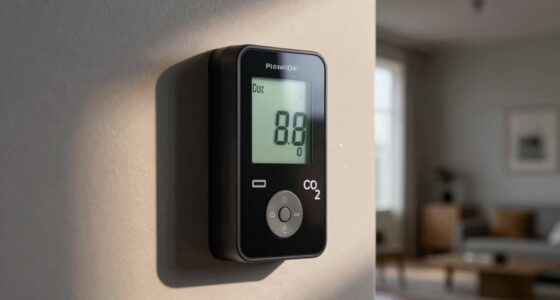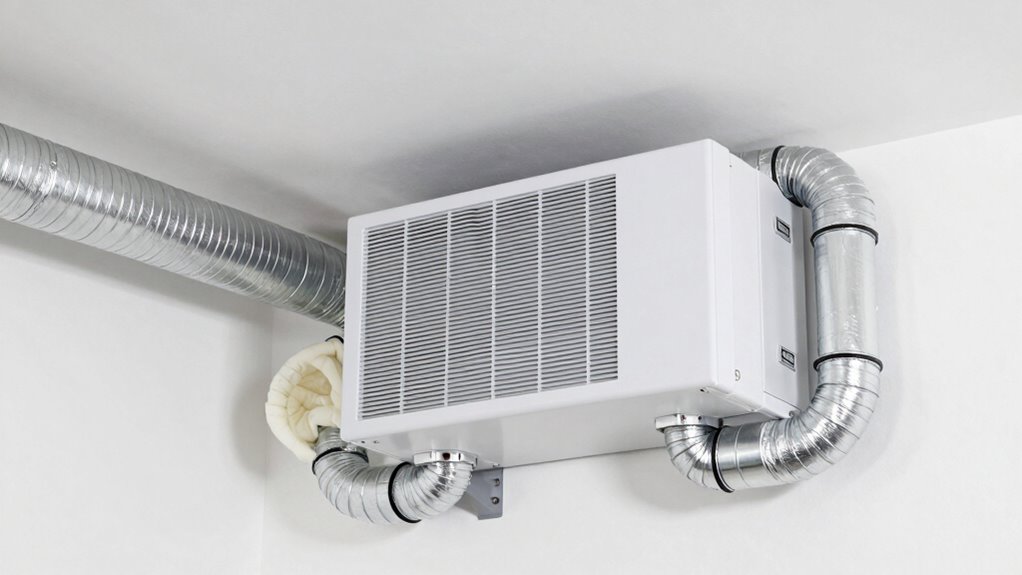

Choosing the right ducting for your ERV or HRV system is crucial because it affects airflow efficiency, energy use, and indoor air quality. Proper placement and duct material ensure balanced ventilation, minimize resistance, and prevent leaks that waste conditioned air. Short, straight routes with smooth interiors improve performance and longevity. If you want to optimize your system’s effectiveness, understanding how ducting choices impact installation and operation will help you get the best results.
Key Takeaways
- Proper duct placement near the building’s core ensures balanced airflow and reduces duct length, improving system efficiency.
- Choosing durable, smooth interior duct materials minimizes airflow resistance and enhances longevity of the ventilation system.
- Straight, short duct routes with minimal bends optimize airflow, reduce energy consumption, and prevent airflow restrictions.
- Proper sealing and insulation of ducts prevent leaks and heat transfer, maintaining indoor air quality and energy efficiency.
- Installing adjustable dampers and balancing airflow ensures consistent ventilation performance across all rooms.
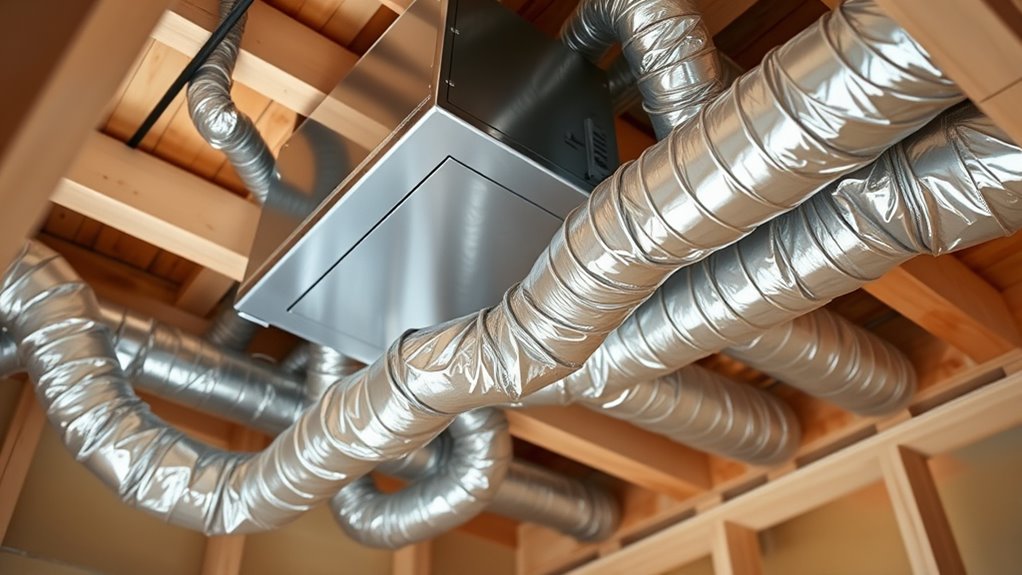
Have you ever wondered how to properly place an ERV or HRV unit to maximize its efficiency? The key lies in understanding that ducting choices directly influence how well your ventilation system performs. When installing these units, the goal is to guarantee that fresh air is distributed evenly while stale air is effectively removed, and the way you route your ducts plays a crucial role in achieving that. Proper ducting minimizes energy loss, reduces noise, and promotes consistent airflow, all of which contribute to a healthier indoor environment.
Proper duct routing enhances ERV and HRV efficiency, ensuring even airflow and optimal indoor air quality.
First, consider the location of your ERV or HRV unit. It should be installed in a central area, ideally near the core of your home or building, to facilitate balanced duct lengths. Long or complicated duct runs increase resistance, causing your system to work harder and consume more energy. Keep duct paths as straight and short as possible, avoiding unnecessary bends and turns, which can restrict airflow. This not only improves efficiency but also prolongs the lifespan of your system components.
Next, think about the materials used for ducting. Rigid metal ducts, such as galvanized steel or aluminum, tend to be more durable and offer less resistance compared to flexible ducts. While flexible ducts are easier to install in tight spaces, they can create more airflow restrictions if not properly installed. If you opt for flexible ducts, make sure they are smooth inside, free of kinks and sharp bends, to prevent airflow degradation. Proper insulation around ducts is also essential, especially if they run through unconditioned spaces, to prevent heat transfer and maintain air temperature. Additionally, selecting the appropriate duct size ensures optimal airflow and system performance.
Another important aspect is balancing the duct system. You need to make certain that the amount of air supplied to each room matches the exhaust rate, which requires precise balancing of the ductwork. Improper duct sizing or uneven distribution can lead to inadequate ventilation in some areas, creating stale spots or excess moisture. Installing adjustable dampers allows for fine-tuning airflow to each zone, ensuring consistent performance throughout your home.
Finally, sealing all duct joints thoroughly is necessary. Leaky ducts can lose a significant portion of conditioned air, reducing system efficiency and increasing energy costs. Use high-quality duct sealant or mastic to secure all connections, and verify that there are no gaps or leaks before completing the installation. Proper ducting choices, from material to routing and sealing, make a noticeable difference in how effectively your ERV or HRV system can ventilate your space, ultimately providing better air quality, lower energy bills, and a more comfortable living environment.

LEVOIT Air Purifier for Home Allergies and Pets Hair Smokers in Bedroom, H13 True HEPA Filter, 24db Filtration System Cleaner Odor Eliminators, Remove 99.97% Dust Smoke Mold Pollen, Core 300, White
- AHAM Verified for Performance: Independently tested for air quality and efficiency
- Powerful Filtration System: 56W motor with 143 CFM CADR
- Effective for Large Rooms: Cleans 222 sq ft 4.8 times/hour
As an affiliate, we earn on qualifying purchases.
Frequently Asked Questions
How Does Ducting Choice Affect Indoor Air Quality?
Your ducting choice directly impacts indoor air quality by determining how effectively fresh air circulates and stale air is removed. Properly designed ducts prevent leaks and minimize contamination, ensuring clean, filtered air reaches your living spaces. Poor ducting can cause air imbalances, trapping pollutants and allergens. By selecting quality duct materials and thoughtful routing, you enhance ventilation efficiency, making your indoor environment healthier and more comfortable.
Can Improper Ducting Lead to Energy Inefficiency?
Yes, improper ducting can lead to energy inefficiency. When ducts are poorly sealed, leaky, or poorly insulated, your system works harder to maintain the desired indoor temperature. This extra effort increases energy consumption and raises utility bills. Additionally, improper duct placement can cause uneven airflow, forcing your HVAC system to run longer. Ensuring correct ducting choices improves system efficiency, saves energy, and keeps your indoor environment comfortable.
What Maintenance Is Required for Different Ducting Types?
You should regularly inspect and clean your ductwork, regardless of type, to maintain ideal airflow and efficiency. For flexible ducts, check for tears or kinks and replace if damaged. For rigid ducts, ensure they are free of dust and debris, and seal any leaks. Insulate ducts to prevent heat loss. Schedule professional inspections annually to identify and address issues early, keeping your system running smoothly and efficiently.
Are Certain Duct Materials Better for Specific Climates?
Yes, certain duct materials work better in specific climates. For hot, humid areas, flexible or insulated ducts help prevent condensation and mold. In colder climates, rigid metal ducts are ideal because they resist freezing and condensation. You should choose duct materials based on your climate to enhance efficiency and durability. Proper selection guarantees your ERV or HRV system performs at its best while reducing maintenance issues over time.
How Does Ducting Influence Noise Levels From Erv/Hrv Systems?
Think of ducting as the quiet river guiding the steady flow of your ERV or HRV system. Well-chosen duct materials like insulated or flexible options act as sound barriers, muffling noise and preventing it from echoing throughout your home. Rigid, smooth ducts reduce turbulence, keeping noise levels low. Proper ducting creates a peaceful environment, so your ventilation system works in harmony with your home, not as a disruptive noise.

MOOKA Air Purifier for Bedroom Home Dorm 430 Ft², Compact HEPA Air Cleaner
- True HEPA Filter with 360° Air Intake: Removes dust, smoke, pollen, pet dander
- Compact & Portable Design: Powered via USB for versatile use
- Universal Voltage Compatibility: Works with 110-240V power sources
As an affiliate, we earn on qualifying purchases.
Conclusion
Choosing the right duct placement for your ERV or HRV isn’t just a detail—it’s essential for maximum performance. Imagine installing yours near a noisy laundry room; you’ll notice increased noise and reduced efficiency. Conversely, placing it in a quiet, central area guarantees better airflow and comfort. Pay attention to ducting choices now, and you’ll enjoy cleaner, more consistent air quality in your home. Proper placement truly makes all the difference in your system’s effectiveness.
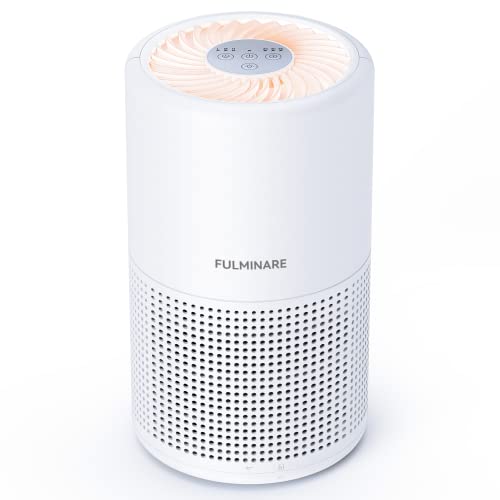
Air Purifiers for Bedroom, FULMINARE H13 True HEPA Filter
- Efficient Particle Filtration: H13 HEPA filter for clean air
- High Circulation Rate: 360° air outlet, refreshes 5x/hour
- Suitable for 215 sq ft rooms: Effective in small to medium rooms
As an affiliate, we earn on qualifying purchases.

VOOPNU Air Purifiers for Bedroom, High Efficiency Filter, 1076 Ft², Black
- Easy-to-Use Control Panel: Intuitive design for simple operation
- Compact and Powerful: Covers 1076 ft² in a small size
- 360° Airflow Design: Ensures even air purification
As an affiliate, we earn on qualifying purchases.