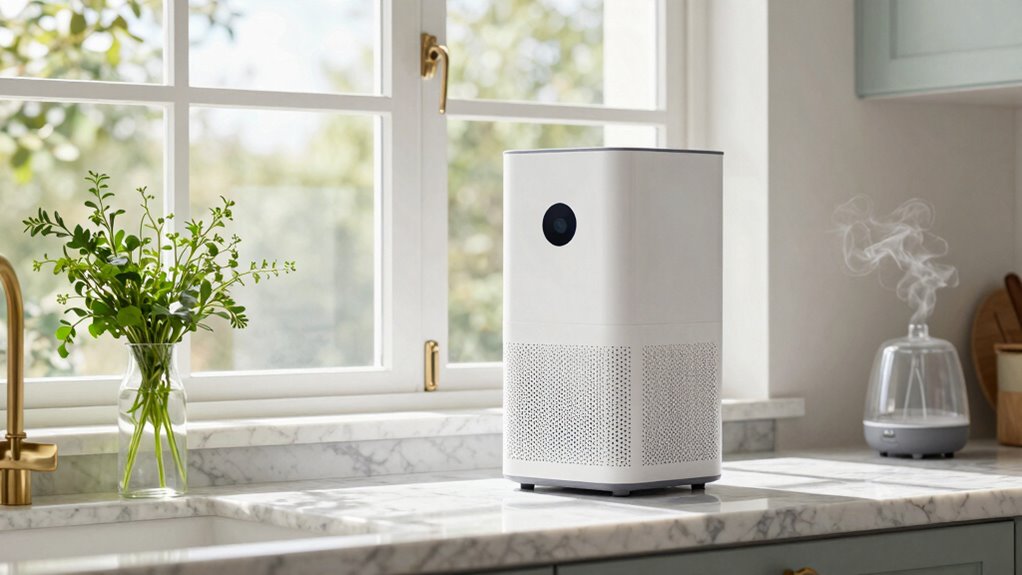

Even if your space smells fresh and clean, it can still hide unseen pollutants that threaten your health. Artificial fragrances and air fresheners only mask odors temporarily and can add harmful chemicals like VOCs, which cause headaches or allergies. True air quality depends on factors like proper ventilation, humidity control, and source removal. If you want to uncover the real story behind “clean” air, there’s more to take into account that could surprise you.

Get health and wellness essentials delivered free with Prime
- Fast, free delivery on millions of items
- Prime Video, Amazon Music and more included
- Member-only deals all year
Key Takeaways
- Fresh scents often mask underlying pollutants like mold, dust, or chemicals, not eliminate them.
- Artificial fragrances may add VOCs, contributing to poor indoor air quality.
- A pleasant smell does not indicate the absence of harmful airborne particles.
- Relying on scent can create a false sense of safety about air health.
- True air quality depends on ventilation, source control, and filtration, not just smell.

Have you ever noticed how some indoor spaces seem to smell perfectly fresh, yet others leave you feeling uneasy despite their cleanliness? That’s because a “clean” scent doesn’t always mean the air is healthy. Many people fall prey to air quality misconceptions, believing that a fresh aroma equates to good air. But scent masking techniques—like air fresheners, candles, or sprays—only temporarily cover up odors. They don’t address the underlying air quality issues, and in fact, can sometimes make things worse by introducing artificial fragrances and chemicals into your environment.
A fresh scent doesn’t mean healthy air—masking odors can hide underlying problems and introduce harmful chemicals.
When you rely on scent masking techniques, you might think you’re creating a healthier space, but what you’re really doing is hiding the problem. These products can contain volatile organic compounds (VOCs), which, when released into the air, may cause headaches, allergies, or respiratory irritation over time. If you’re not aware of this, you might assume your home’s air is clean because it smells good, but the reality could be quite different. The true quality of indoor air depends more on factors like humidity levels, proper ventilation, and the presence of pollutants—not just the scent that lingers.
Many common misconceptions about air quality suggest that if the air smells fresh, it’s free of harmful particles. This isn’t true. Odors often originate from sources like mold, dust, pet dander, or chemical emissions. These issues may be invisible to your nose but can have serious health consequences, especially if you or your family members have allergies or asthma. Relying solely on smelling fresh doesn’t confirm that the air is safe; it’s a false sense of security. In addition, air filtration systems can help remove many airborne pollutants that contribute to poor indoor air quality. Regularly maintaining ventilation systems and controlling indoor humidity can further improve your environment.
Instead of masking odors with artificial scents, focus on improving actual air quality. Ventilate your space regularly, use HEPA filters to capture airborne particles, and control humidity to prevent mold growth. If you notice persistent odors, investigate their sources rather than covering them up. Proper cleaning and maintenance are essential to reduce pollutants at their source. Additionally, understanding indoor air quality factors can help you make more informed decisions about creating a healthier environment. Proper air exchange is crucial for maintaining good air quality and preventing the buildup of pollutants. Remember, a truly healthy environment is one where you don’t just smell fresh, but also breathe easily and safely.
HEPA air purifier for indoor air quality
As an affiliate, we earn on qualifying purchases.
As an affiliate, we earn on qualifying purchases.
Frequently Asked Questions
Can Air Purifiers Eliminate All Indoor Odors?
Air purifiers can’t eliminate all indoor odors because some odors are caused by airborne allergens or odor masking substances that they might not fully filter out. While they improve air quality and reduce many pollutants, certain smells from pets, cooking, or mold can linger. For the best results, choose an air purifier with activated carbon filters, which target odors and airborne allergens more effectively, helping you maintain fresher indoor air.
Are Fragrance-Free Air Fresheners Safer Than Scented Ones?
Fragrance-free air fresheners are generally safer than scented ones because they avoid fragrance masking and scent layering, which can trigger allergies or respiratory issues. While scented options aim to mask odors, they often introduce chemicals that may cause irritation. By choosing fragrance-free products, you reduce the risk of adverse reactions, creating a healthier environment that’s free from the potential harms of added fragrances and unnecessary chemical layering.
How Often Should I Replace Air Filters for Optimal Freshness?
You should replace your air filter every 90 days for maximum freshness, but this depends on your air filter lifespan and household factors. If you have pets, allergies, or live in a dusty area, consider replacing it more often, around every 60 days. Regular replacement guarantees your air stays clean and fresh, preventing buildup of pollutants. Stay attentive to signs like reduced airflow or musty odors to determine when it’s time for a change.
Do “Clean” Scents Indicate the Absence of Harmful Chemicals?
No, “clean” scents often don’t indicate the absence of harmful chemicals. They can be the result of chemical masking or scent illusions that hide unpleasant odors without removing toxins. These fragrances might contain volatile organic compounds (VOCs) that can irritate your respiratory system or cause other health issues. So, just because the air smells fresh doesn’t mean it’s free from harmful chemicals; always check labels and ventilation.
Can Air Quality Sensors Detect Hidden Pollutants?
Yes, air quality sensors can detect hidden pollutants, but they have limits. Think of them as watchful guards, alerting you to indoor chemical levels that might otherwise go unnoticed. While they excel at identifying common pollutants, some hidden pollutants, especially in low concentrations or complex mixtures, can slip past. So, even with sensors, it’s wise to stay vigilant about indoor chemical exposure and guarantee proper ventilation for truly fresh air.
air quality monitor with VOC detection
As an affiliate, we earn on qualifying purchases.
As an affiliate, we earn on qualifying purchases.
Conclusion
Even if your air smells fresh and clean, it might still harbor harmful pollutants. Did you know that indoor air can be up to five times more polluted than outdoor air? That means you could be breathing in toxins without even realizing it, simply because the air smells good. Don’t let a pleasant scent fool you—stay vigilant about air quality and consider testing your environment to keep your home truly safe and healthy.
humidifier with humidity control
As an affiliate, we earn on qualifying purchases.
As an affiliate, we earn on qualifying purchases.
As an affiliate, we earn on qualifying purchases.
Halloween Picks
halloween
As an affiliate, we earn on qualifying purchases.