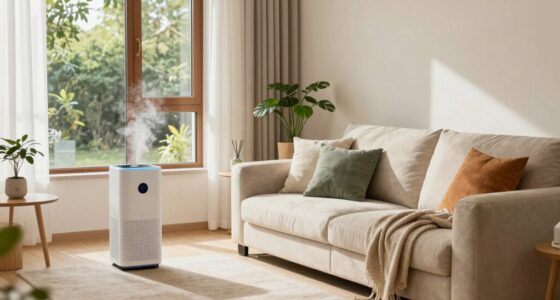
To quickly assess your indoor air quality in 30 minutes, start by visually inspecting potential pollution sources like mold, dust, and pet dander, and check your HVAC filters for dirt. Use a hygrometer to measure humidity, aiming for 30-50%. Review your cleaning habits, making sure you’re dusting and vacuuming often, and ensure exhaust fans in your kitchen and bathroom work properly. If you want more tips to improve your air, keep exploring what you can do next.

Get health and wellness essentials delivered free with Prime
- Fast, free delivery on millions of items
- Prime Video, Amazon Music and more included
- Member-only deals all year
Key Takeaways
- Inspect visible mold, dust buildup, and pet dander around vents, filters, and surfaces for quick source identification.
- Check HVAC filters and air vents for dirt, mold, or debris, and replace or clean as needed.
- Measure indoor humidity with a hygrometer to ensure levels are between 30-50%.
- Observe airflow and open windows or operate exhaust fans in bathrooms and kitchens to improve ventilation.
- Conduct a quick visual and odor check for musty smells or stale air signs, and address with airing or odor absorbers.

Ever wonder if your home’s air is safe to breathe? You don’t need fancy equipment or hours of testing to get a good idea. With a quick DIY indoor air audit, you can spot common problems and take simple steps to improve air quality. It’s a practical way to protect your health without much hassle.
Start by examining your living environment. Look for obvious sources of indoor pollution, like mold, dust buildup, or pet dander. Check your HVAC filters—if they’re dirty or haven’t been replaced recently, that’s a red flag. Replacing filters can instantly improve airflow and reduce airborne particles. Also, inspect vents and ducts for dust or mold, which can circulate pollutants throughout your home. Keep in mind that even if you don’t see mold, a musty smell might indicate hidden moisture issues that need addressing.
Next, assess your cleaning habits and clutter. Regular dusting and vacuuming with a HEPA filter can cut down on allergens. Be sure to vacuum upholstered furniture and curtains, since these can trap dust and pet dander. Decluttering helps reduce dust accumulation and makes cleaning more effective. Pay attention to your bedding and curtains, which can harbor dust mites, especially if they’re not washed frequently. If you notice any strong odors—like stale air, cooking smells, or mustiness—consider airing out your space or using odor absorbers such as activated charcoal.
Now, check the humidity levels. Use a simple hygrometer, which costs only a few dollars, to see if your home’s humidity is in the ideal range of 30-50%. Too high, and mold or dust mites can thrive; too low, and your skin and respiratory passages might get dry. If humidity is off, use a dehumidifier or humidifier to stabilize it. Ventilation also plays an essential role—make sure your bathrooms and kitchen have functioning exhaust fans, and use them when cooking or showering to prevent moisture buildup.
Finally, pay attention to your personal comfort and any symptoms. Do you notice frequent sneezing, coughing, or congestion? Persistent headaches or fatigue? These could signal poor air quality. If you suspect issues, consider opening windows to increase fresh airflow, or invest in an air purifier with a HEPA filter. Even a small, portable unit can make a noticeable difference in removing airborne pollutants. Additionally, air quality testing can provide more detailed insights if needed.
In just 30 minutes, this simple visual and sensory check can reveal a lot about your indoor air quality. By addressing the issues you find, you’re taking an active step toward creating a healthier home environment.
HEPA air purifier for indoor air quality
As an affiliate, we earn on qualifying purchases.
As an affiliate, we earn on qualifying purchases.
Frequently Asked Questions
How Often Should I Perform an Indoor Air Audit?
You should perform an indoor air audit every three to six months to guarantee your home’s air quality stays ideal. Regular checks help you identify potential issues like dust buildup, mold, or poor ventilation early. If anyone in your household has allergies or respiratory problems, consider doing audits more frequently. Staying proactive allows you to address problems promptly, maintaining a healthier indoor environment for everyone.
Can I Identify All Indoor Air Pollutants Myself?
Think of your home like a treasure chest, where hidden pollutants lurk. You can spot many common indoor pollutants—dust, mold, pet dander, and odors—by doing a quick visual and smell check. However, some pollutants, like VOCs or radon, are invisible and require specialized testing. So, while you can identify many issues yourself, certain hazards need professional tools to uncover. Keep vigilant, but know when to call in experts.
What Tools Are Necessary for a DIY Air Quality Check?
You’ll need a few basic tools for your DIY air quality check. A handheld air quality monitor can detect common pollutants like VOCs and particulate matter. A flashlight helps you inspect vents and filters, while a microfiber cloth allows you to clean dust from surfaces. Additionally, keep a notepad to jot down observations. These tools are affordable, easy to use, and will give you a clear snapshot of your indoor air quality.
How Do I Interpret the Results of My Air Audit?
You’ll want to compare your findings to air quality standards, like those from the EPA. If you notice high levels of dust, mold, or chemicals, it indicates poor air quality. Pay attention to any musty odors or visible mold, which suggest issues needing improvement. Low ventilation or high humidity can also be red flags. Use this info to identify problem areas and consider solutions like better ventilation or air purifiers.
When Should I Consult a Professional After My DIY Check?
You should call in a pro if your DIY check reveals persistent mold, strong odors, or allergens that don’t clear up. Don’t be the hero who ignores obvious signs of trouble—bad air isn’t something you want to DIY away. When in doubt, it’s smarter to seek advice from a professional. They can identify hidden hazards, ensure your home’s air quality is safe, and save you from future costly repairs.
digital hygrometer for humidity monitoring
As an affiliate, we earn on qualifying purchases.
As an affiliate, we earn on qualifying purchases.
Conclusion
Now that you’ve completed your indoor air audit, you’re better equipped to spot issues and improve your home’s air quality. Think of it like a modern-day Sherlock Holmes, but instead of a magnifying glass, you have a checklist. Regular inspections keep your space fresh and safe, just like an old library preserved through the ages. So, roll up your sleeves and stay vigilant—your lungs will thank you, and your home will breathe easier.
As an affiliate, we earn on qualifying purchases.
As an affiliate, we earn on qualifying purchases.
Columbus Day / Indigenous Peoples' Day Picks
long weekend sales
As an affiliate, we earn on qualifying purchases.