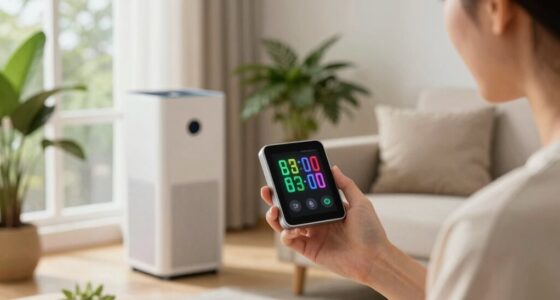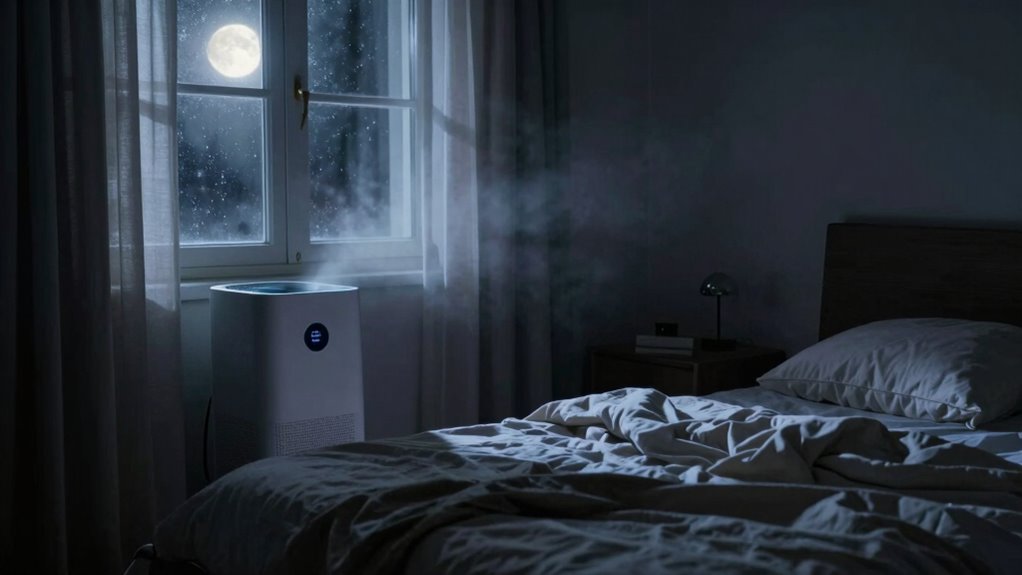

At night, your indoor air often gets worse because you keep windows closed, trapping pollutants, dust, and allergens inside. Less airflow means these contaminants build up, making it harder to breathe comfortably. Humidity can also rise due to cooler outdoor air and indoor activities, promoting mold and dust mites. Without proper ventilation or air purifiers, indoor air becomes stale and unhealthy. To find out simple ways to improve your air quality at night, keep exploring.

Get health and wellness essentials delivered free with Prime
- Fast, free delivery on millions of items
- Prime Video, Amazon Music and more included
- Member-only deals all year
Key Takeaways
- Reduced ventilation at night traps indoor pollutants, leading to increased concentrations of dust, allergens, and mold spores.
- Stagnant air during sleep prevents fresh air exchange, worsening air quality.
- Higher indoor humidity levels at night promote mold growth and dust mite proliferation.
- Sealed environments limit outdoor air entry, causing pollutants to accumulate indoors.
- Lack of airflow and poor moisture control can intensify indoor air problems during sleep hours.
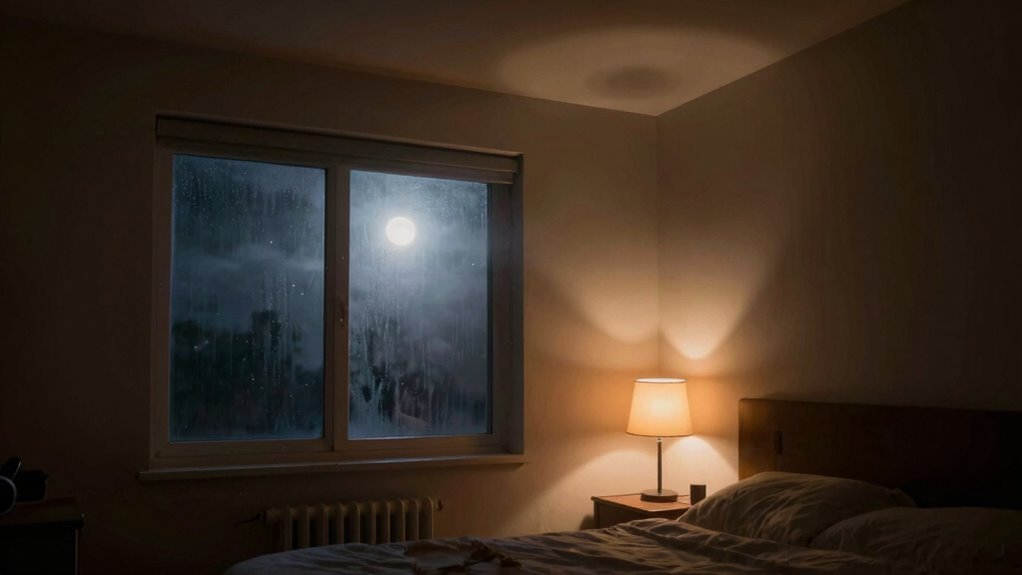
Many people overlook how indoor air quality can worsen at night, but poor ventilation and accumulated pollutants can disrupt your sleep and affect your health. As you settle into bed, the air around you often becomes stagnant, trapping dust, pet dander, mold spores, and other allergens. Without proper airflow, these pollutants build up, making it harder to breathe comfortably and potentially triggering allergy symptoms or respiratory issues. Using air purifiers can markedly improve this situation by filtering out airborne particles, ensuring that the air you breathe during the night is cleaner and healthier. Investing in a good air purifier helps maintain freshness in your sleeping environment, especially when windows remain closed to keep out noise or cold air.
Poor nighttime ventilation traps allergens, disrupting sleep and affecting health; air purifiers improve indoor air quality effortlessly.
In addition to pollutants, humidity levels tend to fluctuate at night, often rising due to cooler outdoor air or indoor activities like breathing and sweating. Excess humidity creates an ideal environment for mold growth and dust mites, both of which can worsen allergies and asthma. To combat this, humidity control becomes vital. A dehumidifier or a humidifier, depending on your home’s needs, helps maintain ideal moisture levels—generally between 30% and 50%. This balance prevents the air from becoming too dry or too moist, reducing the risk of mold proliferation and respiratory discomfort. Proper humidity management not only improves air quality but also contributes to more restful sleep by keeping nasal passages and skin hydrated. Understanding the importance of indoor air quality can help you better address these issues. Additionally, being aware of airborne contaminants can guide you in selecting the most effective air quality solutions. Recognizing how air pollutants can trap in stagnant air highlights the importance of ongoing filtration and ventilation efforts.
Another factor that worsens indoor air quality at night is the natural reduction in ventilation. During the day, you might open windows or use exhaust fans, but at night, these are often closed to keep out noise or cold air. This sealing off limits the exchange of indoor and outdoor air, trapping pollutants inside. Without adequate ventilation, these pollutants can accumulate quickly, making the air stale and unhealthy. To counteract this, you can use mechanical ventilation systems or ensure that your air purifier runs continuously while you’re sleeping. This constant filtration helps remove airborne contaminants, providing a clearer, fresher environment.
Ultimately, your indoor air quality at night depends on your proactive efforts. Using air purifiers to filter pollutants, maintaining proper humidity levels, and ensuring adequate ventilation all play vital roles in creating a safe and comfortable sleep environment. When these elements are properly managed, you’ll notice not only improved sleep quality but also better overall health. Recognizing how indoor air problems can intensify at night allows you to take targeted steps to address them, ensuring that your bedroom remains a space of relaxation and health rather than a source of hidden hazards.
As an affiliate, we earn on qualifying purchases.
Frequently Asked Questions
Can Sleeping Positions Affect Indoor Air Quality?
Your sleep posture can influence indoor air quality, especially if you’re prone to allergic reactions. Certain positions may cause you to breathe in more dust, pet dander, or airborne pollutants trapped near your bedding. For example, sleeping face down can increase exposure to allergens. Maintaining a clean, allergen-free sleep environment and adopting a posture that promotes better airflow can help reduce allergic reactions and improve air quality while you rest.
Do Nighttime Activities Influence Indoor Air Pollution Levels?
Absolutely, your nighttime activities can turn your home into a pollutant party. When you skip ventilation habits like opening windows or turning on fans, indoor air traps pollutants from sources like candles, cooking, or even your cozy pajamas. These activities release airborne pollutants, which linger in poorly ventilated spaces, making the air worse as you sleep. So, if you want fresh air, it’s time to rethink your nightly routine.
How Do Bedding Materials Impact Indoor Air Quality at Night?
Bedding materials considerably impact your indoor air quality at night because bedding chemicals and fabric fibers can release allergens and volatile organic compounds (VOCs). If your bedding contains chemical treatments or synthetic fibers, they can emit irritants while you sleep, worsening air quality. Choosing natural, untreated fabrics and hypoallergenic bedding reduces these emissions, helping you breathe cleaner air and improve overall sleep quality.
Are Air Purifiers More Effective During Nighttime?
Air purifiers are more effective at night because your indoor air often contains higher levels of allergens and pollutants while you’re asleep. However, for ideal performance, you must prioritize air purifier maintenance to guarantee filters work efficiently. Additionally, choose models with good power consumption efficiency to avoid high energy costs. Proper maintenance and energy-conscious choices maximize your purifier’s ability to improve air quality while minimizing your electricity bills.
Does Moisture Build-Up Contribute to Indoor Air Problems Overnight?
Yes, moisture buildup can contribute to indoor air problems overnight. As humidity increases, it creates an ideal environment for mold growth and dust mites, which can worsen air quality. At night, reduced ventilation traps more moisture inside, intensifying these issues. You might notice musty odors or allergy symptoms worsen. To combat this, use dehumidifiers and guarantee proper ventilation to reduce humidity buildup and prevent mold growth.
dehumidifier for indoor air quality
As an affiliate, we earn on qualifying purchases.
As an affiliate, we earn on qualifying purchases.
Conclusion
As night falls, the air you breathe may seem calmer, yet unseen problems often intensify. The quiet darkness can trap pollutants, making breathing harder just when you need rest the most. It’s a stark contrast—peaceful sleep versus the silent assault of indoor toxins. Knowing this, you realize that protecting your air quality isn’t just about daytime comfort but securing your nights. Don’t let unseen dangers turn your peaceful sleep into a restless battle.
bedroom air purifier with HEPA filter
As an affiliate, we earn on qualifying purchases.
As an affiliate, we earn on qualifying purchases.
humidity control device for home
As an affiliate, we earn on qualifying purchases.
As an affiliate, we earn on qualifying purchases.
Halloween Picks
halloween
As an affiliate, we earn on qualifying purchases.