The indoor air “triangle”—source, ventilate, filter—tells you how to improve your home’s air quality. First, control sources like dust, mold, and chemicals to reduce pollutants. Next, ventilate by opening windows or using mechanical systems to bring in fresh air and remove stale air. Finally, use air filters or purifiers to trap remaining particles. Mastering this balance can transform your home’s atmosphere; explore more to get the full picture.
Listen free for 30 days with Audible
Thousands of audiobooks and originals — cancel anytime.
As an affiliate, we earn on qualifying purchases.
Key Takeaways
- The indoor air triangle includes source control, ventilation, and filtration to improve air quality.
- Managing sources reduces pollutant entry; ventilation dilutes indoor pollutants and controls humidity.
- Filtration captures airborne particles that bypass source control and ventilation efforts.
- Combining all three strategies creates a comprehensive approach to healthier indoor environments.
- Properly balancing source control, ventilation, and filtration is essential for optimal indoor air quality.

Indoor Air Triangle
The indoor air triangle is a simple but powerful model that highlights the three key factors affecting indoor air quality: ventilation, moisture, and contaminants. Understanding this triangle helps you see how these elements interact and how you can take control to create a healthier indoor environment. At the core of this model is the idea that air quality isn’t just about filtering out pollutants but also about managing their sources and ensuring proper airflow. When you focus on source control, ventilation, and filtration, you’re addressing the entire cycle that influences indoor air health.
First, consider sources. These are the origins of pollutants like dust, pet dander, mold, cleaning chemicals, and cooking fumes. Your job is to identify and minimize these sources whenever possible. For example, reduce clutter to limit dust accumulation, store chemicals in sealed containers, and use exhaust fans in kitchens and bathrooms to vent out fumes and moisture. Preventing contaminants from entering or accumulating in your home is the most effective way to improve air quality. Eliminating or reducing sources means there’s less to handle downstream, making the entire system easier to manage.
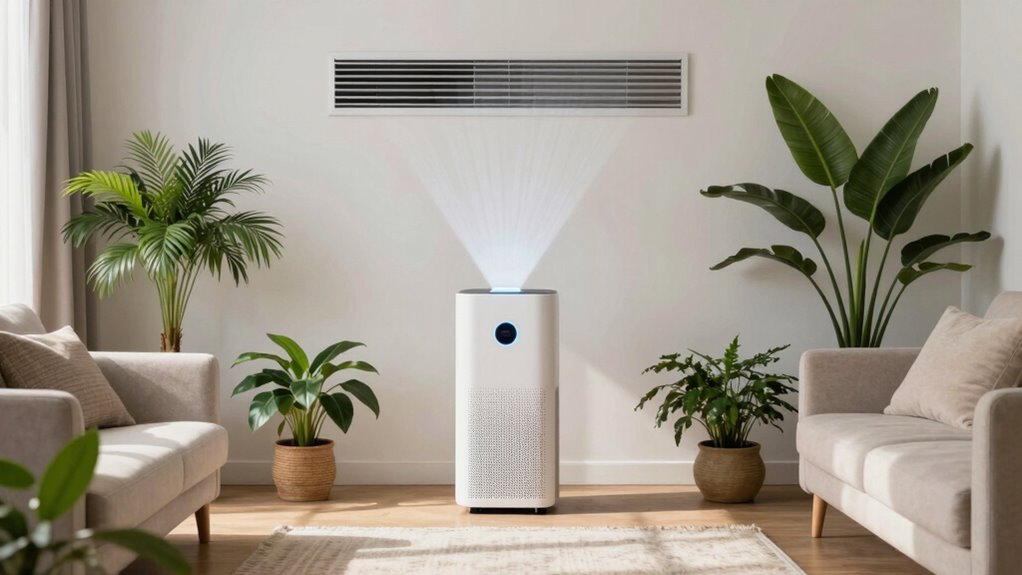
Next, ventilation plays a critical role. It’s about bringing fresh air in and pushing stale air out. Without proper airflow, contaminants and moisture can build up, leading to poor indoor air conditions. You should ensure your home has adequate ventilation, whether through natural means like opening windows and using vents or with mechanical systems such as HRVs or ERVs. These systems exchange indoor air with outdoor air efficiently, reducing humidity and diluting pollutants. Proper ventilation also helps control moisture, which is crucial because excess humidity fosters mold growth and dust mites. Regularly airing out your space keeps the air moving, dilutes indoor pollutants, and maintains a balance that prevents moisture buildup. Incorporating proper ventilation practices can greatly enhance indoor air quality.
Proper ventilation ensures fresh air flow, reduces humidity, and prevents indoor pollutant buildup.
Lastly, filtration is your line of defense against airborne contaminants that can’t be eliminated at the source or removed through ventilation alone. Using high-quality air filters in your heating, ventilation, and air conditioning (HVAC) system traps dust, pollen, pet dander, and other allergens. Consider upgrading your filters regularly and choosing ones rated for capturing finer particles. In some cases, adding portable air purifiers with HEPA filters can further reduce airborne pollutants. Remember, filtration doesn’t replace source control or ventilation but complements them, ensuring that whatever particles remain are captured before they circulate back into your living space.
air purifiers for indoor air quality
As an affiliate, we earn on qualifying purchases.
As an affiliate, we earn on qualifying purchases.
Frequently Asked Questions
How Do Outdoor Air Quality Issues Affect Indoor Air Strategies?
A chain is only as strong as its weakest link, so outdoor air quality issues can undermine your indoor air strategies. If outdoor pollution is high, ventilating your home might bring in harmful particles, negating filtration efforts. To guarantee healthy indoor air, you need to monitor outdoor conditions, adjust ventilation accordingly, and use high-quality filters. This way, you protect your indoor environment without letting outside pollutants sneak in.
What Are the Most Effective Indoor Air Filtering Technologies Today?
You should consider HEPA filters, which capture 99.97% of airborne particles, including allergens and viruses. Activated carbon filters are also effective at removing odors and chemical vapors. UV-C sterilization systems kill bacteria and viruses on contact. Combining these technologies in your HVAC system or standalone units can greatly improve indoor air quality, especially if outdoor air quality is poor. Regular maintenance ensures peak performance and cleaner indoor air.
How Often Should Indoor Air Filters Be Replaced or Maintained?
You should replace or maintain your indoor air filters every 1 to 3 months, depending on usage and filter type. Check your filters monthly, especially if you have pets or allergies. For high-efficiency filters or heavy use, more frequent changes are necessary. Regular maintenance guarantees peak air quality, prevents strain on your HVAC system, and keeps your indoor environment healthier. Don’t wait too long—timely replacement is key.
Can Plants Significantly Improve Indoor Air Quality?
You might find that plants like pothos or snake plants can help, but they won’t dramatically improve air quality on their own. For example, a study showed that while plants can reduce some toxins, their effect is limited compared to proper ventilation and filtration. So, while adding plants makes your space more inviting, rely on good ventilation and air filters for significant air quality improvements.
What Are Common Indoor Air Pollutants Overlooked by Homeowners?
You might overlook certain indoor pollutants like volatile organic compounds (VOCs) from cleaning products, paints, and furniture. Mold spores can also be hidden in damp areas, causing health issues. Radon gas can seep in from the ground, and pet dander often goes unnoticed. Regularly testing for radon, maintaining humidity levels, and choosing low-emission products can help you reduce these overlooked pollutants and improve your indoor air quality.
HVAC air filters high MERV rating
As an affiliate, we earn on qualifying purchases.
As an affiliate, we earn on qualifying purchases.
Conclusion
By understanding the indoor air “triangle”—sources, ventilation, and filtration—you hold the key to creating a healthier home. When you actively manage these elements, you’re not just putting out fires but preventing them altogether. Remember, an ounce of prevention is worth a pound of cure. Take charge of your indoor environment today, and breathe easier knowing you’re tackling the problem from all angles. After all, a well-informed homeowner is a step ahead in the game of clean air.
mechanical ventilation systems for home
As an affiliate, we earn on qualifying purchases.
As an affiliate, we earn on qualifying purchases.
mold and dust source control products
As an affiliate, we earn on qualifying purchases.
As an affiliate, we earn on qualifying purchases.
Flea & tick season Picks
flea and tick prevention
As an affiliate, we earn on qualifying purchases.