
Cleaning your humidifier regularly is vital for your health and air quality. Start with daily tasks: check and replace the filter, empty the water reservoir, and wipe with a cloth. Weekly, inspect and rinse the tank, and monthly, deep clean by disassembling the unit and using vinegar for mineral buildup. Consistent maintenance prevents mold and bacteria growth. Want more tips to keep your humidifier running smoothly? There’s plenty more you can learn to enhance its performance.
Key Takeaways
- Regular maintenance prevents bacteria and mold, ensuring optimal air quality and health benefits.
- Daily tasks include emptying the water reservoir and using distilled water to minimize mineral buildup.
- Weekly cleaning involves rinsing the water tank and checking the filter for wear.
- Monthly deep cleaning requires unplugging, disassembling, and thoroughly cleaning all components.
- Use essential supplies like white vinegar and antibacterial solutions for effective cleaning and maintenance.
Understanding the Importance of Cleaning Your Humidifier

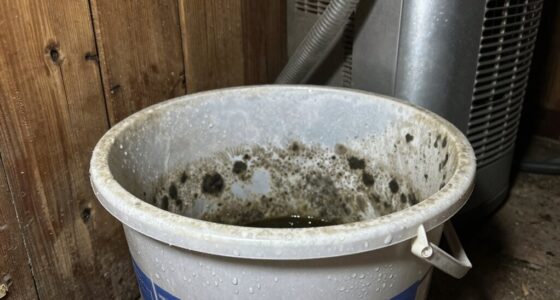
While you might enjoy the soothing benefits of a humidifier, neglecting to clean it can lead to serious health issues. A dirty humidifier can become a breeding ground for bacteria and mold, which can negatively affect your air quality. When you inhale these contaminants, it can trigger allergies, asthma, and other respiratory problems. To truly reap the health benefits of using a humidifier, you must maintain it regularly. Clean water and a sanitized unit ensure that the moisture you’re adding to your environment is pure and beneficial. By prioritizing this simple task, you not only enhance your indoor air quality but also protect your health and well-being for yourself and your loved ones. Additionally, regular cleaning ensures that the air quality remains optimal, preventing potential health risks associated with airborne pollutants. Furthermore, investing in air purifiers can complement your humidifier by reducing the presence of airborne contaminants. Moreover, regular maintenance can help prevent bacteria and mold growth, ensuring that the moisture you breathe is both safe and beneficial. Incorporating natural materials in your home decor can also contribute to a healthier living environment. Don’t overlook this essential step!
What You’ll Need for Cleaning

Before you start cleaning your humidifier, you’ll want to gather a few essential supplies. Make sure to prioritize safety precautions and choose the right cleaning solutions for effective results. Having everything ready will make the process smoother and guarantee your humidifier stays in top shape.
Essential Cleaning Supplies
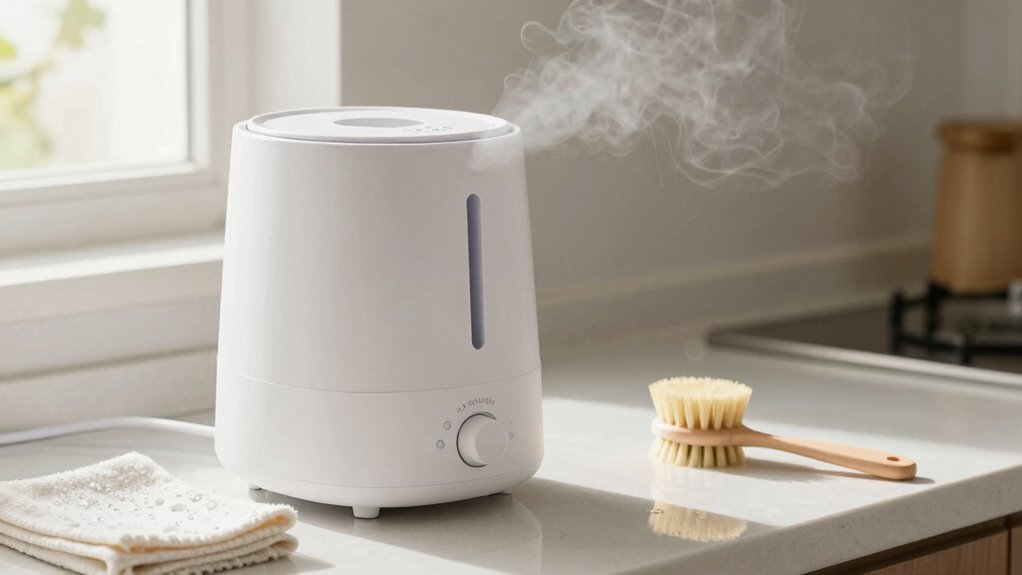
To effectively clean your humidifier, you’ll need a few essential supplies that make the process straightforward and efficient. Start with white vinegar, a natural disinfectant that tackles mineral buildup and helps maintain water quality. You’ll also want a soft cloth or sponge for scrubbing those hard-to-reach areas. Don’t forget a small brush, like an old toothbrush, to get into crevices. If your humidifier uses a filter, ensure you have a replacement on hand, as it’s vital for peak performance. Regularly checking and cleaning the filters is crucial for maintaining efficiency. Additionally, using whole-house filtration systems can enhance water quality, further promoting a healthier humidifier environment. Incorporating cleaning routines into your schedule helps ensure that your humidifier remains in optimal condition. Electric dirt bikes, known for their strong resale value, can also benefit from regular maintenance similar to that of your humidifier. Lastly, have distilled water ready, as it minimizes mineral deposits, guaranteeing your humidifier runs smoothly. With these supplies, you’ll be well-equipped to keep your humidifier clean and functioning at its best. Regular cleaning is crucial for optimal sauna performance, ensuring that both your humidifier and sauna environment remain healthy and enjoyable.
Safety Precautions First
Cleaning your humidifier effectively requires you to prioritize safety, guaranteeing the process is smooth and hazard-free. Start by checking the water quality; using distilled water can minimize mineral buildup and bacteria growth. Always unplug your humidifier before cleaning to secure electrical safety. It’s also important to follow clear, step-by-step guidance to ensure you don’t miss any crucial cleaning steps. Additionally, maintaining a clean environment in your humidifier helps promote better air quality and contributes to the overall sustainability of your home. Regular cleaning can also help prevent bacteria growth within the unit, ensuring that the air you breathe remains healthy. Incorporating smart appliances into your home can further enhance your living space by providing automated features for better management of air quality.
Here’s a handy table to help you gather the necessary precautions:
| Precaution | Description | Importance |
|---|---|---|
| Unplug Device | Disconnect from the power source | Prevents electrical hazards |
| Use Distilled Water | Reduces mineral deposits | Improves water quality |
| Wear Gloves | Protects skin from cleaning agents | Ensures safety during cleaning |
| Ventilate Area | Ensures proper airflow | Reduces inhalation of fumes |
Recommended Cleaning Solutions
With safety precautions in place, you’ll want to gather the right cleaning solutions for your humidifier. Start with antibacterial solutions to effectively eliminate germs and bacteria that might thrive in your device. Look for products specifically designed for humidifiers, ensuring they won’t damage your unit. Next, grab a good mineral scale remover to tackle any buildup from hard water. This step is vital for keeping your humidifier running efficiently, as poor maintenance can lead to inefficiencies. Regular cleaning is essential to prevent mold and bacteria growth, which can negatively impact air quality. You can often find these solutions at home improvement stores or online. Additionally, practicing regular maintenance can help extend the life of your humidifier. Remember to read the labels for proper usage instructions. Having these cleaning solutions on hand will make maintaining your humidifier a breeze, ensuring you breathe clean, healthy air. Additionally, using products specifically designed for humidifiers can help avoid any potential damage while ensuring effective cleaning. Regular maintenance, including using mineral scale removers, can extend the life of your humidifier and improve its performance.
Daily Maintenance Tips

Although maintaining your humidifier might seem intimidating, integrating daily care into your routine can make a significant difference. Start by checking your humidifier filters each day; clean or replace them as needed to guarantee peak performance. If you live in an area with hard water, consider using distilled or filtered water to minimize mineral buildup. This simple change helps prevent clogging and extends the life of your device. Additionally, empty the water reservoir daily, wiping it down with a soft cloth to prevent bacteria growth. By dedicating just a few minutes each day to these tasks, you’ll keep your humidifier running efficiently and improve the air quality in your home. Your lungs will thank you! Remember, regular maintenance is essential to training smarter and ensuring that your humidifier functions optimally. Also, maintaining a clean environment is key to fresh air quality and will enhance your overall well-being. To enhance your overall air quality, consider professional mediation for persistent issues related to allergens and humidity levels in your home. Regular cleaning routines can also help prevent the buildup of harmful bacteria, which can affect both your health and the efficiency of your humidifier.
Weekly Cleaning Routine

To guarantee your humidifier stays in top shape, a weekly cleaning routine is just as important as daily maintenance. This process helps ensure ideal water quality and keeps your humidifier functioning efficiently. Start by checking the filter; if it’s worn out, replace it. Then, empty the water tank and rinse it thoroughly to remove any buildup.
Here’s a simple weekly checklist:
| Task | Frequency |
|---|---|
| Check filter | Weekly |
| Replace filter | As needed |
| Rinse water tank | Weekly |
| Wipe down exterior | Weekly |
| Inspect for mineral deposits | Weekly |
Monthly Deep Cleaning Process

How often do you give your humidifier a thorough cleanse? Ideally, you should perform a deep cleaning once a month. Start by unplugging your humidifier and disassembling it. Remove the water tank and empty any remaining water. Rinse the tank with warm, soapy water to eliminate any buildup. Pay special attention to the filter; if it’s worn or discolored, it’s time for a filter replacement. Check the water basin for any lingering water mineral deposits and clean it thoroughly with a soft brush. Rinse everything well to guarantee no soap residue remains. Once everything’s dry, reassemble your humidifier. This monthly routine helps maintain excellent performance and prolongs the lifespan of your device. Don’t skip it!
How to Remove Mineral Build-Up

If you notice white, chalky deposits in your humidifier, it’s time to tackle mineral build-up. These mineral deposits often come from hard water, leading to annoying calcium buildup that can affect your humidifier’s efficiency. Start by unplugging the unit and emptying the water tank. For a simple cleaning solution, mix equal parts of vinegar and water. Soak a cloth in this solution and wipe down all affected areas, focusing on the tank and base. For stubborn deposits, let the vinegar solution sit for about 30 minutes before scrubbing gently with a soft brush. Rinse everything thoroughly with clean water to remove any vinegar residue. Regularly cleaning your humidifier helps maintain its performance and prolong its lifespan.
Preventing Mold and Bacteria Growth

To keep mold and bacteria at bay, you need a regular cleaning schedule for your humidifier. Using distilled water can also help reduce the buildup of harmful microorganisms. Don’t forget to replace filters often to guarantee clean and safe moisture in your space.
Regular Cleaning Schedule
Since regular cleaning is essential for maintaining your humidifier’s performance, establishing a consistent schedule can help prevent mold and bacteria growth. Here’s a simple routine you can follow:
- Daily: Empty and rinse the water tank to improve water quality and minimize residue buildup.
- Weekly: Clean the tank and base with a mixture of vinegar and water. Don’t forget to check and perform filter replacement if your humidifier uses one.
- Monthly: Deep clean the unit, ensuring all components are free from buildup and grime.
Use Distilled Water
Using distilled water in your humidifier is a straightforward way to prevent mold and bacteria growth. Unlike tap water, distilled water has been purified to remove minerals and impurities, markedly reducing the chances of mineral buildup in your device. This buildup can create a breeding ground for unwanted microorganisms, which can negatively impact your health. When you use distilled water, you’re not only ensuring cleaner mist but also extending the lifespan of your humidifier. Remember, keeping your humidifier free from mold and bacteria is essential for maintaining good air quality in your home. Make it a habit to fill your humidifier with distilled water, and you’ll notice a difference in both performance and cleanliness.
Replace Filters Often
Regularly replacing your humidifier’s filters is essential for preventing mold and bacteria growth. Neglecting filter maintenance can lead to health issues and reduce your humidifier’s efficiency. To keep your air clean and fresh, follow this filter replacement schedule:
- Monthly Check: Inspect filters for any signs of discoloration or buildup.
- Quarterly Replacement: Change filters every three months, or more often if you notice reduced performance.
- Seasonal Deep Clean: Before the start of each season, ensure you replace filters and clean the unit thoroughly.
Signs Your Humidifier Needs Attention
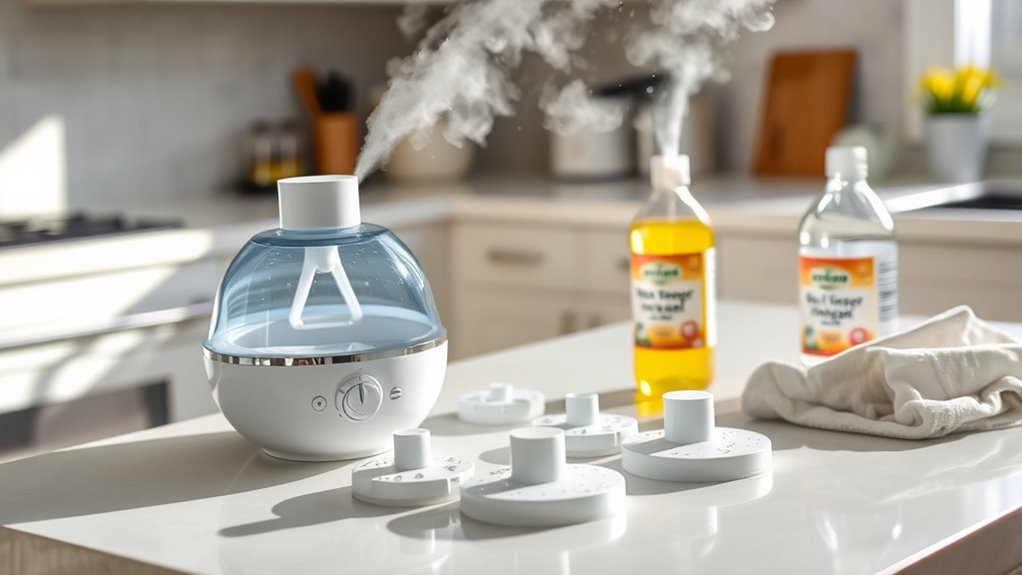
When your humidifier starts to show signs of trouble, it can impact both your comfort and health. You might notice a decrease in mist output or strange noises, indicating that something’s not right. If you see any discoloration or mold buildup, it’s time for immediate user troubleshooting. Pay attention to the humidifier design; older models may require more frequent maintenance. Water leaks or unusual smells are also red flags that shouldn’t be overlooked. Regular checks will help prevent larger issues down the line. By staying vigilant and addressing these signs early, you can ensure your humidifier operates efficiently and contributes positively to your indoor environment. Don’t wait until it’s too late; take action when you notice these warning signs.
Additional Tips for Optimal Humidifier Performance

To keep your humidifier running smoothly, implementing a few additional practices can make a big difference. Regular filter maintenance is vital for optimal air quality. Here are three tips to enhance your humidifier’s performance:
Regular filter maintenance is essential for your humidifier’s performance and air quality. Implement these simple practices for optimal results.
- Change Filters Regularly: Depending on usage, replace filters every 1-3 months to prevent clogs and ensure clean mist.
- Use Distilled Water: This reduces mineral buildup and keeps your humidifier cleaner, promoting better air quality.
- Monitor Humidity Levels: Use a hygrometer to maintain ideal humidity between 30-50%. This prevents over-humidifying, which can lead to mold growth.
Frequently Asked Questions
Can I Use Vinegar for All Types of Humidifiers?
You can use vinegar for many types of humidifiers, but you need to check the humidifier material first. Vinegar’s acidity might damage certain plastics or metals, so it’s essential to verify compatibility. For ceramic or glass models, vinegar works great for cleaning. If you’re unsure, consult your humidifier’s manual or manufacturer recommendations. Regular cleaning keeps your humidifier running efficiently and improves your indoor air quality, so don’t skip this step!
How Often Should I Replace the Humidifier Filter?
You should replace your humidifier filter every 1 to 3 months, depending on your usage and water quality. Consistent humidifier maintenance helps guarantee ideal performance and air quality. If you notice a decrease in humidity levels or a change in water clarity, it might be time for a filter change sooner. Stick to a filter replacement schedule to keep your humidifier running efficiently and to avoid potential issues with mold or bacteria.
Is It Safe to Use Essential Oils in My Humidifier?
Using essential oils in your humidifier can feel like inviting a gentle breeze of tranquility into your home, but it’s a double-edged sword. Not all humidifier materials are compatible with oils, and using them can damage your device or void the warranty. Plus, essential oil safety is vital; some oils can irritate your lungs. So, check your humidifier’s manual first and consider using a diffuser instead for pure, aromatic enjoyment.
What Should I Do if My Humidifier Leaks?
If your humidifier leaks, first unplug it and check for any loose connections or cracks. Proper humidifier maintenance is vital, so make certain the water tank is seated correctly. Clean the device to prevent mineral buildup, which can cause leaks. If you notice persistent issues, consider replacing worn-out parts or the entire unit. For leak prevention, regularly inspect seals and fittings, and avoid overfilling the tank to keep everything functioning smoothly.
Can I Clean My Humidifier With Bleach?
You might want to think twice before using bleach to clean your humidifier. While it can kill germs effectively, bleach can also lead to humidifier corrosion over time. Instead, consider gentler cleaning solutions that keep your device safe and operational. If you do opt for bleach, make certain you’re following proper bleach safety guidelines, like rinsing thoroughly to avoid any harmful residues. Your humidifier will thank you for treating it with care!
Conclusion
So, you think you can just ignore your humidifier and let it fester like a forgotten gym sock? Think again! By following this cleaning routine, you’ll not only spare yourself the horror of mold and bacteria, but you’ll also keep your air fresh and your humidifier humming. Remember, a clean humidifier is a happy humidifier—just like that sock, it deserves a little TLC. Now go forth and conquer the dust and grime like the home hero you are!