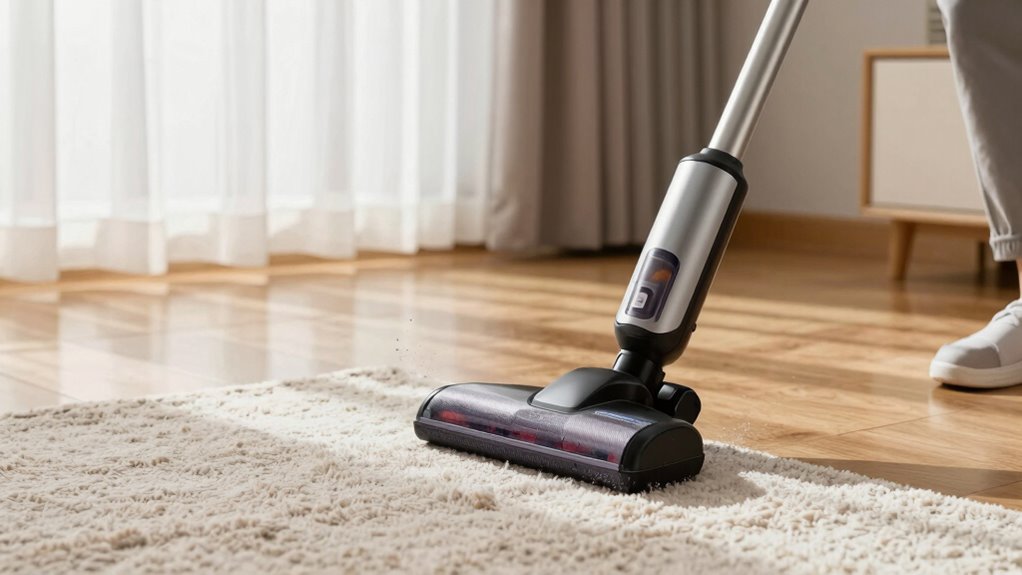
To effectively vacuum for allergens, you need the right techniques. Start in one corner and vacuum in straight lines, overlapping slightly. Use slow, deliberate motions to capture dust mites and pet dander. Don’t forget attachments like crevice tools for tight spots. Vacuum at least once a week, more often if you have pets or allergies. Consistent patterns and regular maintenance keep your vacuum performing well. There’s more to discover about optimizing your cleaning routine for better air quality.
Play games included with Prime
Start a Prime free trial and play with Amazon Luna on your devices.
As an affiliate, we earn on qualifying purchases.
Key Takeaways
- Vacuum in straight lines with slight overlaps to ensure thorough coverage and avoid missing spots where allergens may accumulate.
- Use slow, deliberate motions to effectively lift and capture embedded allergens from carpets and upholstery.
- Change directions periodically while vacuuming to dislodge trapped allergens and dirt for better removal.
- Utilize vacuum attachments such as crevice tools and brushes for targeted cleaning in tight spaces and on various surfaces.
- Establish a regular vacuuming routine, ideally at least once a week, to minimize allergen buildup and improve indoor air quality.
As an affiliate, we earn on qualifying purchases.
Understanding Allergens in Your Home

Have you ever wondered what hidden allergens might be lurking in your home? Airborne allergens can easily find their way into your living space, affecting your health and comfort. Dust mites, mold spores, and pet dander are common culprits. If you’ve got pets, you know that their dander can trigger allergies, causing sneezing and other discomforts. It’s not just about the visible hair; even tiny particles can remain suspended in the air. Regularly cleaning your home helps, but understanding these allergens is vital. By identifying and addressing sources of pet dander and other airborne allergens, you can create a healthier environment. Additionally, utilizing auditory feedback therapy can enhance self-awareness regarding environmental sounds that might contribute to stress and discomfort. Knowing what to look for empowers you to take action, ensuring your home remains a sanctuary rather than a source of irritation. Furthermore, maintaining a clean living space is essential for minimizing allergens and promoting overall well-being. For instance, engaging in aquatic exercise can help improve overall health, making it easier to manage allergy symptoms. Implementing proper color accuracy in your home environment can also reduce the visual distractions caused by allergens. Incorporating smart energy management into your home can also help reduce humidity levels, which in turn minimizes mold growth and dust mite proliferation.
As an affiliate, we earn on qualifying purchases.
The Importance of Choosing the Right Vacuum
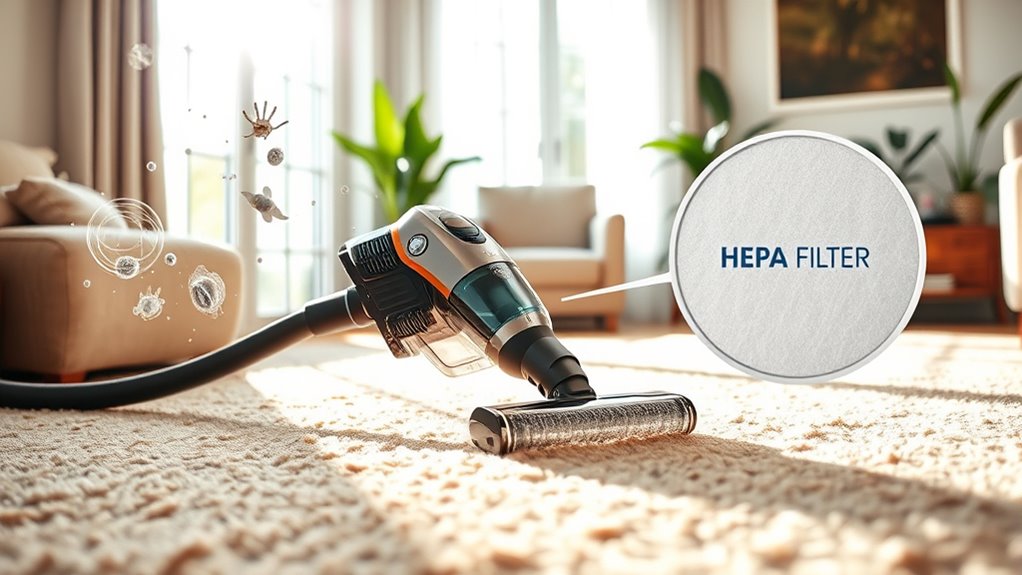
How can you guarantee your vacuum effectively tackles allergens in your home? Choosing the right vacuum is essential. Here are four key factors to consider:
- Vacuum Weight: A lightweight vacuum is easier to maneuver, making it simpler to reach those tricky spots where allergens hide. Additionally, proper aftercare for your vacuum can prolong its lifespan and maintain optimal performance. Using a vacuum with high efficiency ensures that even the smallest particles are effectively captured. Incorporating eco-friendly practices in your cleaning routine can further enhance your home’s air quality.
- Noise Levels: A quieter vacuum not only protects your ears but also reduces stress for pets and kids, making cleaning less disruptive.
- Suction Power: Make sure your vacuum has strong suction to pick up dust, pet dander, and other allergens effectively.
- Attachments: Look for specialized tools, like crevice tools and upholstery brushes, to target allergens in hard-to-reach areas. Additionally, utilizing the power of imagination can help you visualize a cleaner, healthier living space, motivating you to maintain a consistent cleaning routine.
As an affiliate, we earn on qualifying purchases.
HEPA Filters: A Game Changer for Allergen Removal
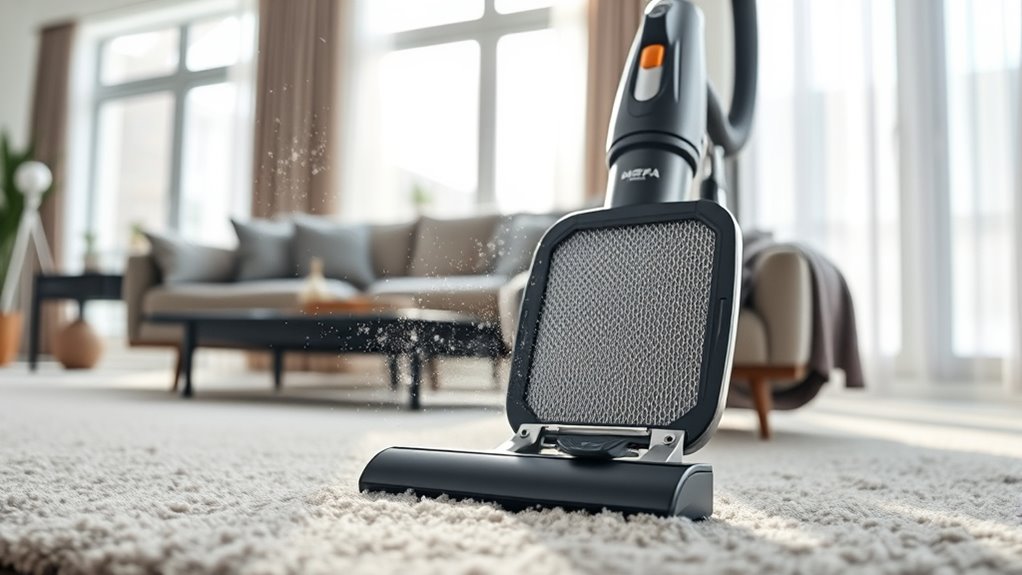
When it comes to tackling allergens, HEPA filters are a vital upgrade for your vacuum. They capture tiny particles that standard filters often miss, considerably improving your air quality. To keep them working effectively, you’ll want to follow some maintenance and replacement tips. Additionally, utilizing renewable power generation can enhance indoor air quality by reducing harmful emissions from traditional energy sources. Investing in a vacuum with advanced filtration systems can also significantly aid in minimizing allergens in your home. Furthermore, using a vacuum equipped with a whole-house water filtration system can further improve your environment by ensuring cleaner water throughout your home. Regular maintenance of your vacuum, including filter replacement schedules, is essential to maintain optimal performance and air quality. Moreover, using smart gear can help you monitor and improve indoor conditions, making your living space even safer and more comfortable.
HEPA Filter Efficiency
Because allergens can trigger uncomfortable reactions, using a vacuum cleaner equipped with a HEPA filter can substantially improve your indoor air quality. HEPA filters excel in trapping tiny particles, ensuring you breathe cleaner air. Here are four reasons why HEPA filter efficiency matters:
- Superior Filtration: HEPA filters capture 99.97% of particles down to 0.3 microns.
- Airflow Optimization: A well-designed vacuum maintains strong airflow, maximizing debris collection. Additionally, utilizing energy-efficient technology in vacuum design can further enhance performance. Engaging in mindfulness practices while cleaning can also improve your overall sense of well-being.
- Longer Filter Lifespan: Regular use of a HEPA filter prolongs its effectiveness when maintained properly.
- Reduced Allergens: HEPA filters considerably lower allergens like dust mites and pet dander.
Additionally, many high-quality vacuums also incorporate advanced filtration systems that further enhance air quality by targeting even smaller particles. Investing in a vacuum with a HEPA filter not only enhances your cleaning routine but also contributes to a healthier living environment.
Maintenance and Replacement Tips
To keep your HEPA filter working effectively, regular maintenance and timely replacement are essential. Start by checking your vacuum’s filter every month—this helps verify it’s free from debris. When you notice a decrease in suction or airflow, it’s time for filter cleaning or replacement. Keeping an eye on your vacuum bag is equally important; a full bag can hinder performance. Aim for vacuum bag replacement every two to three months, or sooner if it’s full. Additionally, risk management strategies can be beneficial for maintaining your vacuum’s performance over time. Engaging in creative projects with your family can also encourage a more thorough cleaning routine. Also, remember to follow the manufacturer’s recommendations for your specific model. By staying proactive with these maintenance tips, you’ll maximize your HEPA filter’s ability to trap allergens, improving your home’s air quality and your overall well-being. Furthermore, using vacuums with anti-allergen technology can significantly enhance your cleaning effectiveness. Additionally, understanding the importance of data privacy regulations can further enhance your awareness of how home cleanliness impacts health. Regularly maintaining your vacuum not only preserves its functionality but also ensures optimal allergen removal efficiency, which is crucial for maintaining a healthy living environment.
As an affiliate, we earn on qualifying purchases.
Vacuuming Technique: The Right Way to Do It
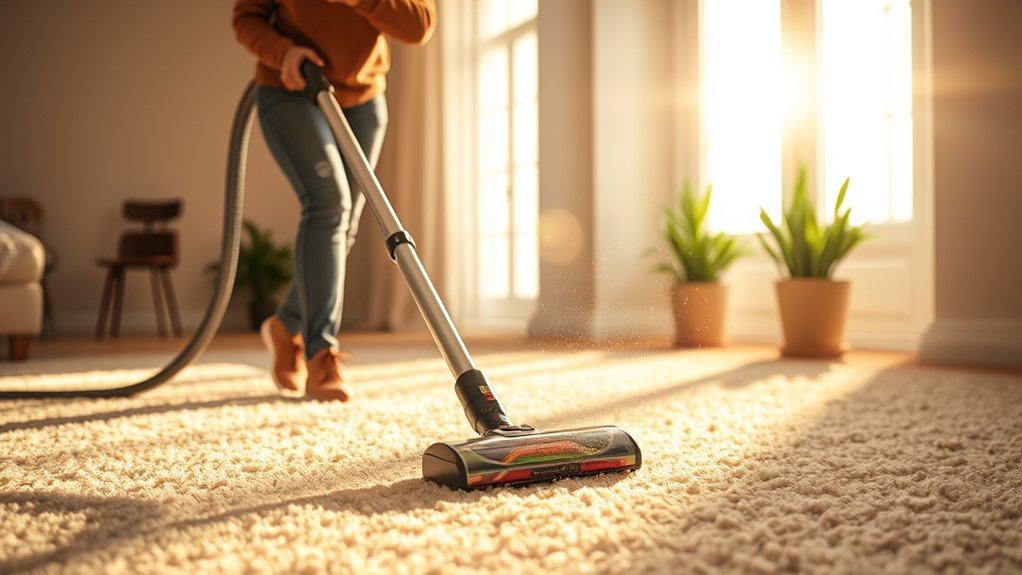
To effectively tackle allergens, you need to master your vacuuming technique. Focus on proper patterns, choose the right attachments, and keep up with regular maintenance. These steps will guarantee you’re getting the most out of your vacuuming efforts. Additionally, using a vacuum equipped with a HEPA filter can significantly improve your ability to capture microscopic allergens and improve air quality in your home.
Proper Vacuuming Patterns
How can you guarantee that your vacuuming is as effective as possible? By following the right vacuuming patterns, you can considerably reduce allergen distribution in your home. Here’s how to vacuum properly:
- Start in one corner and work your way across the room, ensuring you cover every inch.
- Vacuum in straight lines, overlapping slightly to avoid missing spots.
- Change directions periodically; this helps lift embedded allergens and dirt.
- Use slow, deliberate motions—speed can lead to missed areas and ineffective cleaning.
Choosing the Right Attachments
Which attachments you choose can make a considerable difference in your vacuuming effectiveness. Selecting the right tools enhances your ability to capture allergens hidden in carpets and upholstery. Make certain your attachments are compatible with your vacuum model; otherwise, they won’t perform ideally. For instance, a crevice tool can reach tight spaces where allergens accumulate, while a brush attachment can agitate carpets for deeper cleaning.
Additionally, consider the hose flexibility. A flexible hose allows you to maneuver easily around furniture and tight corners, ensuring you don’t miss any spots. By combining the right attachment compatibility with a flexible hose, you’ll notably improve your vacuuming technique and reduce allergens in your home, creating a healthier environment for you and your family.
Regular Maintenance Tips
While you may think vacuuming is a straightforward task, regular maintenance is essential for guaranteeing your vacuum operates at its best. Keeping your vacuum in top shape helps improve air quality and reduces allergen sources in your home. Here are some maintenance tips to follow:
- Empty the dustbin regularly to prevent clogs and maintain suction power.
- Clean or replace filters as recommended by the manufacturer to ensure efficient airflow.
- Inspect and clean brushes to remove hair and debris that can hinder performance.
- Check hoses for blockages to ensure smooth operation and avoid losing suction.
Frequency Matters: How Often Should You Vacuum?

To keep allergens at bay, you need to vacuum regularly, as dust, pet dander, and pollen can accumulate rapidly in your home. Aim to vacuum at least once a week, or more often if you have pets or allergies. Pay attention to the vacuum bag; a full bag can reduce suction power, making it less effective in capturing allergens. Additionally, consider the cord length when choosing your vacuum. A longer cord allows you to cover more area without switching outlets, making your cleaning routine more efficient. By establishing a consistent vacuuming schedule and using the right equipment, you’ll help maintain a healthier living environment and considerably reduce allergens in your home.
Don’t Forget About Upholstery and Drapes
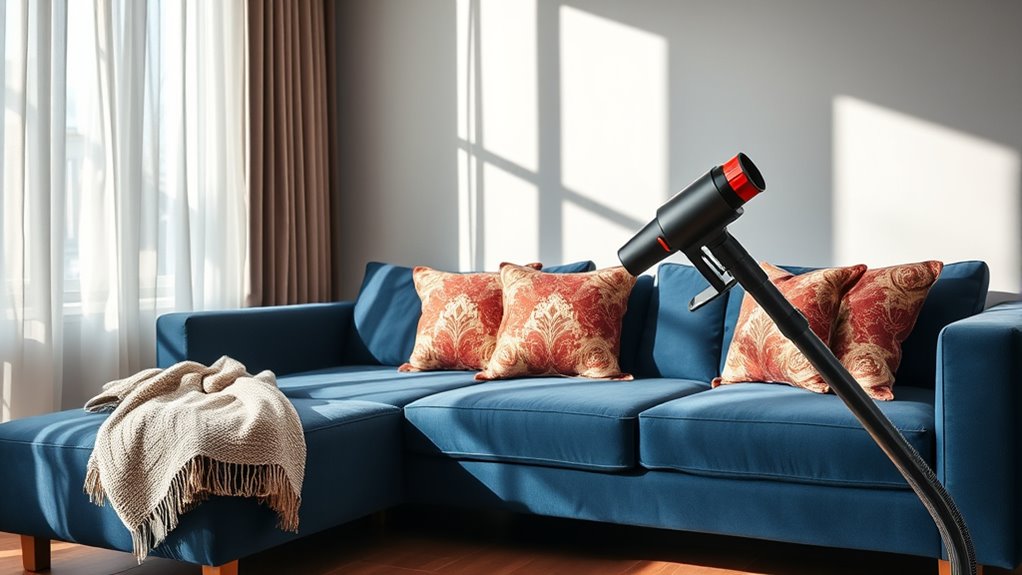
Have you ever considered how much allergens can hide in your upholstery and drapes? These areas often get overlooked during your cleaning routine, but they can harbor dust mites, pet dander, and pollen. Regular upholstery cleaning and drapes maintenance are vital for keeping your home allergen-free. Here’s what you should do:
- Vacuum upholstery weekly with a suitable attachment.
- Use a damp cloth to wipe down fabric surfaces.
- Wash drapes according to manufacturer instructions every 3-6 months.
- Consider professional cleaning for deep-seated allergens.
The Role of Vacuum Attachments in Allergen Control
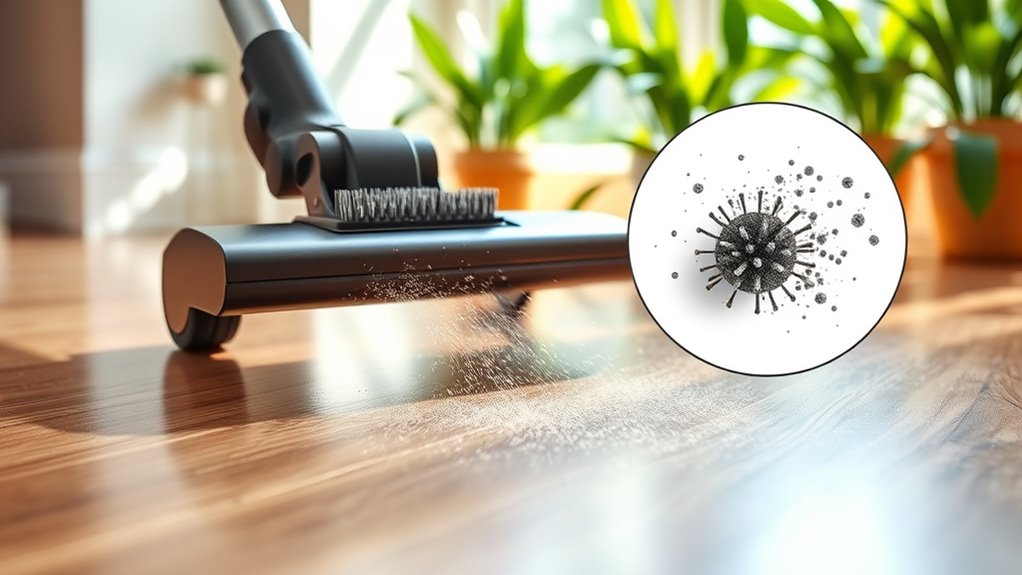
Upholstery and drapes aren’t the only places where allergens lurk; the right vacuum attachments can make a significant difference in your cleaning efforts. With attachment versatility, you can tackle various surfaces effectively, ensuring you pick up dust and allergens where they hide. An ergonomic design allows for comfortable handling, making it easier to reach tight corners and high spots.
Here’s a quick look at essential vacuum attachments:
| Attachment Type | Purpose | Benefits |
|---|---|---|
| Crevice Tool | Tight spaces | Reaches narrow areas |
| Upholstery Brush | Furniture and fabric surfaces | Gentle yet effective cleaning |
| Dusting Brush | Delicate items | Protects surfaces while cleaning |
| Floor Brush | Hard floors and carpets | Versatile for different flooring types |
Choose wisely, and enhance your allergen control!
Maintenance Tips for Your Vacuum Cleaner
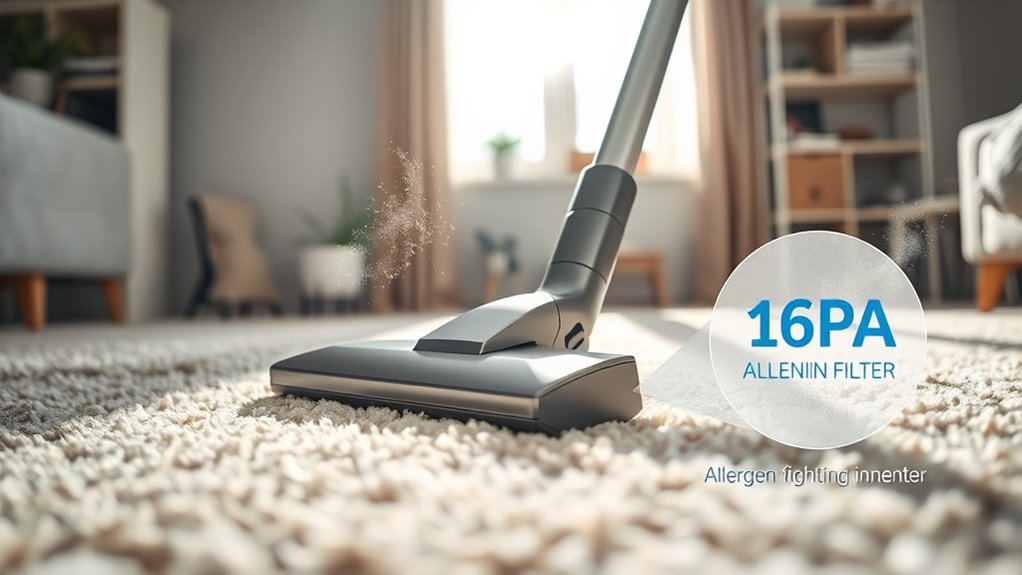
While vacuuming is essential for reducing allergens, maintaining your vacuum cleaner is just as crucial for peak performance. Here are some tips to keep your vacuum in top shape:
Maintaining your vacuum is key to maximizing its performance and ensuring effective allergen reduction.
- Clean or Replace Filters: If you have a bagless design, make sure to clean or replace filters regularly to maintain suction.
- Check the Brush Roll: Remove any tangled hair or debris from the brush roll to ensure effective cleaning.
- Inspect the Cord: Regularly check the cord length for frays or damage. A compromised cord can affect safety and functionality.
- Empty the Bin: For bagless models, empty the dust bin frequently to prevent clogs and maintain efficiency.
Additional Cleaning Strategies to Combat Allergens
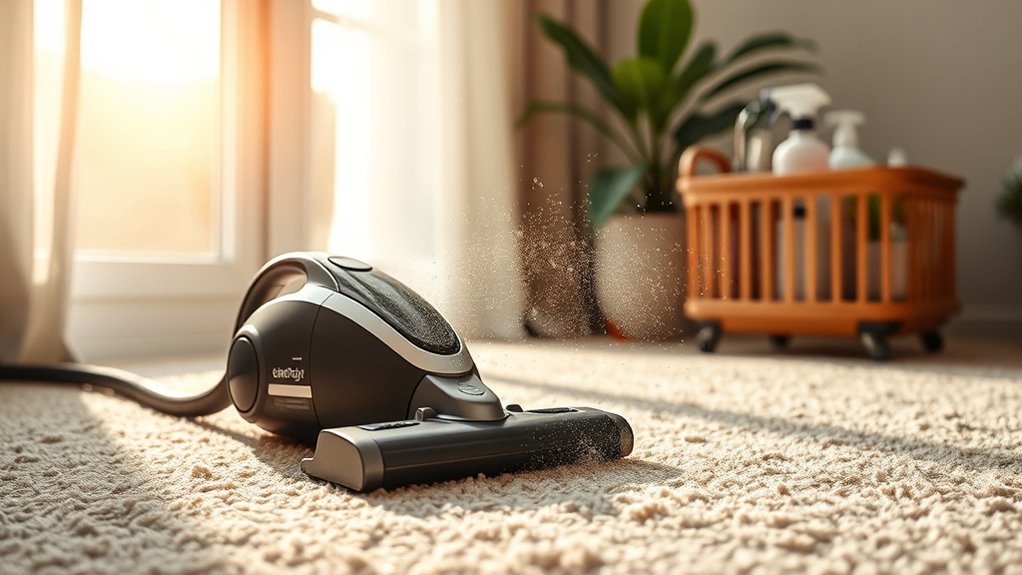
To effectively combat allergens in your home, it’s essential to implement additional cleaning strategies alongside regular vacuuming. Start by dusting surfaces with a damp cloth to capture airborne allergens instead of just moving them around. Wash your bedding weekly in hot water to eliminate dust mites, a common allergy trigger. Don’t forget to clean your curtains and upholstery, as they can harbor allergens too. Consider using an air purifier with HEPA filters to help reduce airborne allergens in your living spaces. Regularly mopping hard floors can also prevent dust from accumulating. Ultimately, keep clutter to a minimum, as it can trap dust and other allergy triggers. By combining these strategies, you’ll create a healthier environment for you and your family.
Frequently Asked Questions
Can Vacuuming Help With Pet Allergies Specifically?
Yes, vacuuming can definitely help with pet allergies. By regularly vacuuming, you can effectively reduce pet dander in your home. Make sure you use a vacuum equipped with a HEPA filter, as it captures smaller particles. Don’t forget about vacuum maintenance—empty the bag or canister frequently and clean the filters to keep your vacuum working efficiently. This way, you’ll create a healthier environment for yourself and minimize allergy symptoms.
What Types of Allergens Does Vacuuming Remove?
Vacuuming can effectively remove various allergens, including dust mites, pollen, and pet dander. In fact, studies show that using a vacuum with HEPA filters can capture up to 99.97% of particles, considerably reducing allergens in your home. When you vacuum carpet fibers, you dislodge and collect these irritants, making your living space healthier. Regular vacuuming not only helps improve air quality but also contributes to your overall well-being by minimizing allergic reactions.
Is It Better to Vacuum or Sweep for Allergens?
It’s generally better to vacuum for allergens than to sweep. Vacuuming captures dust, pet dander, and other allergens effectively, while sweeping can just push them around, making them airborne. Plus, maintaining your vacuum—like changing filters and emptying bags—ensures it works at its best. While sweeping has its advantages, like quick clean-ups, it doesn’t provide the deep clean you need to minimize allergens. Stick with vacuuming for a healthier home environment.
How Do I Know if My Vacuum Is Effective?
To know if your vacuum’s effective, check its suction power and look for allergen filters. A vacuum with HEPA filters captures smaller particles, helping reduce allergens in your home. Regular vacuum maintenance, like cleaning or replacing filters and emptying the bin, keeps it running efficiently. If you notice a decrease in performance, it might be time to inspect the brush rolls and hoses for clogs or wear.
Can Vacuuming Trigger Allergies Instead of Relieving Them?
Yes, vacuuming can trigger allergies if your vacuum isn’t well-maintained. If you don’t regularly clean or replace filters, dust and allergens can escape back into the air. To avoid this, use allergy-proofing techniques like sealing your vacuum and choosing ones with HEPA filters. Make sure to empty the dust bin often, too. By keeping your vacuum in top condition, you can help relieve allergies instead of making them worse.
Conclusion
In the battle against allergens, you’ve got the right tools and techniques at your disposal. By choosing a vacuum with a HEPA filter and mastering your vacuuming skills, you’ll create a cleaner, healthier home. Remember, it’s not just about frequency; it’s about thoroughness. So, keep your vacuum in tip-top shape, and don’t forget those pesky drapes and upholstery! With these strategies, you’ll be kicking allergens to the curb like a pro—no DeLorean needed!
Fall Picks
fall essentials
As an affiliate, we earn on qualifying purchases.