Humidifier scale buildup happens because minerals like calcium and magnesium in your tap water don’t evaporate when the water turns to mist. Instead, these minerals concentrate as water evaporates, leaving deposits behind inside your device. Over time, these deposits can clog vents and reduce mist output, making your humidifier less effective. Using hard water speeds up this process, but understanding how to prevent and clean deposits can keep your humidifier working smoothly—if you keep exploring, you’ll discover more helpful tips.
Key Takeaways
- Mineral deposits from tap water, especially calcium and magnesium, cause scale buildup inside humidifiers.
- Heating or evaporating water concentrates minerals, leading to deposits on internal surfaces.
- Hard water has higher mineral content, accelerating the formation of crusty mineral deposits.
- Mineral residues accumulate over time, clogging vents and reducing mist output efficiency.
- Regular cleaning and using distilled water help prevent and minimize scale buildup.

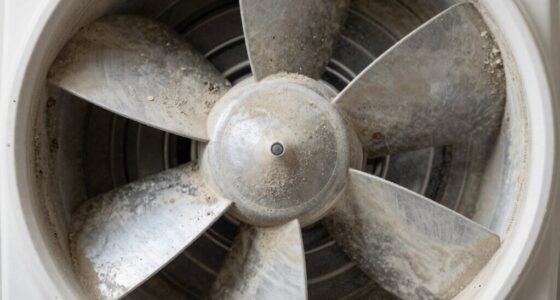
If you use a humidifier regularly, you’ve probably noticed white or grayish deposits forming inside it over time. These deposits are known as scale buildup, and they happen because of minerals in the water you use. Tap water contains minerals like calcium, magnesium, and other dissolved solids. When your humidifier heats or evaporates the water, these minerals don’t go away. Instead, they settle out and stick to surfaces inside the device. Over days, weeks, or months, these mineral deposits accumulate, forming the stubborn crusts you see.
This process begins as the water evaporates from the humidifier’s surfaces. As the water turns into mist, the minerals it carried become more concentrated. When the water level drops or reaches a certain point, the minerals are left behind. Because the minerals are insoluble in the air and don’t vaporize with the water, they settle out and cling to the humidifier’s components—like the tank, the heating element, or the filter. The warmer the water, the faster this process accelerates, which is why humidifiers that heat water tend to develop more scale buildup.
The minerals don’t just sit idly; they tend to stick tightly to surfaces, forming crusty deposits that can interfere with your humidifier’s performance. These deposits can clog the vents, obstruct airflow, and reduce the efficiency of mist production. As the buildup thickens, the humidifier may struggle to generate enough mist, or it might produce inconsistent output. This not only diminishes the effectiveness of your device but can also cause it to work harder, potentially shortening its lifespan.
You might wonder why some humidifiers get scale buildup faster than others. The main reason is the type of water you use. Hard water, which contains high mineral content, leads to more rapid and extensive deposits. On the other hand, soft water has fewer minerals, so buildup happens more slowly. Using distilled or demineralized water can markedly reduce the problem, as these types of water contain fewer minerals and don’t leave behind deposits as readily. Additionally, the water quality significantly influences how quickly scale develops.
Regular cleaning helps prevent excessive scale buildup. If you notice deposits forming, it’s a sign to descale your humidifier more frequently. Using vinegar or a descaling solution effectively dissolves mineral deposits without damaging your device. Avoid ignoring this issue because the buildup can cause the humidifier to work less efficiently, increase energy use, and even promote mold growth if not cleaned properly. In short, understanding why scale forms helps you maintain your humidifier better, ensuring healthier air quality and a longer-lasting device.
Frequently Asked Questions
Can Using Distilled Water Prevent Scale Buildup Completely?
Using distilled water can notably reduce scale buildup in your humidifier, but it might not prevent it entirely. Since distilled water contains fewer minerals, there’s less chance for scale to form. However, if mineral content is still present or the water contains other impurities, some buildup may still occur over time. Regular cleaning and maintenance are essential to keep your humidifier working efficiently, regardless of the water you use.
How Often Should I Descale My Humidifier?
You should descale your humidifier at least once a month, especially if you use tap water. If you notice mineral deposits or reduced mist output, it’s time to clean it more frequently. Regular descaling prevents buildup, keeps your humidifier running efficiently, and guarantees the air you breathe stays clean. Adjust the frequency based on your water quality and usage to maintain ideal performance and avoid any potential issues.
Does Mineral Content Vary by Water Source Impact Scale Formation?
Yes, mineral content in your water source impacts scale formation. Hard water, rich in minerals like calcium and magnesium, tends to cause more scale buildup in your humidifier. When you use softer water, there’s less mineral residue, reducing the chances of scale. So, switching to distilled or demineralized water can markedly cut down on mineral deposits, keeping your humidifier cleaner and functioning better longer.
Are There Commercial Descaling Products Recommended for Humidifiers?
Yes, there are commercial descaling products recommended for humidifiers. You should look for descalers specifically designed for appliances like humidifiers or steamers. Follow the manufacturer’s instructions carefully, usually involving diluting the product and running it through the unit. These products help dissolve mineral deposits, ensuring your humidifier runs efficiently and prolongs its lifespan. Always rinse thoroughly after descaling to prevent any residue from affecting air quality.
What Are the Health Risks Associated With Scale Buildup in Humidifiers?
Scale buildup in your humidifier can release bacteria, mold, and mineral particles into the air you breathe, potentially causing respiratory issues, allergies, or asthma flare-ups. It may also worsen existing conditions or lead to sinus infections. To protect your health, clean your humidifier regularly, use distilled water, and replace filters as recommended. Staying vigilant helps prevent these health risks and keeps your indoor air safe and clean.
Conclusion
Now that you understand why humidifiers get scale buildup, think of it as nature’s tiny mountain range forming inside your device. Just like minerals settle into quiet corners, they create a crust that hampers your humidifier’s work. But with regular cleaning, you can keep this indoor mountain range at bay, ensuring your humidifier breathes easy and keeps your space comfy. So, keep it clean, and let your humidifier sing a clear, smooth melody of moisture.