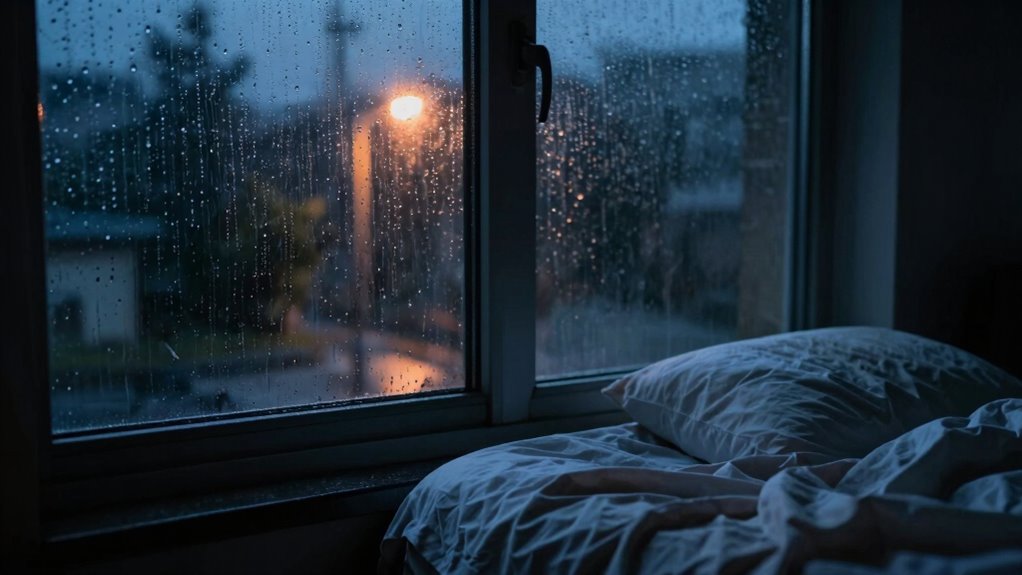
Humidity impacts your sleep more than heat alone because it hampers your body’s ability to cool down through sweat evaporation. When it’s humid, you feel stickier, and your body struggles to shed heat, leading to discomfort and restless nights. High temperatures without humidity are easier to manage because they allow natural cooling. To improve your sleep, understanding how humidity affects comfort can make a big difference—keep exploring to find out more.
Get ready for Prime Big Deal Days — try Prime free
Exclusive member deals on October 6–7, plus fast free delivery. Cancel anytime.
As an affiliate, we earn on qualifying purchases.
Key Takeaways
- High humidity hampers sweat evaporation, making it harder for the body to cool down, thus more disruptive to sleep than heat alone.
- Dry heat allows better natural cooling through evaporation, often resulting in less sleep disturbance compared to humid conditions.
- Elevated humidity increases feelings of stickiness and dampness, leading to more frequent waking and restless sleep.
- Managing humidity with fans, air conditioning, or ventilation significantly improves sleep comfort over just controlling temperature.
- Heat without humidity is generally easier to tolerate, but high humidity directly worsens sleep quality by trapping heat close to the body.
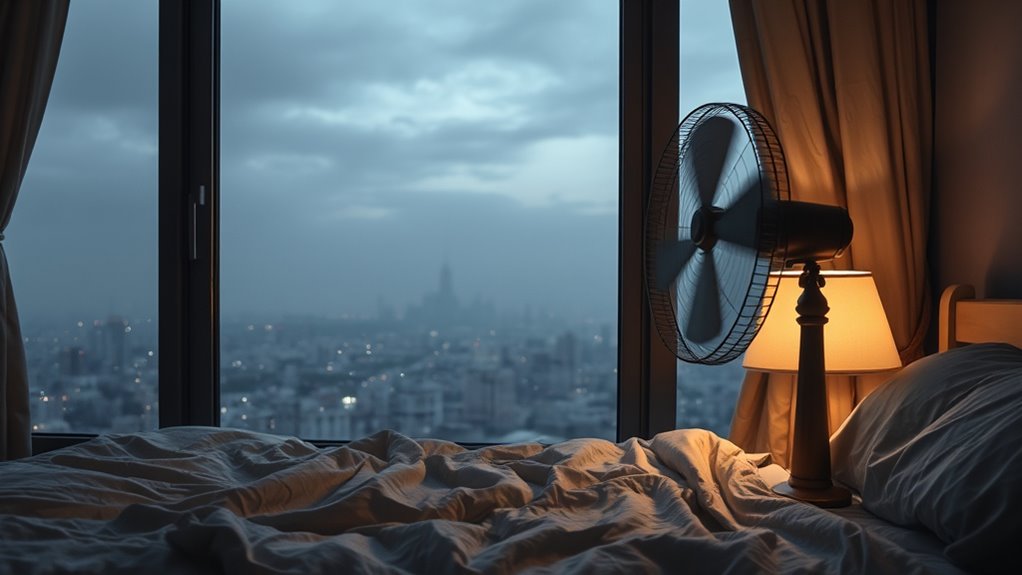
When you encounter hot days, it’s easy to assume that high temperatures are the only factor affecting how hot it feels. But in reality, humidity plays a vital role in how your body perceives heat and how well you sleep. High humidity levels make the air feel heavier and more oppressive, which can considerably disrupt your ability to rest. Even if the temperature isn’t extremely high, muggy conditions can make it feel much hotter, leading to discomfort and restless sleep. Your body relies on sweating to cool down, but when the air is saturated with moisture, sweat doesn’t evaporate efficiently. This hampers your body’s natural cooling process, causing you to feel hotter and more uncomfortable throughout the night.
High humidity makes it harder for sweat to evaporate, disrupting your body’s cooling and causing discomfort.
As humidity rises, your body’s cooling mechanism becomes less effective. When sweat can’t evaporate, your body struggles to shed heat. This means you may find yourself waking up frequently, tossing and turning as your internal thermostat tries to regulate your temperature. The sensation of stickiness and damp sheets can intensify your discomfort, making it difficult to fall asleep initially and stay asleep once you’re there. High humidity also causes your body to work harder just to stay cool, which can lead to increased heart rate and sweating, further disrupting your rest cycle. Additionally, filtration systems in your home can influence indoor humidity levels, impacting overall comfort.
On the other hand, heat alone—without excessive humidity—can still be uncomfortable, but it’s often easier to manage. You might use fans, air conditioning, or open windows to cool down the environment. When the air is dry, sweat evaporates more readily, helping your body cool itself naturally. This allows you to stay more comfortable and sleep more soundly, even if the temperature is high. Humidity, however, complicates this process by preventing evaporation, trapping heat close to your skin, and making the overall environment feel much warmer than it actually is.
Frequently Asked Questions
How Does Temperature Fluctuation Affect Sleep Quality?
Temperature fluctuations disrupt your sleep by causing your body to constantly adjust, making it hard to stay in deep rest. When the temperature rises or drops unexpectedly, you may find it difficult to fall asleep or stay asleep through the night. You might wake up feeling tired or restless. To improve sleep quality, keep your bedroom temperature steady, ideally between 60-67°F, and avoid sudden changes that can disturb your rest.
Can Humidity Levels Influence Sleep Apnea Episodes?
Humidity levels can definitely disrupt your sleep, especially if you’re prone to sleep apnea. High humidity causes your nasal passages to swell and congest, making breathing difficult and increasing apnea episodes. Conversely, low humidity can dry out your throat and airways, worsening breathing struggles. Maintaining a comfortable humidity range helps you breathe easier, reduces interruptions, and results in a more peaceful, restorative slumber. Stay mindful of your environment to optimize sleep quality.
What Are the Long-Term Health Effects of Poor Sleep Caused by Heat?
Poor sleep caused by heat can lead to long-term health issues like increased risk of heart disease, diabetes, and weakened immune function. When you don’t rest well, your body struggles to repair itself and regulate hormones, which can cause weight gain and mood swings. Over time, chronic sleep deprivation from heat exposure may also impair cognitive function and elevate stress levels, impacting your overall well-being and quality of life.
Do Different Sleep Positions Respond Differently to Heat and Humidity?
Yes, different sleep positions respond differently to heat and humidity. If you sleep on your stomach, you might find it harder to cool down since this position traps more heat. Side sleepers tend to stay cooler because they expose less surface area to the mattress. Back sleepers can experience discomfort if it’s humid, as sweat and moisture build up more easily. Adjusting your position can help improve your comfort in hot or humid conditions.
How Do Age and Health Conditions Alter Sensitivity to Heat and Humidity?
Think of your body as a delicate sailboat; age and health conditions are the wind and water that influence how it handles storms. As you age or face health issues, you become more sensitive to heat and humidity, like a boat taking on water faster in rough seas. You might find it harder to stay cool or sweat efficiently, making sleep more elusive during hot, humid nights.
Conclusion
So, when it comes to ruining your sleep, humidity might be the bigger culprit. Studies show that high humidity levels can decrease sleep quality by up to 30%, making it harder to stay asleep and feel rested. While heat can be uncomfortable, humidity’s ability to interfere with your body’s cooling process makes it more disruptive. Next time you’re struggling to sleep, consider lowering humidity levels first—you might just find it makes all the difference.
Fall yard work Picks
leaf blowers
As an affiliate, we earn on qualifying purchases.