The amount of activated carbon in your odor purifier directly affects how well it can absorb and neutralize smells. More carbon provides greater surface area and capacity, making your device last longer before needing a filter change. If the carbon weight is too low, odors will quickly break through, reducing efficiency. Choosing the right amount *guarantees* you get consistent odor control over time. Keep in mind, the type and quality of carbon also play a key role, so there’s more to discover if you’re interested.
Key Takeaways
- Higher carbon weight increases the purifier’s capacity to absorb and neutralize odors effectively over time.
- Adequate carbon weight prevents rapid saturation, maintaining consistent odor removal performance.
- Sufficient carbon volume reduces the frequency of filter replacements, saving costs and effort.
- The amount of activated carbon directly influences the overall efficiency and lifespan of the purifier.
- Matching carbon weight to odor intensity ensures reliable and long-lasting odor control.

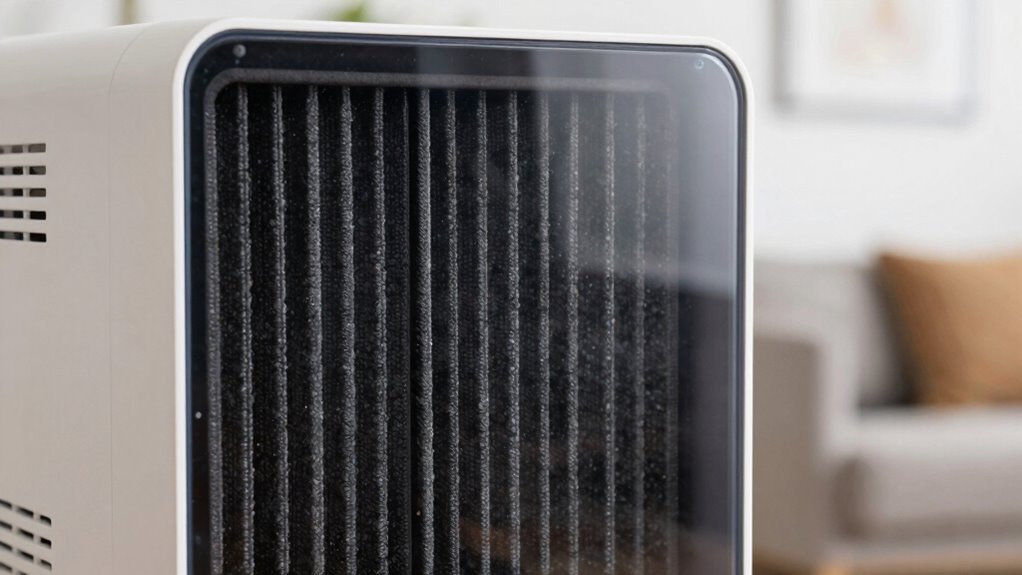
When choosing an odor-focused air purifier, understanding the role of carbon weight is key to selecting an effective model. The weight of activated carbon in the purifier directly impacts its ability to remove odors and airborne chemicals. Activated carbon works through chemical absorption, a process where odor molecules and volatile organic compounds (VOCs) bind to the carbon’s porous surface. The more carbon present, the greater its capacity to absorb these pollutants, which in turn enhances the air filtration efficiency of the device.
A higher carbon weight generally means the purifier can handle more odor molecules before the carbon becomes saturated. This results in longer-lasting filtration performance and fewer replacements, saving you time and money over the long run. Conversely, a purifier with insufficient carbon weight might seem effective initially but quickly loses its ability to combat persistent odors, such as smoke, pet smells, or cooking fumes. It’s important to match the carbon weight to the size of the space and the intensity of odors you want to eliminate, ensuring the purifier maintains high air filtration efficiency throughout its use.
Many people overlook the significance of carbon weight when evaluating air purifiers. They focus on other features like CADR ratings or filter lifespan without considering the critical role of the activated carbon’s capacity. Remember, the core strength of an odor-focused purifier lies in its chemical absorption ability, which is directly tied to the amount of activated carbon it contains. More carbon means more surface area for chemical reactions, leading to more effective odor removal. Additionally, the type of activated carbon used can influence how well odors are neutralized, especially for specific chemicals or pollutants.
It’s not just about quantity; the quality of activated carbon and type of activated carbon matter too. Some purifiers use specially treated or specialized activated carbon designed to target specific chemicals or odors more efficiently. But regardless of the type, a sufficient carbon weight is essential for ensuring consistent performance. Using high-quality activated carbon can improve the efficiency and lifespan of the purifier by providing better odor neutralization capabilities. When you select a purifier with an appropriate amount of carbon, you’re investing in a device that offers reliable odor control and maintains high air filtration efficiency over time. Ensuring a sufficient carbon capacity guarantees that the purifier can meet your odor removal needs effectively and efficiently. Additionally, choosing a model with adequate carbon capacity can help prevent the need for frequent filter replacements, which can be both inconvenient and costly.
activated carbon odor purifier
As an affiliate, we earn on qualifying purchases.
As an affiliate, we earn on qualifying purchases.
Frequently Asked Questions
How Does Carbon Weight Affect Purifier Lifespan?
A higher carbon weight extends your purifier’s lifespan because it offers more surface area for air filtration and odor absorption. When more activated carbon is present, it can trap contaminants and odors more effectively, meaning you won’t need to replace the filter as often. This results in better odor control over time and guarantees your purifier continues to work efficiently. So, investing in a purifier with more carbon can save you money and improve air quality longer.
Is Heavier Carbon Always Better for Odor Removal?
Heavier carbon isn’t always better for odor removal, but it does pack more punch. You need high carbon purity and proper weight distribution to maximize efficiency. Too much weight without quality can be like using a rusty sword—ineffective. Focus on balanced weight and purity to guarantee your purifier tackles odors effectively. Remember, the goal is smart weight, not just heavy weight, to keep your air fresh and clean.
Can Carbon Weight Influence Purifier Maintenance Frequency?
Yes, carbon weight can influence your purifier’s maintenance frequency. Heavier carbon typically offers greater airflow efficiency, which helps the purifier work more effectively over time. However, more weight might also mean the carbon needs to be regenerated or replaced less often, as it absorbs odors more efficiently. Keep an eye on your purifier’s performance; when airflow decreases or odors persist, it’s time for carbon regeneration or replacement.
How Does Carbon Weight Impact Purifier Size and Portability?
Think of carbon weight as the backbone of purifier size and portability. Higher carbon density means you need more activated carbon, making your purifier bulkier and less portable. Purifier design must balance carbon weight with size to keep it manageable. If you want a compact, easy-to-carry device, choose one with optimized carbon density. This way, you get effective odor removal without sacrificing convenience or mobility.
Are There Trade-Offs Between Carbon Weight and Cost?
Yes, there are trade-offs between carbon weight and cost. Heavier carbon filters offer better odor absorption and cost efficiency over time, but they can increase initial expense and environmental impact due to more material use. Lighter filters might lower upfront costs and reduce environmental footprint, but may require frequent replacements, raising long-term costs. Balancing carbon weight helps you optimize both cost efficiency and environmental sustainability.
carbon weight air purifier
As an affiliate, we earn on qualifying purchases.
As an affiliate, we earn on qualifying purchases.
Conclusion
Ultimately, selecting a purifier with the right carbon weight subtly enhances the ambiance of your space, ensuring that unwelcome odors are gently ushered away. When you prioritize this detail, you’re not just choosing a device—you’re curating an atmosphere of refined freshness. Trust in the nuanced power of the right carbon weight; it’s a delicate touch that elevates your environment, leaving only the most pleasant impressions behind.
odor neutralizing air purifier with high carbon capacity
As an affiliate, we earn on qualifying purchases.
As an affiliate, we earn on qualifying purchases.
pet odor air purifier with activated carbon
As an affiliate, we earn on qualifying purchases.
As an affiliate, we earn on qualifying purchases.