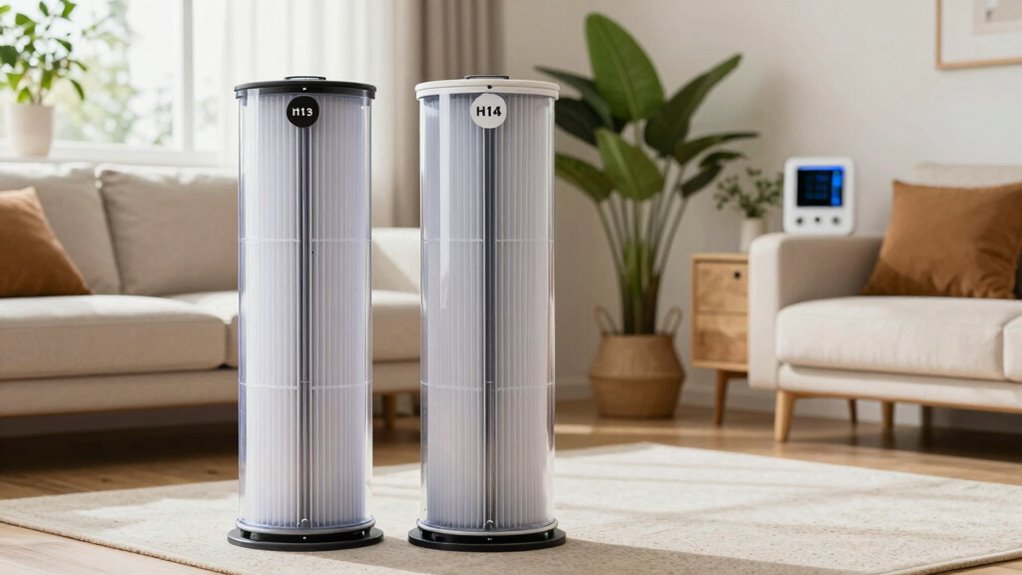

Choosing between HEPA H13 and H14 filters depends on your health needs and air quality concerns. H14 filters trap slightly more microscopic particles, offering better protection for sensitive environments or severe allergies, but they tend to cost more and may require compatible systems. If you want accentuated filtration, H14 could be worth it. Otherwise, H13 filters usually provide excellent air quality for most homes. For detailed insights, continue exploring what suits your situation best.

Get health and wellness essentials delivered free with Prime
- Fast, free delivery on millions of items
- Prime Video, Amazon Music and more included
- Member-only deals all year
Key Takeaways
- H14 filters trap slightly more microscopic particles, including bacteria and viruses, providing higher protection for sensitive individuals.
- The performance difference between H13 and H14 is small but can be significant for allergy sufferers and health-critical environments.
- H14 filters are generally more expensive and may require more frequent replacements, impacting overall cost-effectiveness for home use.
- Not all home air purifiers are compatible with H14 filters; verify system specifications before upgrading.
- For most households, H13 filters suffice for reducing allergens, but H14 offers extra filtration for maximum air purity.
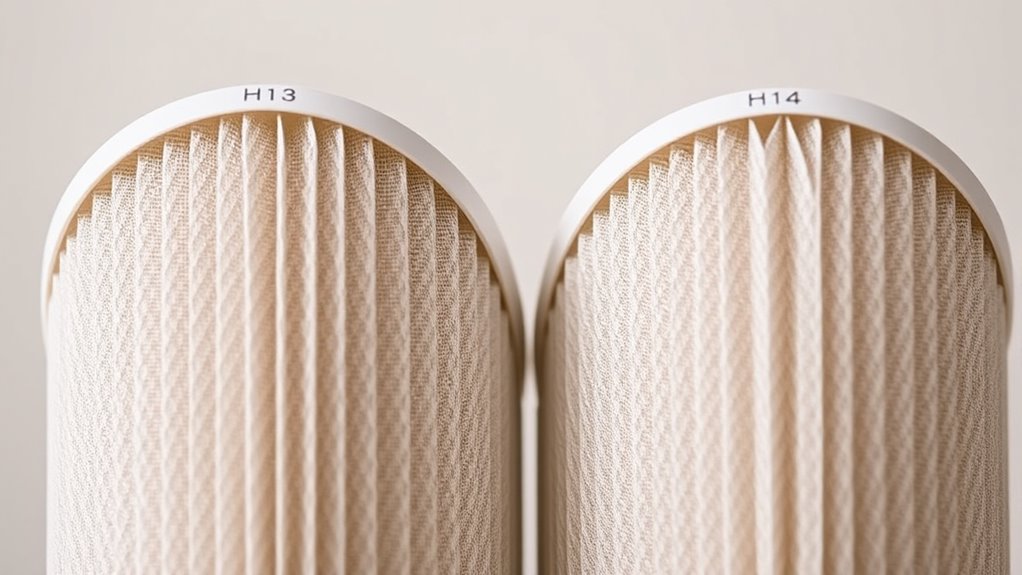
Are HEPA H13 and H14 filters truly different in performance? The answer is yes, but the significance depends on your specific needs. Both filters meet high standards for air purification, but they vary slightly in their efficiency and application. HEPA H13 filters can trap at least 99.95% of airborne particles as small as 0.3 microns, making them suitable for most residential needs. H14 filters, on the other hand, are slightly more efficient, capturing at least 99.995% of particles at the same size. That tiny difference means H14 filters can remove even more microscopic pollutants, such as certain bacteria, viruses, and fine allergens.
HEPA H14 filters offer slightly higher efficiency, capturing more tiny particles than H13 filters.
This difference in filtration efficiency becomes important if you or someone in your household suffers from severe allergies, asthma, or other respiratory conditions. You’ll notice that H14 filters provide a higher level of purification, which can translate into cleaner air and fewer health issues over time. However, this increased performance often comes with a higher cost and sometimes more frequent replacements. It’s crucial to weigh whether the incremental benefit justifies the expense in your situation.
In everyday home environments, many people find H13 filters perfectly adequate. They effectively reduce common airborne allergens like pollen, dust mites, pet dander, and mold spores. If your main concern is improving air quality without going to extreme measures, an H13 filter will generally do the job well. But if you’re dealing with particularly sensitive individuals, or if you want to maximize air purity, investing in H14 filters can offer an extra layer of protection.
Another factor to evaluate is the compatibility of your air purifier or HVAC system. Not all units are designed to handle H14 filters, which might be thicker or require more power to operate efficiently. Installing a filter that your device isn’t rated for can reduce its lifespan or performance. Always check the manufacturer’s specifications before upgrading. Additionally, understanding filter efficiency can help you make more informed choices about the best air purification options for your home.
Frequently Asked Questions
Can HEPA H13 or H14 Filters Remove Viruses Effectively?
Yes, HEPA H13 and H14 filters can effectively eliminate viruses from the air. They trap tiny particles, including airborne viruses, thanks to their high filtration efficiency. You should choose an H14 filter for extra protection, as it captures even smaller particles. Keep in mind, though, that regular filter replacement and proper maintenance are essential to guarantee maximum virus removal and maintain indoor air quality.
How Often Should HEPA H13 and H14 Filters Be Replaced?
You should replace HEPA H13 and H14 filters every 6 to 12 months, depending on usage and air quality. If you’re constantly battling dust, pet dander, or viruses, you might want to swap them sooner—no one enjoys breathing recycled mystery particles. Regular checks and timely replacements keep your air clean and your lungs happy, proving that even the tiniest filters deserve a little love and attention.
Are HEPA H14 Filters More Expensive Than H13 Filters?
Yes, HEPA H14 filters tend to be more expensive than H13 filters. This price difference comes from H14 filters’ higher efficiency at capturing very fine particles, which requires more advanced materials and manufacturing processes. When shopping, you’ll notice H14 filters generally cost more upfront, but they offer better filtration, making them a good investment if you’re aiming for cleaner indoor air.
Do HEPA H13 and H14 Filters Produce Any Harmful Emissions?
No, HEPA H13 and H14 filters don’t produce harmful emissions. They are designed to trap pollutants and particles, not release any substances into the air. You can trust that using these filters won’t introduce toxins or harmful chemicals into your home environment. Instead, they help improve air quality by capturing allergens, dust, and bacteria, making your space healthier without risking any additional pollution or emissions.
Which Filter Type Is Better for Allergy Sufferers at Home?
You should choose a HEPA H13 filter if you’re an allergy sufferer, as it captures more airborne particles like pollen, dust mites, and pet dander. H13 filters are highly efficient and are often recommended for allergy relief. While H14 filters offer similar benefits, H13 provides slightly better filtration performance for sensitive individuals. Opting for an H13 filter guarantees cleaner air and helps reduce allergy symptoms effectively at home.
Conclusion
Whether you choose HEPA H13 or H14, remember that filtration levels matter, but your home’s needs matter more. Focus on your air quality, your health, and your comfort. Prioritize what suits your space, your lifestyle, and your priorities. Because in the end, it’s not just about the filter’s rating, but about creating a healthier, safer, and more comfortable environment for you and your loved ones. Your choice, your air, your peace of mind.
Halloween Picks
halloween
As an affiliate, we earn on qualifying purchases.