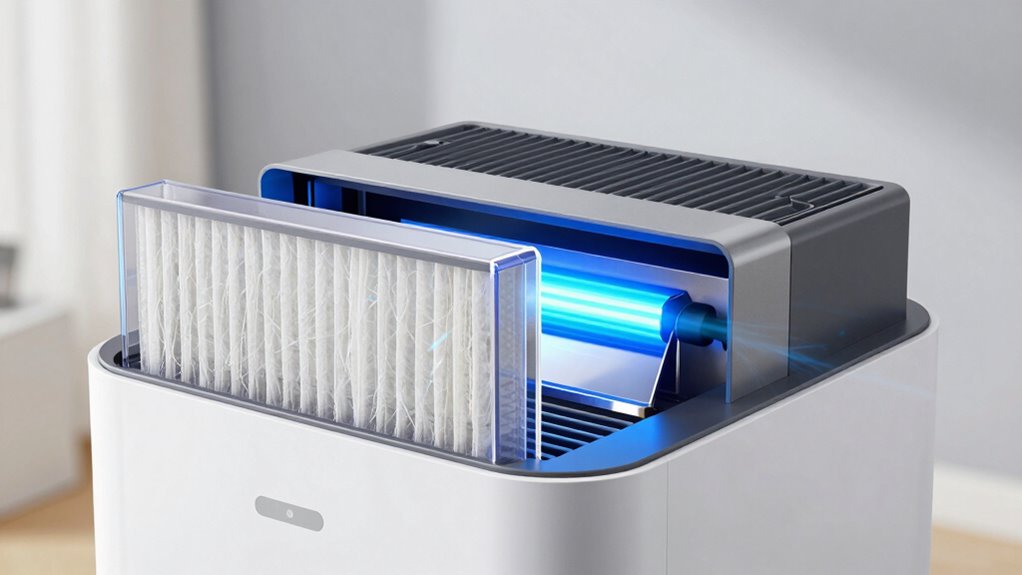
If you’re choosing between HEPA, UV, or ionization, it depends on what you’re targeting. HEPA filters are great for removing allergens and dust, UV light kills bacteria and viruses, and ionization helps reduce smoke and odors. Often, combining these technologies provides the best overall air quality. To understand which solution fits your needs best, consider your specific concerns and safety factors. Keep exploring to find out more about making an informed choice.
Key Takeaways
- HEPA filters effectively remove particulate matter like dust and pollen without ozone production.
- UV light kills or inactivates bacteria, viruses, and mold spores, complementing particulate filters.
- Ionization reduces smoke, odors, and chemicals by charging particles to settle or stick to surfaces.
- Combining HEPA with UV or ionization provides comprehensive air purification for particles and microorganisms.
- Consider your specific needs and ozone safety when choosing between or combining these air purification technologies.
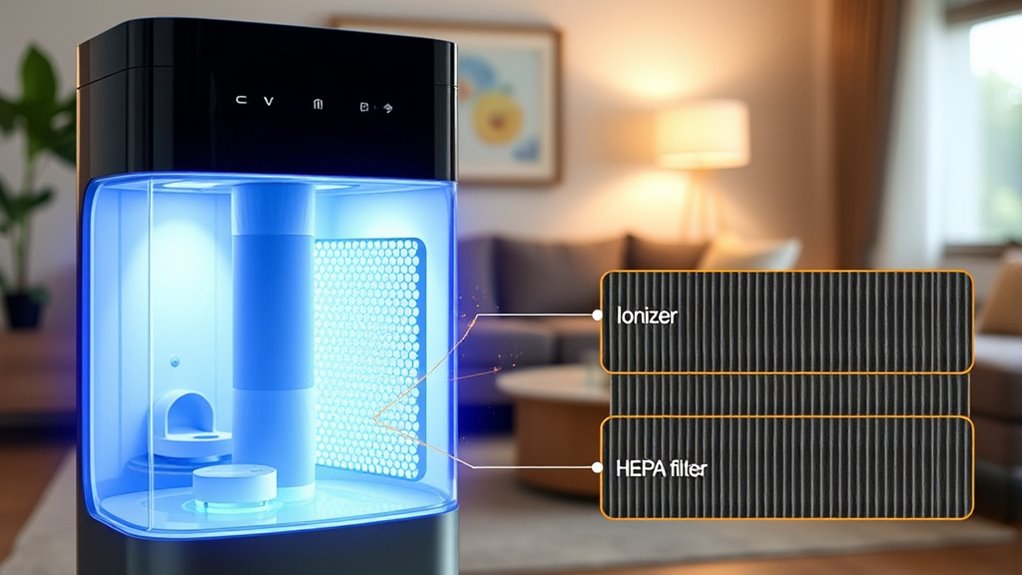
When choosing an air purification method, understanding the differences between HEPA filters, UV light, and ionization is essential. Each technology targets airborne pollutants in unique ways, so knowing what they do helps you decide what fits your needs best. HEPA filters are a popular choice because they physically trap particles like dust, pollen, pet dander, and some bacteria. They are highly effective at capturing particles as small as 0.3 microns, which covers a broad range of common indoor allergens. If your main concern is allergies or asthma, a HEPA filter can drastically improve your indoor air quality. Plus, HEPA filters are straightforward, reliable, and don’t produce ozone, making them a safe, chemical-free option.
HEPA filters effectively trap dust, pollen, pet dander, and bacteria without producing ozone, ensuring safe, chemical-free air purification.
UV light technology, on the other hand, works differently. It uses ultraviolet radiation to kill or inactivate microorganisms such as bacteria, viruses, and mold spores. When air passes through a UV chamber, the light penetrates the microorganisms’ cells, disrupting their DNA and rendering them harmless or unable to reproduce. If you’re worried about biological contaminants, UV purification can be a valuable addition. However, UV light doesn’t remove dust or chemical pollutants, so it’s not sufficient on its own if your primary concern is particulate matter or odors. Also, UV systems need maintenance, like replacing bulbs, and they generate ozone as a byproduct, which can be harmful in high concentrations, so proper design and usage are important. Additionally, understanding the airborne pollutants that each technology targets can help you select the most effective system for your environment.
Ionization technology takes a different approach by electrically charging particles in the air. These charged particles then stick to surfaces or are collected on plates within the device. Ionizers excel at reducing smoke, odors, and certain airborne chemicals because they cause pollutants to settle out of the air more quickly. They’re often quieter and require less maintenance than other methods. But, ionization can produce ozone as a byproduct, which can irritate your lungs, especially if the device isn’t well-designed or used in poorly ventilated spaces. Some models incorporate ozone filters or operate at ozone-safe levels, so check the specifications before purchasing.
Ultimately, you don’t have to rely on just one technology. Many air purifiers combine HEPA filters with UV or ionization to maximize effectiveness. If your primary concern is allergens and dust, a HEPA filter might be enough. If you’re dealing with biological threats like mold or viruses, adding UV can offer extra protection. For odors or smoke, ionization could be beneficial, but be cautious of ozone emissions. Consider your specific air quality issues, health needs, and the potential risks of ozone when choosing a system. Combining these technologies often provides the most all-encompassing air purification, giving you peace of mind in creating a cleaner, healthier environment.

LEVOIT Air Purifier for Home Allergies and Pets Hair Smokers in Bedroom, H13 True HEPA Filter, 24db Filtration System Cleaner Odor Eliminators, Remove 99.97% Dust Smoke Mold Pollen, Core 300, White
- AHAM Verified for Performance: Independently tested for air quality and efficiency
- Powerful Filtration System: 56W motor with 143 CFM CADR
- Effective for Large Rooms: Cleans 222 sq ft 4.8 times/hour
As an affiliate, we earn on qualifying purchases.
Frequently Asked Questions
How Do These Air Purification Methods Compare in Energy Efficiency?
You’ll find that HEPA filters are generally more energy-efficient because they rely on physical filtration, which consumes less power. UV purifiers use more energy due to UV lamps that need constant power, and ionization units can vary, but often use moderate energy levels. If you prioritize energy savings, a HEPA filter is usually your best bet, while UV and ionization may increase your energy bill slightly.
Are There Health Risks Associated With UV or Ionization Devices?
Yes, there are health risks with UV and ionization devices. UV light can cause skin burns and eye damage if you’re exposed directly, so it’s crucial to verify the device is properly shielded. Ionization devices may produce ozone, which can irritate your lungs and worsen respiratory issues. Always follow manufacturer instructions, use these devices in well-ventilated areas, and consider consulting a professional to minimize potential health risks.
Can These Systems Effectively Remove Airborne Viruses?
Yes, these systems can effectively reduce airborne viruses. HEPA filters trap tiny particles, including viruses, making them highly effective. UV systems deactivate viruses with light energy, while ionization devices cause particles to clump together and settle out of the air. Combining these technologies can provide thorough protection, but it is crucial to use them correctly and maintain them properly to guarantee maximum effectiveness against airborne viruses.
What Maintenance Is Required for Each Air Purification Technology?
Think of maintaining your air purifier like tending to a vintage radio. For HEPA filters, you’ll need to replace them every 6-12 months. UV systems require bulb replacements annually and occasional cleaning. Ionizers generally need minimal upkeep, just regular cleaning of external parts. Keep an eye on manufacturer guidelines, and don’t forget to check filters and bulbs periodically to guarantee peak performance and fresh, clean air in your space.
Which System Is Best for Allergy Sufferers?
If you suffer from allergies, a HEPA filter is your best choice because it captures tiny particles like pollen, pet dander, and dust mites effectively. UV and ionization systems can help reduce bacteria and odors but don’t target allergens as well. You should prioritize a HEPA air purifier for allergen relief, and make certain regular filter changes to keep it working efficiently.

MOOKA Air Purifier for Bedroom Home Dorm 430 Ft², Compact HEPA Air Cleaner
- True HEPA Filter with 360° Air Intake: Removes dust, smoke, pollen, pet dander
- Compact & Portable Design: Powered via USB for versatile use
- Universal Voltage Compatibility: Works with 110-240V power sources
As an affiliate, we earn on qualifying purchases.
Conclusion
In the battle of HEPA, UV, and ionization, your choice depends on your needs. HEPA happily hones in on harmful particles, UV uniquely eradicates germs at a molecular level, and ionization impressively neutralizes airborne allergens. While each offers benefits, combining these clean-cut contenders can create a thorough, carefree clean. Decide wisely, and breathe freely—because a perfect purifier pairing promises pure, pristine air, turning your space into a sanctuary of safety and serenity.
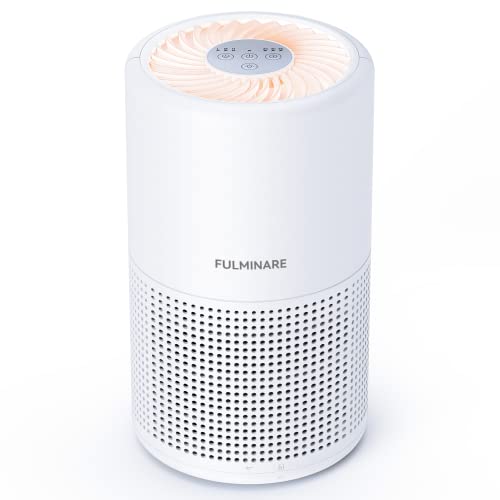
Air Purifiers for Bedroom, FULMINARE H13 True HEPA Filter
- Efficient Particle Filtration: H13 HEPA filter for clean air
- High Circulation Rate: 360° air outlet, refreshes 5x/hour
- Suitable for 215 sq ft rooms: Effective in small to medium rooms
As an affiliate, we earn on qualifying purchases.

VOOPNU Air Purifiers for Bedroom, High Efficiency Filter, 1076 Ft², Black
- Easy-to-Use Control Panel: Intuitive design for simple operation
- Compact and Powerful: Covers 1076 ft² in a small size
- 360° Airflow Design: Ensures even air purification
As an affiliate, we earn on qualifying purchases.