To ease dry eyes at home, focus on balancing humidity, managing screen time, and reducing dust. Use a humidifier or place water bowls nearby to keep the air moist, especially in dry or air-conditioned rooms. Take regular breaks from screens and blink often to prevent dryness from prolonged use. Keep dust at bay by vacuuming with HEPA filters and cleaning surfaces regularly. If you want practical tips for creating a more eye-friendly environment, keep going.
Key Takeaways
- Maintain indoor humidity levels at 40-50% using humidifiers or water bowls to prevent tear evaporation.
- Follow the 20-20-20 rule and reduce screen brightness to minimize eye strain and blinking issues.
- Regularly clean surfaces and use HEPA filters or air purifiers to reduce dust and allergens that irritate eyes.
- Stay well-hydrated by drinking plenty of water to support natural tear production.
- Use artificial tears and take frequent breaks to keep eyes moist and comfortable at home.
Are you struggling with dry, itchy eyes and wondering how to find relief at home? It’s a common problem that can disrupt your daily routine, but understanding the main causes—humidity levels, screen time, and dust—can help you manage your symptoms effectively. Each factor plays a crucial role in your eye comfort, and making simple adjustments can make a big difference.
First, consider humidity. Dry air is a leading culprit behind dry eyes, especially in winter or in air-conditioned environments. When the air lacks moisture, your tears evaporate faster, leaving your eyes feeling gritty and irritated. To combat this, you can use a humidifier in your room or workspace. Setting it to maintain around 40-50% humidity creates a more eye-friendly atmosphere. Additionally, placing a bowl of water near your heating source can help increase ambient moisture. Remember, staying well-hydrated by drinking plenty of water supports your tear production, so don’t overlook the importance of internal hydration in maintaining eye moisture.
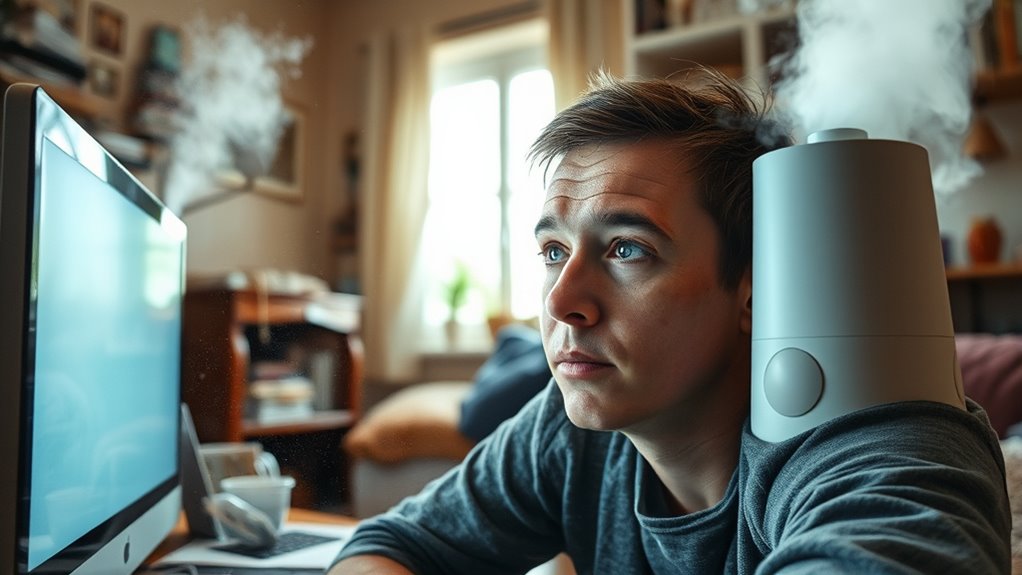
Dry air from winter or air conditioning reduces tear moisture; using a humidifier helps keep your eyes comfortable.
Next, look at your screen habits. Prolonged exposure to computers, tablets, and smartphones can strain your eyes and reduce blinking frequency, which contributes to dryness. When you stare at screens for hours, your blink rate drops by about half, and fewer tears are spread across your eyes, leading to discomfort. To counteract this, follow the 20-20-20 rule: every 20 minutes, look at something 20 feet away for at least 20 seconds. This not only relaxes your eye muscles but also encourages blinking. Adjust your screen brightness to match ambient lighting, and consider using artificial tears or lubricating eye drops to keep your eyes moist during long screen sessions. Taking regular breaks and blinking intentionally helps maintain a healthy tear film.
Dust is another common irritant that can worsen dry eyes. Dust particles settle on your surfaces and float in the air, triggering inflammation or allergic reactions that diminish tear quality. To minimize dust exposure, keep your living and working spaces clean. Vacuum regularly with a HEPA filter vacuum, dust surfaces with a damp cloth, and wash your bedding frequently. Using an air purifier equipped with HEPA filters can markedly reduce airborne dust and allergens. Wearing glasses when cleaning or dusting can also shield your eyes from airborne irritants. These simple steps create a cleaner environment and reduce the likelihood of dust-related dryness and irritation.
Frequently Asked Questions
Can Certain Medications Worsen Dry Eyes at Home?
Yes, certain medications can worsen your dry eyes at home. For example, antihistamines, decongestants, antidepressants, and some blood pressure medicines reduce tear production or increase tear evaporation. If you’re taking these, you might notice increased dryness or discomfort. It’s essential to consult your doctor if you suspect your medication is affecting your eyes, so they can adjust your treatment or suggest remedies to help alleviate dryness.
Do Specific Home Remedies Effectively Treat Dry Eyes?
Simple saline solutions and soothing warm compresses can considerably soothe dry eyes, providing quick relief. You might also try blinking more often to boost natural lubrication or using a humidifier to add moisture to your environment. Additionally, avoiding screens for extended periods and reducing dust exposure can help. These practical, persistent practices promote healthier, happier eyes, easing discomfort and encouraging eye comfort daily.
How Does Indoor Air Quality Impact Dry Eye Symptoms?
Indoor air quality greatly impacts your dry eye symptoms. Poor air circulation, low humidity, dust, and pollutants can irritate your eyes, making dryness worse. When air is stale or filled with allergens, your eyes struggle to stay lubricated. You should improve airflow, use humidifiers, and keep your living space clean to reduce irritants. These steps help keep your eyes moist, comfortable, and healthy.
Are There Particular Household Allergens That Trigger Dry Eyes?
You might be surprised, but common household allergens like dust mites, pet dander, mold, and pollen can trigger your dry eyes. When these allergens circulate in your indoor air, they cause irritation and inflammation, making your eyes feel dry and uncomfortable. Regular cleaning, using air purifiers, and controlling humidity can help reduce allergen levels, giving your eyes relief and improving your overall comfort at home.
Can Sleep Position Influence Dryness and Eye Comfort?
Yes, your sleep position can influence dryness and eye comfort. If you sleep on your stomach or sides with your face pressed into the pillow, you might cause more eye irritation and dryness due to increased contact with bedding and reduced blinking. Sleeping on your back helps keep your eyes open and less exposed to irritants, promoting better moisture retention. Adjust your position to stay more comfortable and protect your eyes overnight.
Conclusion
Taking steps at home can really help ease dry eyes. Keep humidity levels balanced, take regular breaks from screens, and clean dust regularly. Did you know that spending just two hours daily on screens increases dry eye risk by over 30%? By making small changes, you can protect your eyes and reduce discomfort. Remember, your environment plays a big role—so stay mindful and take action to keep your eyes healthy and comfortable.