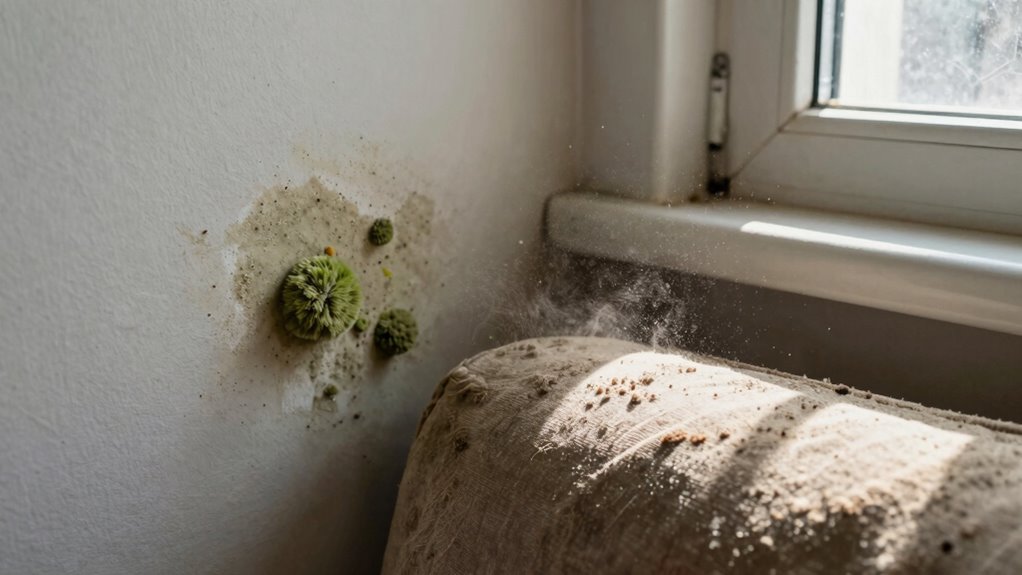
Notice if your symptoms worsen in the morning or late at night, which often points to mold spores settling overnight. Persistent symptoms regardless of cleaning or environment change suggest dust allergies, especially if activities like tidying or vacuuming trigger flare-ups. Mold allergy symptoms tend to fluctuate with humidity and damp areas, while dust allergies are more constant. By paying attention to timing and triggers, you’ll better understand your allergies—keep looking for more clues.
Key Takeaways
- Mold allergy symptoms worsen in the morning or late at night due to spore settlement, unlike persistent dust allergy symptoms.
- Improvement after cleaning or airing out rooms suggests dust mite allergies; consistent symptoms point to mold.
- Mold allergies often flare in damp, mold-prone areas like basements, while dust mites thrive in bedding and upholstery.
- Dust allergy symptoms tend to be constant and less affected by environmental changes compared to mold allergies.
- Activities like vacuuming or tidying can trigger dust allergy symptoms, whereas mold symptoms are more environment-dependent.

Dust allergies, on the other hand, are generally more constant and less tied to specific environmental conditions. People with dust allergies often experience symptoms regardless of the weather or humidity levels. These symptoms tend to be persistent and include sneezing, nasal stuffiness, post-nasal drip, and itchy or watery eyes. If you find that your symptoms are worse when your home is dusty, or during times when you’ve been cleaning or tidying up, dust mites could be the main trigger. Dust mites are microscopic creatures that thrive in bedding, upholstery, and carpets, so increased exposure through vacuuming or changing bedding can trigger flare-ups. If your symptoms improve after thorough cleaning or airing out rooms, dust mites are likely involved. Recognizing the presence of airborne allergens like mold spores and dust mites can help you determine the root cause of your symptoms more accurately. Another clue lies in the pattern of your symptoms throughout the day. Mold allergies often cause symptoms that worsen in the morning or late at night, possibly because mold spores settle overnight or because humid conditions tend to be higher during these times. Dust-related symptoms may be more consistent throughout the day but can spike after activities that disturb dust, like sweeping or making the bed.
Frequently Asked Questions
Can Mold and Dust Allergies Occur Simultaneously?
Yes, mold and dust allergies can occur simultaneously. When you’re exposed to both, your immune system might react to each allergen, causing overlapping symptoms like sneezing, congestion, and itchy eyes. You may notice increased severity of symptoms or new ones, especially in damp or dusty environments. Managing both involves reducing exposure—cleaning regularly, controlling humidity, and using air purifiers—to help lessen your allergic reactions.
Are Symptoms of Mold Allergy Worse Outdoors or Indoors?
Your mold allergy symptoms are typically worse indoors because mold thrives in damp, humid environments like bathrooms, basements, or around leaky pipes. When you’re inside, you breathe in mold spores that trigger allergy symptoms such as sneezing, congestion, or itchy eyes. Outdoors, mold spores are more dispersed and less concentrated, so your symptoms usually lessen. To minimize reactions, keep indoor areas dry and well-ventilated.
How Do I Get Tested for Mold Versus Dust Allergy?
You should visit an allergist for testing. They typically perform skin prick tests or blood tests to identify your specific allergies. During a skin test, they’ll expose your skin to small amounts of mold and dust allergens and observe reactions. Blood tests measure your immune response. Make sure to discuss your symptoms and environmental exposures with your doctor so they can recommend the most accurate tests for you.
What Home Remedies Can Help Alleviate Allergy Symptoms?
You can try using saline nasal sprays to flush out allergens, which helps reduce congestion and irritation. Keep your living space clean and dry to minimize mold growth and dust accumulation. Using a humidifier can maintain ideal air moisture levels, easing breathing. Drinking plenty of water helps thin mucus. Also, consider natural remedies like honey, which may soothe your throat, and herbal teas with ginger or chamomile to reduce inflammation.
Do Allergy Medications Differ for Mold and Dust Allergies?
Imagine your allergy medications as different keys for unique doors. Yes, they can differ; antihistamines might work well for dust allergies, calming sneezing and runny noses, while inhalers or nasal corticosteroids may be more effective for mold allergies, reducing inflammation and congestion. Consult your doctor to choose the right treatment, as tailored medications help you better manage symptoms and prevent flare-ups, much like finding the perfect key for each door.
Conclusion
Understanding the differences between mold and dust allergies helps you identify what triggers your symptoms. For example, if you notice your sneezing worsens after cleaning your basement, mold might be the culprit. Conversely, if dust mites seem to cause more irritation during winter, dust allergy could be the cause. By paying attention to these clues, you can take targeted steps—like reducing humidity or using air purifiers—to breathe easier and improve your quality of life.