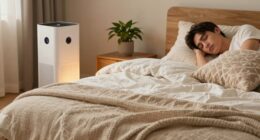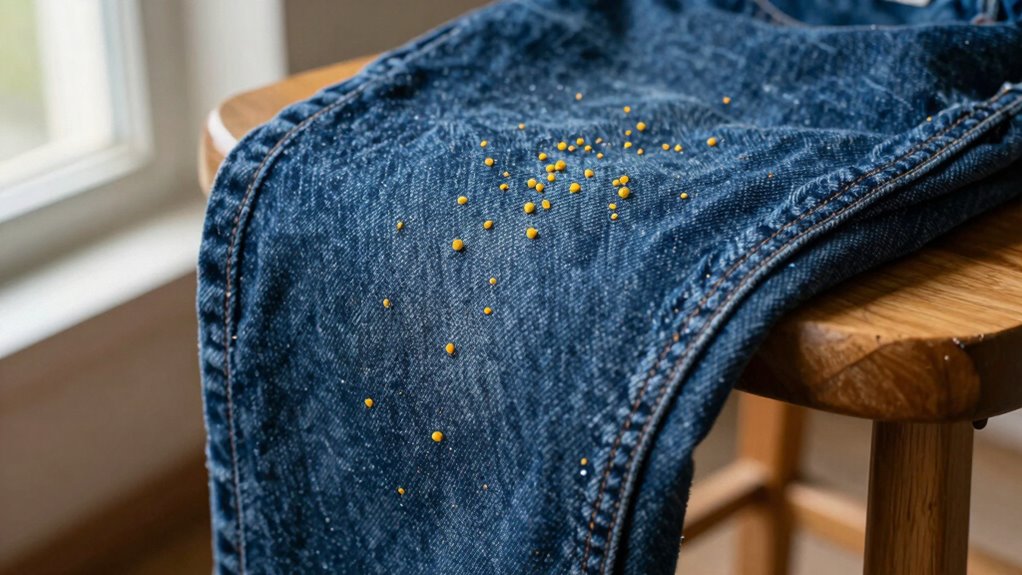

When you step outside during pollen season, your clothes easily trap allergens like pollen, dust mites, and pet dander. These particles stick to fabrics and can embed deep into the fibers, making them difficult to remove without washing. As you carry your clothes inside, allergens transfer onto furniture, bedding, and other areas, increasing indoor allergen levels. Keep going to find out effective ways to reduce allergen transfer and protect your home environment.
Key Takeaways
- Pollen from outdoor environments easily sticks to clothing fibers during outdoor activities.
- Lightweight pollen grains adhere to fabrics, transferring from clothes to indoor surfaces.
- Contact with outdoor air causes pollen to settle on clothing, which can be carried inside.
- Allergens in clothing can remain viable and allergenic until washed away.
- Proper washing and changing clothes after outdoor exposure reduce indoor pollen buildup.

Have you ever wondered if the clothes you wear could be hiding allergens that trigger your skin or respiratory reactions? It’s a common question, especially for those who suffer from allergies or asthma. The truth is, your clothing can carry more than just dirt or odors; it can also trap pollen, dust mites, pet dander, and other allergens. When you step outside, your clothes come into contact with these particles, and they don’t magically stay outside. Instead, they cling to your fabric, ready to be brought indoors. This means that every time you put on a fresh outfit or remove your shoes, you could be bringing those allergens right into your home environment.
Pollen is one of the most common culprits. During peak allergy seasons, outdoor air is filled with tiny pollen grains from trees, grasses, and weeds. These grains are lightweight and sticky, meaning they easily adhere to your clothing. Even a quick walk through a park or a garden can transfer a significant amount of pollen onto your clothes. Once inside, these allergens can settle onto furniture, carpets, and bedding, where they continue to trigger allergic reactions. The problem worsens if you don’t wash your clothes promptly, as pollen can remain viable and allergenic for days if not properly cleaned away.
Dust mites and pet dander also hitch a ride on your clothes. Dust mites are microscopic creatures that thrive in warm, humid environments, such as your bedding and upholstery. When you sit or lie down, tiny particles from these mites or pet dander can cling to your clothing fibers. If you have pets, their fur and skin flakes can easily transfer onto your clothes, especially if you spend time cuddling or playing with them. These allergens aren’t just on your clothes; they can be transferred to your home’s surfaces, making it a continuous cycle of allergen presence.
Understanding that your clothing can carry allergens helps you take proactive steps to minimize exposure. Regularly washing your clothes, especially after outdoor activities, can remove most pollen and dander. Using allergen-proof covers on bedding and vacuuming with HEPA filters also makes a difference. When you come inside after being outdoors, changing clothes and showering can help reduce the amount of allergens you bring into your living space. Recognizing that your wardrobe acts as an allergen carrier encourages better habits to keep your home environment healthier and less reactive. Additionally, choosing clothing fabrics that are less likely to trap allergens can further reduce your exposure.
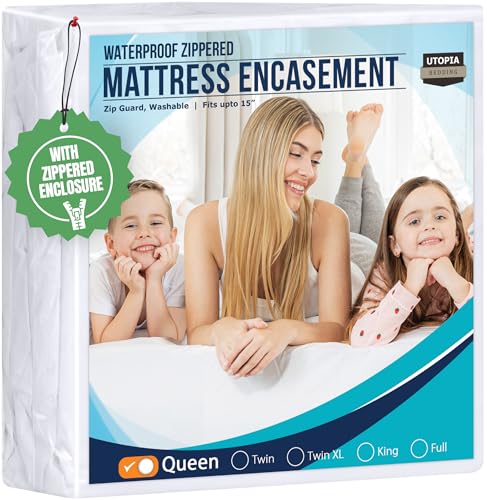
Utopia Bedding Mattress Protector Zippered Queen Size, 100% Waterproof Bed Bug and Dust Mite Proof Mattress Encasement, Absorbent 6 Sided Mattress Cover
360° Coverage Protection – Fits 60 inches by 80 inches queen size mattress up to 15 inches deep,…
As an affiliate, we earn on qualifying purchases.
As an affiliate, we earn on qualifying purchases.
Frequently Asked Questions
Can Washing Clothes Completely Remove Pollen Allergens?
Washing clothes can considerably reduce pollen allergens, but it may not completely remove them. Using hot water and a thorough wash cycle helps break down pollen particles. Adding a fabric softener or allergen-specific detergent boosts effectiveness. However, some pollen residues might linger, especially if clothes aren’t washed properly or if pollen has embedded deep into fabrics. Regular washing and proper laundry practices are your best defense against lingering allergens.
Are Synthetic Fabrics More Likely to Trap Pollen Than Natural Fibers?
Synthetic fabrics are more likely to trap pollen than natural fibers because their tightly woven, smooth surfaces prevent pollen from easily slipping through. You might notice pollen sticking to polyester or nylon more than cotton or linen. To minimize pollen buildup, wash synthetic clothes regularly, and consider choosing natural fibers when spending time in pollen-heavy areas. This way, you reduce pollen transfer and keep allergens at bay.
How Long Do Pollen Allergens Stay on Clothing?
Pollen allergens can cling to your clothing for several hours to days, depending on exposure and fabric type. You might think you’re safe after a quick walk, but those tiny particles can linger longer than you expect. Washing clothes promptly, especially after outdoor activities, helps remove the allergens. Keep in mind, the longer pollen stays on your garments, the higher the chance you’ll bring those pesky allergens into your home.
Do Dryer Sheets Help Reduce Pollen Allergens on Clothes?
Dryer sheets can help reduce pollen allergens on your clothes. They leave a coating that makes it harder for pollen to stick, and some contain fragrances that mask allergens. Using a dryer sheet during drying may make it easier to remove pollen when you fold your laundry. However, for best results, consider washing your clothes with allergen-reducing detergents first, then use dryer sheets to minimize pollen transfer.
Can Outdoor Clothing Be Safely Worn Indoors Without Allergen Transfer?
Yes, outdoor clothing can be safely worn indoors if you take precautions. Imagine your clothes as a shield catching pollen outside; once inside, you shake them out vigorously or leave them outside to release trapped allergens. Wearing a designated outdoor jacket and changing clothes before entering helps prevent allergen transfer. Regular washing and airing out clothes also reduce pollen buildup, keeping your indoor environment safer and allergen-free.

Shark Upright Vacuum, Navigator Lift-Away Deluxe with Large Dust Cup Capacity, HEPA Filter, Swivel Steering, Upholstery Tool & Crevice Tool, Blue, NV360
POWERFUL SUCTION: Deep-clean carpets and tackle bare floors with multi-surface powerful suction.
As an affiliate, we earn on qualifying purchases.
As an affiliate, we earn on qualifying purchases.
Conclusion
So, next time you notice pollen on your clothes, remember it’s more than just a nuisance—it’s a real allergen carrier. While some think washing clothes immediately removes all traces, pollen can cling stubbornly. Trust the evidence: thorough washing and drying help reduce your exposure. Don’t assume it’s harmless; staying vigilant keeps your home allergy-free. Ultimately, understanding how pollen sticks to your clothes helps you take smarter steps to protect your health and enjoy allergy seasons more comfortably.

ECOS Laundry Detergent Liquid, 200 Loads – Dermatologist Tested Laundry Soap – Hypoallergenic, EPA Safer Choice Certified, Plant-Powered – Lavender, 100 Fl Oz (Pack of 2)
CLIMATE POSITIVE AND SUSTAINABLE – Not only is this laundry detergent formula effective and kind to sensitive skin,…
As an affiliate, we earn on qualifying purchases.
As an affiliate, we earn on qualifying purchases.

OxiClean Washing Machine Cleaner with Odor Blasters, 4 Count
Includes: One 4 count box of OxiClean Washing Machine Cleaner with Odor Blasters to supercharge your washing machine…
As an affiliate, we earn on qualifying purchases.
As an affiliate, we earn on qualifying purchases.