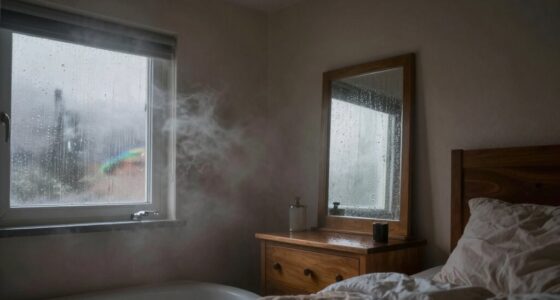
Controlling indoor humidity is a highly effective way to reduce dust mites and improve your allergy and asthma symptoms. Keep your home’s humidity below 50% by using dehumidifiers, air conditioners, or good ventilation. Using a hygrometer helps you monitor levels accurately. Maintaining proper moisture makes it hard for dust mites to survive and avoids mold growth. Stay with me to find out more ways to create a healthier and more comfortable living space.

Get health and wellness essentials delivered free — and shop member deals
- Fast, free delivery on millions of items
- Access to Prime Big Deal Days deals on October 6–7
- Prime Video, Amazon Music and more included
Key Takeaways
- Keep indoor humidity below 50% to hinder dust mite survival and reproduction.
- Use dehumidifiers and air conditioners to effectively reduce excess moisture.
- Regularly monitor humidity levels with a hygrometer for optimal dust mite control.
- Maintain proper ventilation and clean bedding, curtains, and upholstery to lower allergen load.
- Adjust humidity management seasonally to sustain a dry, inhospitable environment for dust mites.
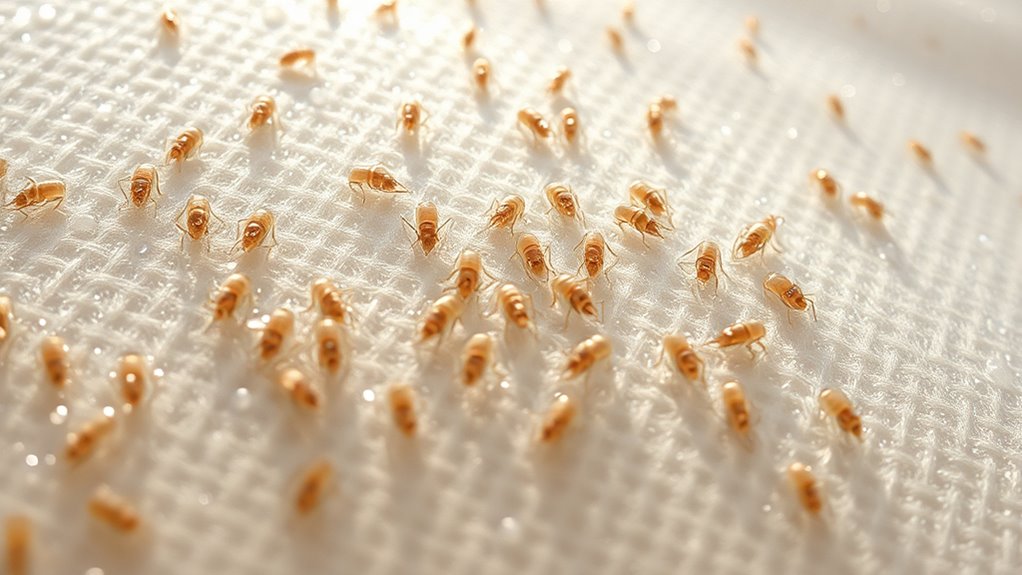
Have you ever wondered how humidity levels affect dust mites in your home? These tiny creatures thrive in environments that are warm and humid, making humidity control one of the most effective strategies to reduce their presence. Dust mites need moisture to survive and reproduce, so keeping indoor humidity below 50% can markedly diminish their population. When the air is dry, dust mites struggle to maintain the moisture levels they need, which leads to their decline. Using a hygrometer helps you monitor humidity levels accurately, ensuring you keep the environment inhospitable for these pests. If you notice the humidity creeping above recommended levels, consider using a dehumidifier or air conditioner to pull moisture from the air. These devices not only improve comfort but also create an environment that dust mites find unlivable. Proper humidity control can also prevent pest infestations, making your home healthier overall.
Maintaining lower humidity isn’t just about reducing dust mites; it also benefits your overall health. Dust mite allergens are a common trigger for asthma and allergies, and decreasing their numbers can lead to fewer respiratory issues. When you keep humidity in check, you’re also preventing the growth of mold and mildew, which thrive in damp environments and can exacerbate allergy symptoms. Proper ventilation plays an essential role here, so make sure your home is well-ventilated, especially in high-moisture areas like bathrooms and kitchens. Using exhaust fans or opening windows when weather permits helps circulate air and keeps moisture levels in check. Regularly cleaning your home, especially bedding, curtains, and upholstery, also removes dust mite allergens and reduces their food sources.
It’s essential to understand that humidity control isn’t a one-time fix but an ongoing process. Changes in weather or household routines can cause fluctuations in humidity, so consistent monitoring is key. During humid seasons, you might need to run a dehumidifier more frequently or increase ventilation efforts. Conversely, in dry seasons, maintaining some humidity with a humidifier might be necessary to prevent other issues like dry skin or respiratory discomfort. Remember, the goal isn’t to make the air completely dry but to keep it within a level that discourages dust mites. By actively managing humidity, you create an environment that’s less inviting for dust mites, ultimately helping you breathe easier and enjoy a healthier home.
Frequently Asked Questions
Can Dust Mites Survive in Low Humidity Environments?
Yes, dust mites struggle to survive in low humidity environments. When humidity drops below 50%, their ability to thrive diminishes considerably because they need moisture to survive and reproduce. You can effectively reduce dust mite populations by keeping your home’s humidity levels low, ideally around 30-50%. Using dehumidifiers and ensuring proper ventilation helps create an environment that isn’t conducive to dust mite survival.
What Are the Signs of Dust Mite Allergies?
Oh, the glamorous world of dust mite allergies! You might notice constant sneezing, watery or itchy eyes, and a stuffy nose that never seems to quit. Sometimes, you’ll feel itchy skin or even wheezing when you breathe. If your sleep is interrupted by coughing or you wake up congested, dust mites could be the culprits. Fundamentally, your body’s allergic reactions scream, “Hey, dust mites, I don’t like you!”
Are There Natural Ways to Reduce Humidity Effectively?
Yes, you can naturally reduce humidity by using ventilation, opening windows, and placing houseplants that absorb moisture. Using a dehumidifying bowl with charcoal or silica gel packs also helps, as they naturally absorb excess moisture. Additionally, fixing leaks and ensuring proper insulation prevents moisture buildup. Keep your home well-ventilated, especially in damp areas like bathrooms and kitchens, to maintain a balanced humidity level naturally.
How Often Should I Clean to Control Dust Mites?
You should clean your home at least once a week to effectively control dust mites. Focus on vacuuming carpets, rugs, and upholstery thoroughly, using a vacuum with a HEPA filter. Wash bedding, pillowcases, and curtains regularly in hot water. Dust surfaces with a damp cloth to trap allergens, and keep clutter to a minimum. Consistent cleaning reduces dust mite populations and helps maintain a healthier environment.
Do Air Purifiers Help Reduce Dust Mite Presence?
Air purifiers act like vigilant guardians, catching dust mites and their allergens before they settle. Yes, they can help reduce dust mite presence considerably. By filtering out tiny particles, including mite debris, they improve your air quality. However, don’t rely solely on them; combine regular cleaning, humidity control, and mite-proof bedding for an all-encompassing defense. Think of it as building a fortress around your home’s air.
Conclusion
Just like the hero who fights off the shadows, keeping your home’s humidity low and dust mites at bay is your defense. Remember, a simple act like controlling moisture levels can turn your space into a fortress of comfort and health. Don’t let these tiny invaders win—take charge today and create a clean, safe haven where you can breathe easy, just like the champions in your favorite stories who conquer the odds.
Fall Picks
fall essentials
As an affiliate, we earn on qualifying purchases.