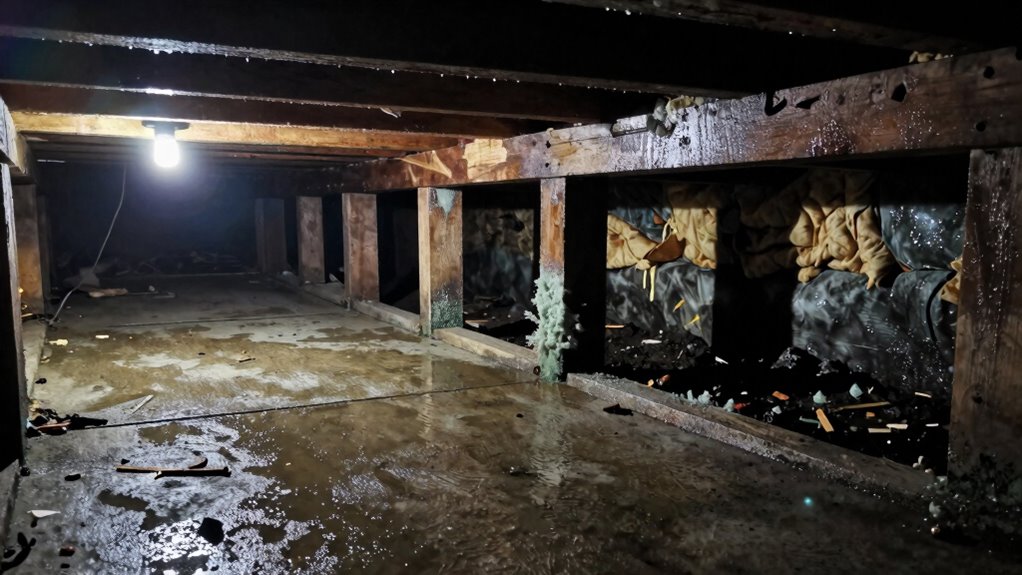

Crawl space moisture is the main cause of musty air in your home. Excess humidity from soil, leaks, or poor drainage seeps into the space, promoting mold and mildew growth. This damp environment leads to unpleasant odors and affects air quality upstairs. Ventilation issues and lack of vapor barriers make things worse. To keep your home fresh and healthy, it’s important to understand the true source of this moisture—keep going to discover how to fix it effectively.
Listen free for 30 days with Audible
Thousands of audiobooks and originals — cancel anytime.
As an affiliate, we earn on qualifying purchases.
Key Takeaways
- Moisture from soil infiltrates through cracks and pores, increasing humidity in the crawl space.
- Poor drainage and improper grading direct water toward the foundation, elevating moisture levels.
- High soil and air humidity promote mold, mildew, and musty odors in the crawl space.
- Lack of vapor barriers and ventilation traps humid air, worsening musty air issues.
- Plumbing leaks and condensation on cool surfaces add to moisture, fueling musty odors.
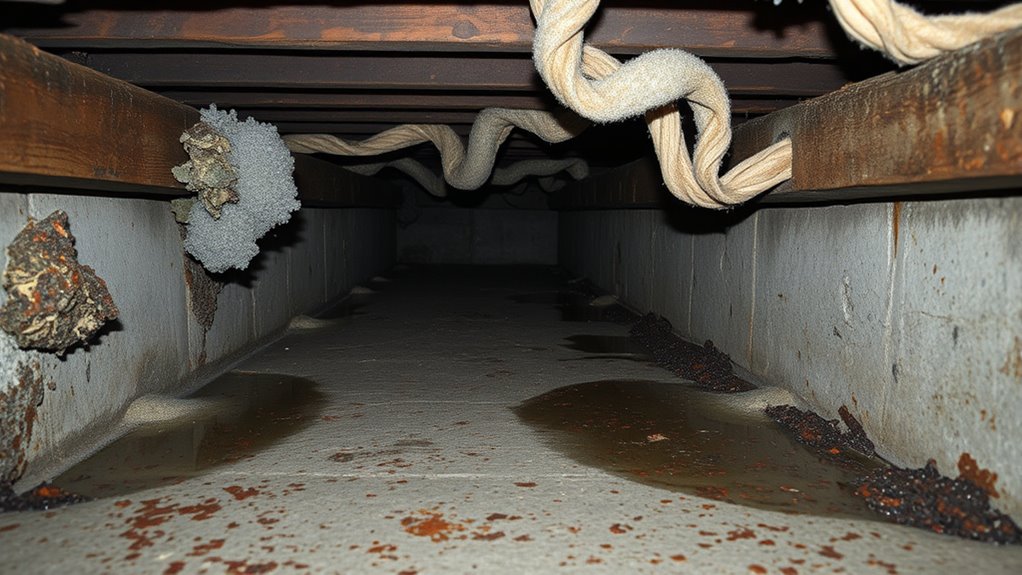
Have you ever wondered why your crawl space feels damp or musty? The answer often lies beneath your home, where moisture seeps in and creates a perfect environment for mold, mildew, and unpleasant odors. Crawl spaces are naturally vulnerable to moisture because they’re close to the ground, where humidity levels tend to be higher. When moisture infiltrates, it doesn’t just stay hidden; it rises into the living spaces above, affecting your indoor air quality and potentially causing structural damage over time.
Crawl space moisture can lead to mold, odors, and structural damage if not properly addressed.
The main source of moisture in crawl spaces is often the surrounding soil. When the ground is damp, water can easily move through tiny pores and cracks, especially if the soil is poorly drained or if there’s heavy rainfall. This moisture then evaporates into the air inside your crawl space, increasing humidity levels. Poor ventilation can make this worse, trapping humid air and preventing it from escaping. Without proper airflow, moisture accumulates, encouraging mold growth and creating that telltale damp smell.
Another factor that contributes to crawl space moisture is plumbing leaks. If pipes run through or beneath your crawl space and develop leaks or drips, they add to the moisture load. Over time, even small leaks can considerably raise humidity levels, especially if not detected and repaired promptly. Additionally, improper grading around your home can direct water toward the foundation rather than away from it. When water pools or seeps into the ground near your foundation, it increases the likelihood of moisture infiltration through cracks or vents.
Condensation also plays a role. When warm, moist air comes into contact with cooler surfaces like concrete or metal in your crawl space, it condenses into water droplets. This is especially common in humid climates or during colder months when indoor heating causes warm air to meet cooler surfaces. Without a vapor barrier or insulation, this condensation cycle persists, maintaining high moisture levels. Recognizing the importance of soil drainage and how it impacts moisture levels can help prevent ongoing issues.
To address crawl space moisture effectively, you need to identify its sources—whether it’s ground moisture, leaks, or condensation—and take steps to control it. Installing a vapor barrier can prevent ground moisture from rising into the space, while fixing leaks and ensuring proper drainage help keep water away from your foundation. Proper ventilation and dehumidification reduce indoor humidity, making the environment less hospitable for mold and mildew. When you tackle these issues head-on, you eliminate the dampness that causes musty air and protect your home’s structure and indoor air quality.
Frequently Asked Questions
How Can I Identify Hidden Moisture Issues in My Crawl Space?
You can identify hidden moisture issues in your crawl space by inspecting for damp or wet areas, mold, or mildew growth. Look for water stains, rusted metal, or warped wood. Use a moisture meter to check the moisture levels in the wood and framing. Also, note any musty odors or condensation on surfaces. Regularly vent, insulate, and seal your crawl space to prevent moisture buildup.
What Are the Long-Term Health Effects of Mold From Moisture?
You might experience respiratory problems, allergies, or asthma worsened by mold exposure over time. Mold spores can cause persistent coughing, throat irritation, and sinus issues. In some cases, long-term exposure can lead to more severe health problems like mold hypersensitivity or infections, especially if you have a weakened immune system. It’s vital to address mold issues promptly to protect your health and prevent ongoing or future health complications.
Are There Eco-Friendly Options to Reduce Crawl Space Humidity?
Yes, you can use eco-friendly options to reduce crawl space humidity. Installing natural ventilation systems like vents or fans powered by solar energy helps increase airflow without harming the environment. You might also consider using eco-friendly vapor barriers made from recycled materials, which prevent moisture buildup. Additionally, adding moisture-absorbing products like silica gel or charcoal can help maintain ideal humidity levels naturally, keeping your crawl space dry and healthy.
How Often Should I Inspect My Crawl Space for Moisture Problems?
You should inspect your crawl space at least every three to six months. Regular checks help you catch moisture problems early before they cause mold, wood rot, or musty odors. Look for standing water, dampness, or mold growth, especially after heavy rains or high humidity seasons. If you notice issues, address them promptly with proper ventilation, sealing, or moisture barriers to keep your crawl space dry and healthy.
Can Poor Drainage Around My Home Contribute to Crawl Space Moisture?
Yes, poor drainage around your home can definitely contribute to crawl space moisture. When the ground doesn’t drain properly, water can pool or seep into the soil, increasing humidity levels beneath your house. This excess moisture then finds its way into the crawl space, creating a damp environment that promotes mold, mildew, and musty odors. To prevent this, guarantee your gutters are clean and extend downspouts away from your foundation.
Conclusion
To keep your home fresh and healthy, addressing crawl space moisture is key. Think of it like watering a plant: too much water, and it rots; too little, and it wilts. By controlling humidity and fixing leaks, you prevent mold and musty air from taking hold. Visualize your crawl space as a balanced ecosystem—when moisture levels are just right, your home stays dry, comfortable, and free from that unpleasant musty smell.
Fall Picks
fall essentials
As an affiliate, we earn on qualifying purchases.